


 Home /
Top 10 Electric Motor Manufacturers in the World 2026
Vertical-Axis Drives After Power Loss: Which Holding and Brake Data Must OEMs Verify?
Oct 14, 2026
Indexing Packaging Machines: Calculating Acceleration Torque From a Motion Profile
Oct 14, 2026

Changing an NMRV Worm Gearbox Ratio: Can You Keep the Existing Motor?
Oct 14, 2026
How to Check Overhung Load When a Chain Sprocket Is Moved Along a Gearbox Output Shaft
Oct 14, 2026
The top 10 electric motor manufacturers in the world for 2025–2026 are ABB, Siemens, WEG, Nidec, Regal Rexnord, Toshiba, Johnson Electric, AMETEK, Rockwell Automation, and Mabuchi Motor — ranked here on five stated criteria: motor type coverage, efficiency range (IE1–IE4), global support footprint, industries served, and OEM flexibility. This guide compares each manufacturer head-to-head so you can shortlist the right partner for your industrial application, with a separate section on what to check before you buy.
Key Takeaways
- ABB, Siemens, and WEG consistently rank in the top 3 across independent lists for industrial motor manufacturing (Ruito, Hongma, Twirl).
- Ranking criteria vary by source — this guide ranks on five stated criteria (motor types, efficiency classes, global support, industries served, OEM flexibility), not revenue alone.
- The largest US-headquartered industrial motor manufacturer is Nidec Motor Corporation, with 5,001–10,000 employees (RevenueBase).
- Efficiency classes (IE1–IE4/IE5) are the single most important technical comparison point when evaluating motor manufacturers for new installations.
- Chinese manufacturers (Wolong, TECO) offer competitive IE1–IE4 options and faster lead times for OEMs sourcing from Asia.
How We Ranked the Top 10 Electric Motor Manufacturers
We ranked manufacturers on five checkable criteria — motor type coverage, efficiency classes offered (IE1–IE4), global support footprint, industries served, and OEM customization capability — using only information published on each company's own website or reputable directories.
No single ranking is definitive. Ruito Motor, Hongma Motor, and Twirl Motor each published different Top 10 lists in 2024–2025, reflecting different criteria. This list uses a synthesized, stated methodology so you can evaluate the ranking logic itself.
The five ranking criteria are:
- Motor type coverage — Does the manufacturer produce AC induction, synchronous, permanent magnet, DC, servo, or geared motors?
- Efficiency range — What IE efficiency classes (IE1 through IE4/IE5) does the manufacturer offer across its portfolio?
- Global support footprint — Does the manufacturer have service, sales, and manufacturing presence across multiple regions?
- Industries served — Which industrial sectors does the manufacturer actually supply (mining, power, automotive, HVAC, etc.)?
- OEM flexibility — Can the manufacturer support custom mounting dimensions, ratings, or integrated drive solutions?
Top 10 Electric Motor Manufacturers at a Glance (Comparison Table)
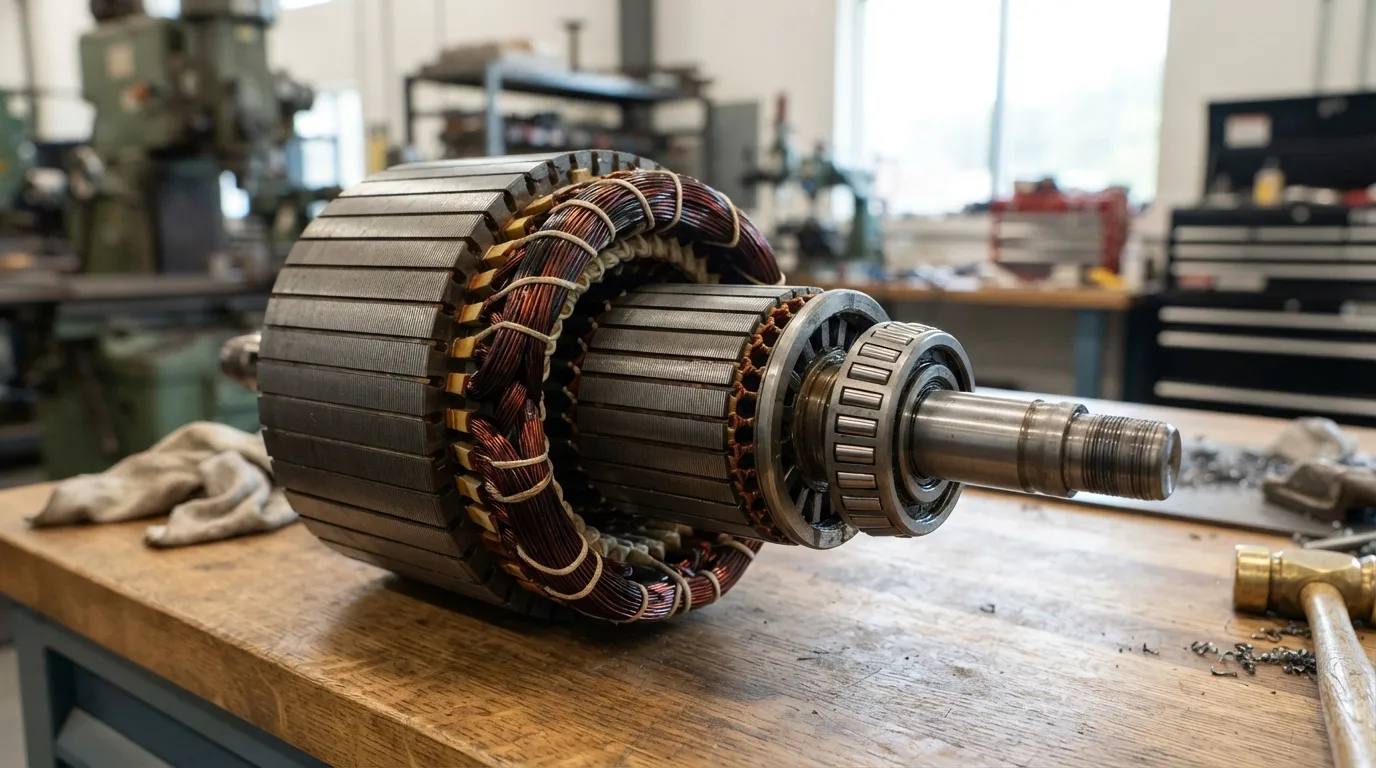
This table summarizes all 10 manufacturers by founding year, headquarters, key motor types, efficiency focus, industries served, and best-fit scenario.
| Rank | Company | Founded | HQ | Key Motor Types | Efficiency Focus | Industries Served | Best For |
|---|---|---|---|---|---|---|---|
| 1 | ABB | 1988 | Zurich, Switzerland | LV/MV induction, synchronous, permanent magnet | IE2–IE4 | Mining, water, oil & gas, power | Large-scale industrial integration |
| 2 | Siemens | 1847 | Munich, Germany | SIMOTICS LV/MV, servo, geared motors | IE2–IE4 | Automotive, manufacturing, energy | Automation-integrated drive systems |
| 3 | WEG | 1961 | Jaraguá do Sul, Brazil | LV/MV induction, synchronous (to 50 MW), PM, wound rotor, DC | IE3–IE4 | Mining, pulp & paper, water, power | Heavy-industry high-power applications |
| 4 | Nidec | 1973 | Kyoto, Japan | Small precision to industrial, BLDC | IE2–IE4 | HVAC, home appliances, industrial | High-volume precision motors |
| 5 | Regal Rexnord | 1955 | Milwaukee, USA | AC/DC, gearmotors, HVAC, power transmission | IE2–IE3 | HVAC, food & beverage, material handling | Power transmission integration |
| 6 | Toshiba | 1875 | Tokyo, Japan | LV/MV, wound rotor, synchronous | IE2–IE4 | Power generation, marine, mining | Heavy industry and marine |
| 7 | Johnson Electric | 1959 | Hong Kong | Micromotors, DC, BLDC, actuators | N/A (high-volume) | Automotive, medical, consumer | High-volume precision motion |
| 8 | AMETEK | 1930 | Berwyn, USA | Precision motors, BLDC, motion control | N/A (precision) | Medical, aerospace, industrial | Precision and specialty applications |
| 9 | Rockwell Automation | 1903 | Milwaukee, USA | Servo motors, drives, motor control | IE2–IE3 | Manufacturing, mining, oil & gas | Integrated motor-drive-control systems |
| 10 | Mabuchi Motor | 1954 | Matsudo, Japan | Small DC motors, BLDC | N/A (small DC) | Automotive, home appliances | High-volume small DC motors |
Founding years and headquarters data are sourced from the Ruito Motor Top 10 list and Twirl Motor's global manufacturer directory. Nidec's US leadership position is sourced from RevenueBase's ranking of US industrial motor manufacturers by team size.
Company Profiles — Top 10 Electric Motor Manufacturers
1. ABB
ABB, formed in 1988 from the merger of Sweden's ASEA and Switzerland's BBC Brown Boveri, is one of the world's largest industrial motor and drive manufacturers, headquartered in Zurich, Switzerland. According to the Ruito Motor ranking, ABB holds the #1 position for its comprehensive low-voltage and medium-voltage induction motor portfolio, synchronous motors, and permanent magnet motors.
ABB's strength lies in integrating motors with drives, variable speed drives, and complete automation systems — making it a preferred choice for large-scale industrial sites in mining, water, oil and gas, and power generation. For OEMs and plant engineers, ABB offers the advantage of a single supplier for motor plus drive plus control, simplifying system integration.
Best for: Large-scale industrial integration where motor-drive-control compatibility is critical.
2. Siemens
Siemens, founded in 1847 and headquartered in Munich, Germany, delivers the SIMOTICS motor range integrated with SINAMICS drives and automation platforms. The Ruito Motor ranking places Siemens #2, noting its broad coverage of low-voltage and medium-voltage motors, servo motors, and geared motors.
Siemens distinguishes itself through deep automation integration. A Siemens SIMOTICS motor is designed to work seamlessly with SINAMICS drives and TIA Portal engineering software, reducing commissioning time for complex machines. In the automotive, manufacturing, and energy sectors, this integration is a decisive advantage.
Best for: Automation-integrated drive systems where motor, drive, and control must work as one.
3. WEG
WEG, founded 1961 in Jaraguá do Sul, Brazil, offers one of the industry's broadest motor portfolios, from fractional-horsepower to 50 MW synchronous machines. According to Twirl Motor's analysis, WEG's range includes low- and medium-voltage induction motors up to 50 MW, synchronous motors up to 50 MW, permanent magnet motors up to 20 MW, wound rotor motors up to 10 MW, DC motors up to 2.5 MW, and generators up to 150 MVA.
For heavy industries that need high-power machines — mining, pulp and paper, water treatment, power generation — WEG is a strong contender with proven reliability and global service networks. WEG's focus on IE3 and IE4 efficiency classes aligns well with the growing regulatory push toward premium-efficiency motors.
Best for: Heavy-industry high-power applications where motor size and efficiency matter most.
4. Nidec
Nidec, ranked #1 among US-headquartered industrial electric motor manufacturers with 5,001–10,000 employees and headquarters in Creve Coeur, Missouri, spans precision micro-motors to large industrial drives. According to RevenueBase's US ranking, Nidec Motor Corporation leads the US market by team size, indicating substantial operational scale.
Nidec's parent company in Japan, founded in 1973, has grown into one of the world's largest motor manufacturers through acquisitions and organic growth. Nidec excels in high-volume precision motor production for HVAC, home appliances, and industrial applications, making it a strong partner for OEMs with high-volume motor requirements.
Best for: High-volume precision motors where manufacturing scalability is essential.
5. Regal Rexnord
Regal Rexnord, founded 1955 in Milwaukee, focuses on AC/DC motors, gearmotors, HVAC, and power transmission components. The Ruito Motor ranking places Regal Rexnord #5, highlighting its broad coverage of motor types and its strength in power transmission integration.
What distinguishes Regal Rexnord is its combination of motors with mechanical power transmission components — gearboxes, couplings, bearings, and conveyor components. For plant engineers in HVAC, food and beverage, and material handling, this integration simplifies procurement and ensures compatibility between motor and driven equipment.
Best for: Power transmission integration where motors and gearboxes come from one supplier.
6. Toshiba
Toshiba International Corporation, founded 1875, is a leading supplier of medium-voltage motors and power systems for heavy industry. The Ruito Motor ranking places Toshiba #6, noting its strength in industrial motors, drives, medium-voltage motors, and power systems.
Toshiba's motor portfolio includes low- and medium-voltage induction motors, wound rotor motors, and synchronous machines for power generation, marine, and mining applications. Its long history and deep engineering expertise make Toshiba a reliable choice for critical heavy-industry applications where motor failure has major operational impact.
Best for: Heavy industry and marine applications requiring medium-voltage machines.
7. Johnson Electric
Johnson Electric, founded 1959 in Hong Kong, is a global leader in micromotors and high-volume precision motion for automotive and consumer applications. According to the Ruito Motor ranking, Johnson Electric specializes in micromotors, DC motors, brushless motors, and actuators for automotive, medical, and consumer product markets.
Johnson Electric's competitive advantage is scale — producing millions of small precision motors per year for automotive seat adjusters, window lifters, medical pumps, and consumer devices. For OEMs needing high-volume, cost-effective precision motion, Johnson Electric is a proven partner.
Best for: High-volume precision motion where unit cost and consistency are paramount.
8. AMETEK
AMETEK specializes in precision motors, brushless DC motors, and motion control for medical, aerospace, and industrial applications. The Ruito Motor ranking places AMETEK #8, highlighting its focus on precision and specialty rather than commodity motors.
Operating since 1930, AMETEK serves niches where motor reliability, precision, and environmental tolerance matter more than cost per unit. Medical device manufacturers, aerospace suppliers, and industrial automation providers rely on AMETEK's sealed, precise, and long-life motor designs.
Best for: Precision and specialty applications in medical, aerospace, and industrial automation.
9. Rockwell Automation
Rockwell Automation, founded 1903 in Milwaukee, delivers integrated motor-drive-control systems for manufacturing and process industries. The Ruito Motor ranking places Rockwell #9, noting its strengths in servo motors, drives, and motor control.
Rockwell Automation is unique in this list as a company that sells complete automation solutions — motor, drive, PLC, and HMIs — rather than motors as standalone products. For plant engineers looking to modernize manufacturing lines with integrated motion control, Rockwell's Allen-Bradley ecosystem is a strong choice.
Best for: Integrated motor-drive-control systems where automation is the primary goal.
10. Mabuchi Motor
Mabuchi Motor, founded 1954 in Matsudo, Japan, is the world's largest producer of small DC motors for automotive and consumer electronics. According to the Ruito Motor ranking, Mabuchi focuses exclusively on small DC motors and brushless motors for automotive, home appliance, and consumer device applications.
Mabuchi's scale is remarkable — the company produces billions of small motors annually for applications like power windows, seat adjusters, and small appliance drives. For OEMs needing inexpensive, reliable, high-volume small motors, Mabuchi is the standard-bearer.
Best for: High-volume small DC motors in automotive and consumer applications.
What to Check When Choosing an Electric Motor Manufacturer
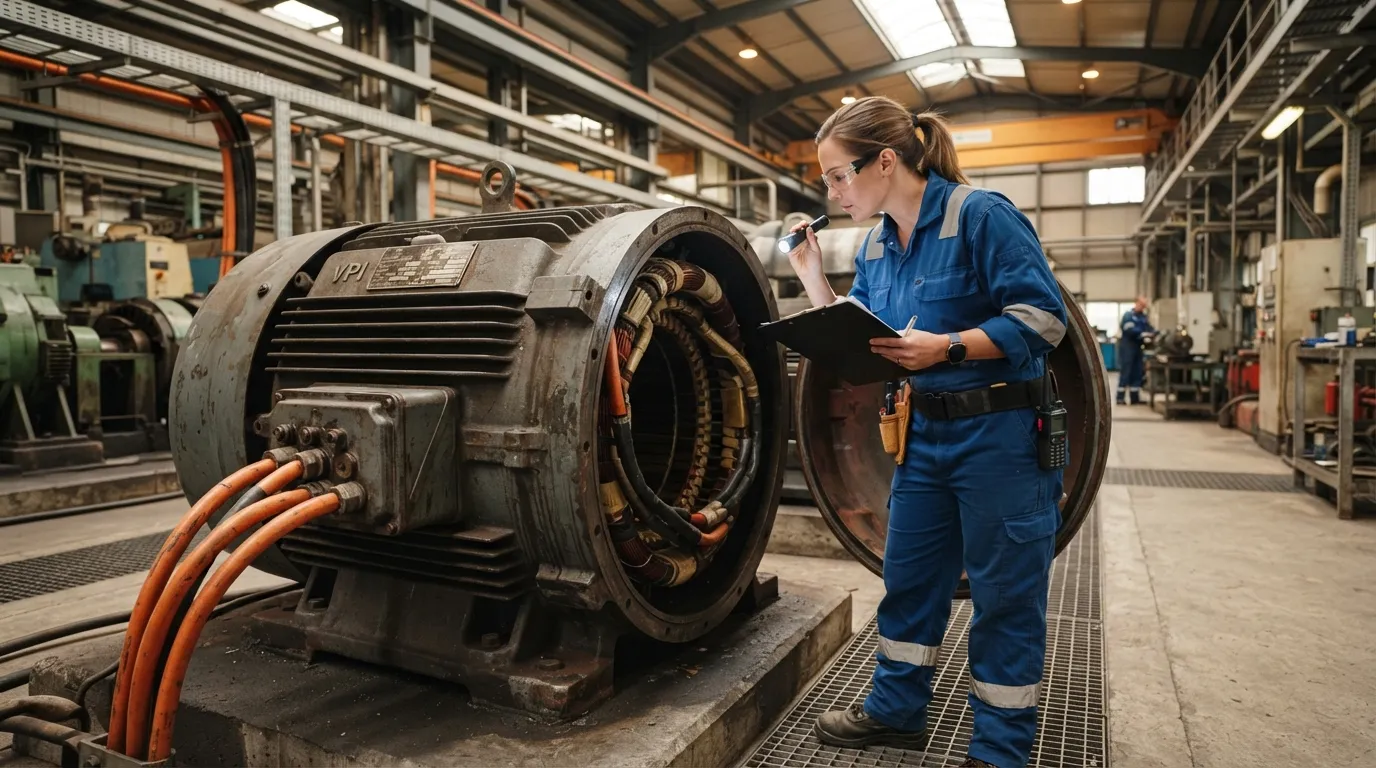
Beyond brand reputation, verify motor type coverage, efficiency class documentation, engineering support, OEM customization capability, and realistic lead times before shortlisting a manufacturer.
Ruito Motor's buyer's guide emphasizes that OEM selection goes far beyond brand recognition. Their guide highlights specific technical factors including shaft length, mounting holes, gearbox direction, wire outlet, connector type, encoder needs, noise level, duty cycle, and load torque as OEM-specific selection criteria. Each of these factors can determine whether a motor fits your application without modification.
Use this numbered checklist when evaluating any electric motor manufacturer:
- Define required motor types — AC induction, synchronous, permanent magnet, DC, servo, or geared. Not every manufacturer covers all types.
- Verify efficiency class documentation — Confirm IE1–IE4 class per IEC 60034 with test reports, not just catalog claims.
- Check mounting dimension standards — NEMA vs. IEC frame sizes; verify the motor drops into your existing equipment without adapter plates.
- Confirm OEM customization capability — Can the manufacturer modify mounting, shaft, flange, or ratio for your application without excessive lead times?
- Assess engineering support depth — Application engineering (helping you size and select) vs. sales-only support. This is critical when integrating motors into existing systems.
- Request documented test reports — Ask for test certificates, tolerance data, and noise/vibration measurements before ordering.
- Validate global support footprint — Is there local service, spare parts availability, and warranty support in your region?
- Confirm lead time expectations — Global brands may quote 8–20+ weeks for custom builds; understand the trade-off between brand and speed.
How to Choose Between a Global Brand and a Specialist Manufacturer
Global brands (ABB, Siemens, WEG) excel at integrated automation and high-power applications; specialists (Regal Rexnord, AMETEK) offer niche precision and power transmission expertise; Chinese manufacturers offer competitive IE1–IE4 motors with faster OEM lead times.
The "top 10" list varies by region. India has its own top 10 list including Siemens Ltd., ABB India, CG Power, Nidec India, Kirloskar Electric, WEG Industries India, Marathon Electric India, Havells, Bharat Bijlee, and BHEL, according to Kompass India's industry directory. The United States has its own ranking by team size, with Nidec Motor leading, followed by TMEIC, Kollmorgen, Yaskawa America, and Hydro-Gear, per RevenueBase's data.
When deciding between a global brand and a specialist, consider:
- Global brands offer integrated systems, global support consistency, and proven reliability — at a premium price and longer lead times.
- Specialists offer niche expertise, customization, and often faster support — but may have narrower product ranges.
- Chinese manufacturers like Wolong, established in 1984, offer 40+ series and 3,000+ motor varieties with IE1–IE4 efficiency classes, and hold leading domestic market share positions, according to Twirl Motor's analysis. They often deliver faster custom builds due to in-house production control.
The right choice depends on your application's criticality, volume, and tolerance for lead time.
What About Gear Motors?
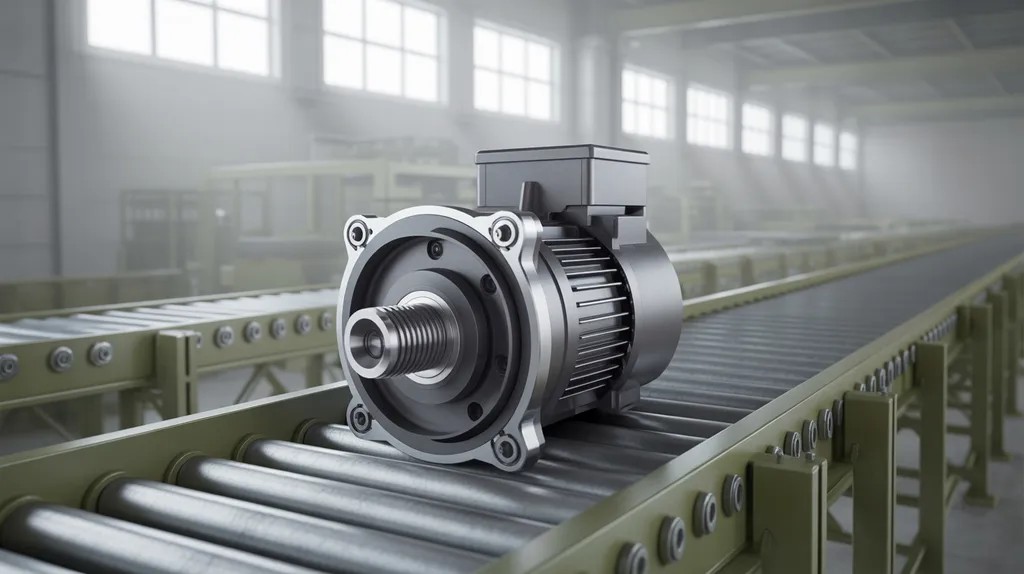
Many Top 10 manufacturers do not sell gear motors directly to OEMs with the same customization flexibility; gear motor specialists fill this gap with integrated motor plus gearbox solutions.
Understanding the difference between a gear motor vs electric motor matters when your application requires speed reduction. An electric motor run at high speed can deliver more power per unit size, but many industrial applications — conveyors, mixers, agitators — require lower speed with higher torque. A gear motor integrates the motor and speed reducer into a single unit, simplifying mounting and reducing footprint.
If your application needs an integrated motor and gearbox, see our separate ranking of top gear motor manufacturers for a comparison focused on geared drive solutions.
A Note from Mingye — Publisher Disclosure
Mingye, the publisher of this guide, was not ranked here because ranking a company on its own article would be biased. However, as a Chinese gear motor manufacturer, Mingye supports OEMs with custom motors and reducers built in its own CNC-equipped factory with 7–15 day delivery.
Mingye (Shanghai Mingye Machinery Co., Ltd., Jinshan District, Shanghai) designs, makes, and supplies industrial power transmission equipment. Its range covers more than 20 series: R, S, K, and F series helical gear motors, HB series heavy-duty industrial gearboxes, heavy-duty planetary reducers, NMRV worm gear motors, cycloidal pinwheel reducers, cylindrical gear reducers, three-phase asynchronous motors, and small gear motors, plus special reducers for rubber and plastic machinery, welding rotators, and paddle mixers.
Mingye builds both motors and reducers in its own CNC-equipped factory on modular, standardized designs, offers OEM customization of mounting dimensions and transmission ratios, and normally delivers in 7–15 days. It serves OEMs and plant engineers in plastics and rubber, mixing, conveying and material handling, packaging, mining, cement, power, and ports.
If your application needs custom gear motors or reducers — R, S, K, F series, heavy-duty planetary, or NMRV worm gear — Mingye builds both motors and reducers in-house with OEM customization and 7–15 day delivery. Contact us with your mounting dimensions and ratio requirements for a quick assessment. For a deeper step-by-step framework on motor selection, see our full guide on choosing an industrial electric motor.
Frequently Asked Questions
Who is the largest electric motor manufacturer in the world?
ABB, Siemens, and WEG are the three most frequently named in the top positions across independent manufacturer lists from Ruito, Hongma, and Twirl. Nidec leads US-headquartered manufacturers by team size with 5,001–10,000 employees, according to RevenueBase's industry ranking.
What is the difference between IE1 and IE4 efficiency classes?
IE classes (IEC 60034) rate motor energy efficiency from IE1 (standard) to IE4 (premium). IE4 motors consume significantly less energy than IE1 over their lifetime, and many regions now mandate IE3 or higher for new industrial installations.
Do Chinese electric motor manufacturers meet international standards?
Yes — Chinese manufacturers like Wolong (IE1–IE4, 3,000+ varieties) and TECO supply globally, and many hold ISO and IEC compliance. The key is verifying documentation and test reports rather than assuming standards compliance based on a manufacturer's location.
Which electric motor manufacturer is best for gear motors?
None of the Top 10 manufacturers in this list specializes in gear motors exclusively; global brands offer geared motor options within broader automation systems. For OEM customization flexibility with integrated motor and gearbox solutions, a specialized gear motor manufacturer may be a better fit. Before sizing your gear motor, confirm your requirements with a what size electric motor assessment.
How long does it take to get a custom electric motor?
Lead times vary: global brands typically quote 8–20+ weeks for custom builds; Chinese manufacturers with in-house production can often deliver custom motors and reducers in 7–15 days, depending on configuration. Always confirm lead times in writing before committing to an order. For OEMs evaluating integrated motor and gearbox solutions, our gear reduction motor buying guide for oems covers the procurement specifics.
Share on Social:


Contact Us
Vertical-Axis Drives After Power Loss: Which Holding and Brake Data Must OEMs Verify?
Oct 14, 2026
Indexing Packaging Machines: Calculating Acceleration Torque From a Motion Profile
Oct 14, 2026
Changing an NMRV Worm Gearbox Ratio: Can You Keep the Existing Motor?
Oct 14, 2026
How to Check Overhung Load When a Chain Sprocket Is Moved Along a Gearbox Output Shaft
Oct 14, 2026