


 Home /
What Size Electric Motor Do I Need?
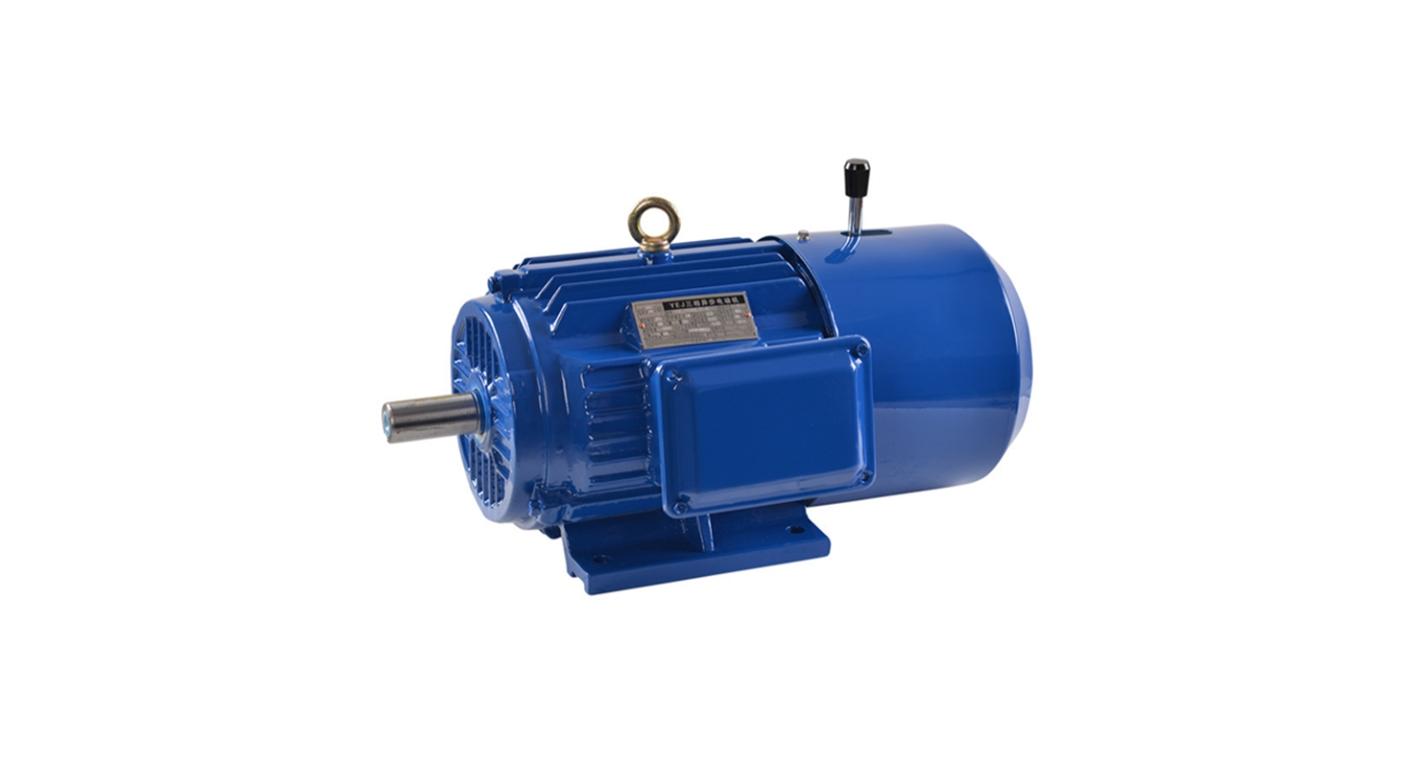
Right Angle Geared Motor: Matching Electrical Supply, Variable Speed and Braking
Oct 26, 2026
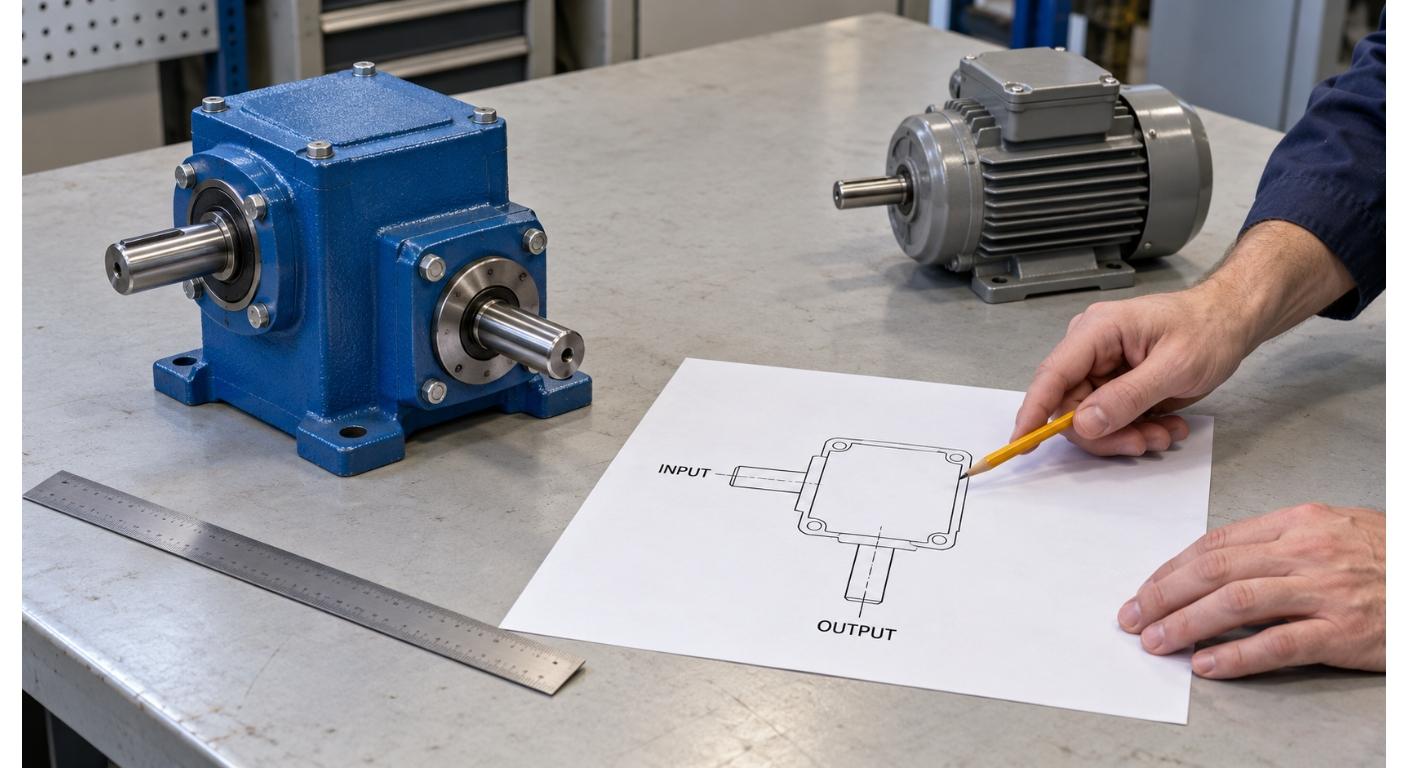
Planning a Bevel Reducer Installation: Turn Shaft Requirements Into a Practical Drive Layout
Oct 26, 2026
Choosing an Overhead Crane Gearbox by Its Hoisting or Travel Function
Oct 26, 2026
Replacing an Industrial Worm Gearbox: What to Keep and What to Reassess
Oct 25, 2026
Size an electric motor from the load's torque and speed: power (watts) equals torque (N·m) times angular speed (rad/s). Convert to horsepower or kilowatts using constant factors, then add margin for starting torque, duty cycle, and efficiency. For most industrial loads, size the motor at 90–95% load for best efficiency, and account for service factor.
What Is the Formula for Sizing an Electric Motor?
The core formula for motor sizing is power = torque × angular speed, expressed in engineering units as HP = T × RPM / 5,252 (for foot-pounds) or kW = T × RPM / 9,550 (for newton-meters).
According to Malloy Electric, these constants come from the unit conversions between mechanical power and electrical power. One horsepower equals 0.746 kilowatts, and the 5,252 and 9,550 constants account for the conversion of rotational speed and torque units into power units.
| Quantity | Formula | Units |
|---|---|---|
| Power (watts) | P = T × ω | W, N·m, rad/s |
| Power (horsepower) | HP = T × RPM / 5,252 | HP, ft-lb, RPM |
| Power (kilowatts) | kW = T × RPM / 9,550 | kW, N·m, RPM |
| Angular speed | ω = RPM × 2π / 60 | rad/s |
| Conversion | 1 HP = 0.746 kW | — |
To use these formulas, you need two things: the torque the load demands at the shaft, and the speed at which it must turn. For deeper background on how torque and speed produce power, see our explainer on motor power from torque speed.
Torque, Speed, and Power: How They Work Together
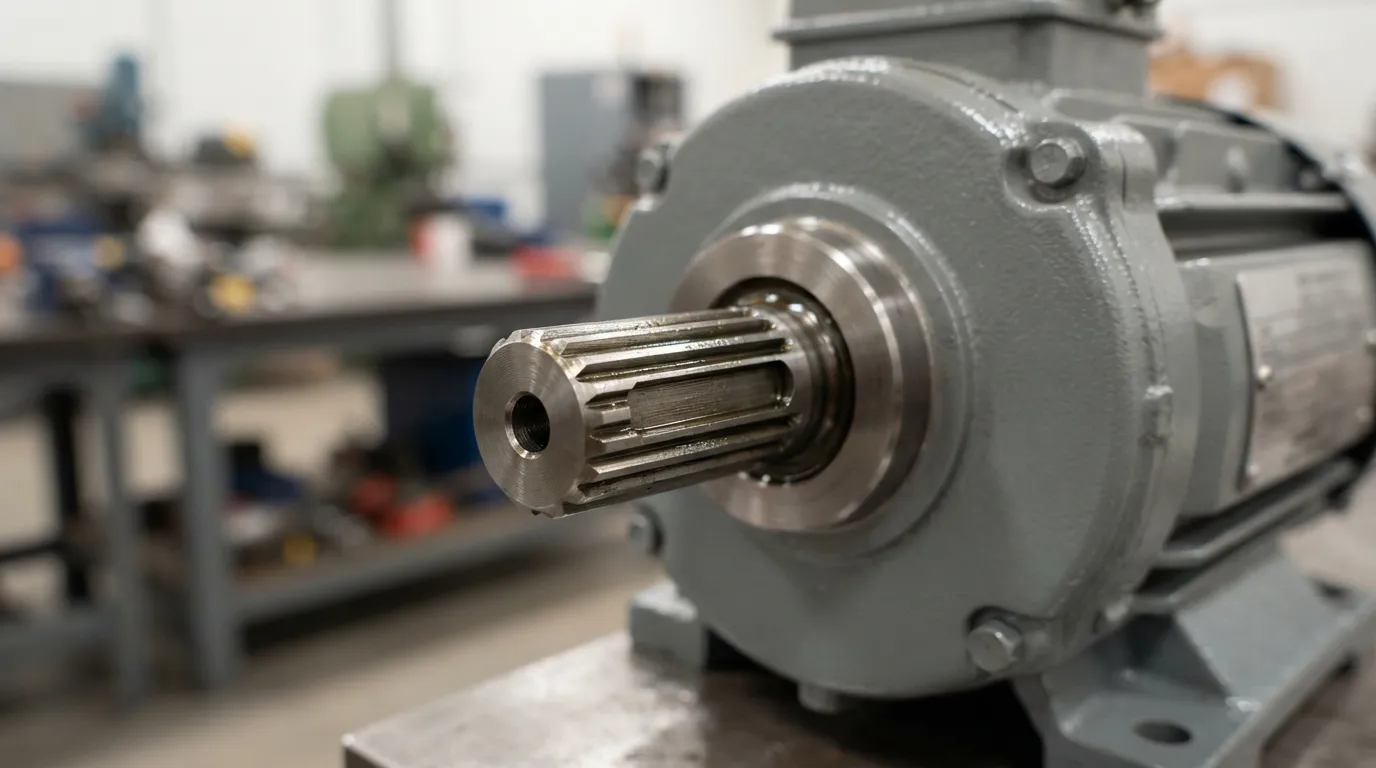
Torque is the turning force a motor delivers at the shaft, speed is how fast the shaft rotates, and power is the product of the two. You cannot size a motor from torque alone or speed alone — you need both.
A four-pole motor on 60 Hz has a synchronous speed of 1,800 RPM but runs at approximately 1,750 to 1,780 RPM under load, according to Malloy Electric. That small difference is called slip, and it is normal for induction motors.
To make this concrete: a 100 horsepower motor running at 1,750 RPM produces approximately 300 foot-pounds of continuous torque at the shaft. If that motor ran at 3,500 RPM instead, it would produce roughly half the torque at the same power — which is why high-speed, low-torque applications use different motors than low-speed, high-torque ones.
Worked Example — Sizing a Motor for a Conveyor Drive

For a conveyor requiring 12.5 N·m at 150 RPM, the required power is 12.5 × 150 / 9,550 ≈ 0.196 kW, or about 0.26 HP. After applying a 1.15 service factor and an 80% efficiency margin, the calculated size rises to roughly 0.37 HP — so you would select a 0.5 HP motor.
- Determine load torque and speed. Measure or calculate the torque the conveyor needs at the drive shaft, and the shaft speed in RPM. For this example: 12.5 N·m at 150 RPM.
- Calculate power in kilowatts. kW = T × RPM / 9,550 = 12.5 × 150 / 9,550 = 0.196 kW.
- Divide by efficiency. Motors are not 100% efficient. Using 0.80 as a safety margin: 0.196 / 0.80 = 0.245 kW.
- Multiply by service factor. For a general-purpose motor with 1.15 service factor: 0.245 × 1.15 = 0.282 kW.
- Round up to a standard size. The next common motor size above 0.282 kW is 0.37 kW (0.5 HP).
- Verify starting torque. Confirm the motor's locked-rotor torque exceeds the conveyor's breakaway torque. For gear-driven conveyors, consult our conveyor motor gearbox guide to account for torque multiplication through the reducer.
At Mingye, we build both motors and gearboxes in our own CNC-equipped factory, so we size the motor and reducer as one system — the gearbox multiplies motor torque while reducing speed, which changes the motor size you need.
How Do I Choose the Right Motor Type and Frame Size?
After you compute the required horsepower or kilowatts, match the motor to your application by type, enclosure, and frame size.
The motor type depends on your load's speed-torque behavior:
| Load Type | Examples | Torque Behavior | Power Behavior |
|---|---|---|---|
| Constant torque | Conveyor, mixer, positive-displacement pump | Constant | Rises with speed |
| Variable torque | Centrifugal pump, fan, blower | Rises with speed | Cubed with speed |
| Constant power | Machine tools, winder | Falls with speed | Constant |
Enclosure selection follows the environment. A TEFC (Totally Enclosed Fan-Cooled) motor suits dusty or damp industrial environments; an ODP (Open Drip-Proof) motor works in clean, indoor, dry locations.
Frame size is determined by the motor's horsepower and speed — it defines shaft height, mounting hole positions, and overall dimensions. In North America, NEMA frame sizes like 143T, 215T, or 445T are standard; internationally, IEC frame sizes use metric dimensions. A typical spec for a 10 HP motor might read: 230/460 V, 1,760 RPM, 215T frame, TEFC enclosure, 92.4% efficiency, 1.15 service factor.
What Is Starting Torque and Why Does It Matter?
Starting torque (also called locked-rotor torque) is the turning force a motor produces from standstill when voltage is applied. If starting torque is too low, the motor stalls and cannot bring the load up to speed. If it is too high, it can damage gears, couplings, or the driven equipment.
Starting current is also a factor. According to Malloy Electric, inrush current for across-the-line starting is typically 6 to 8 times full-load amps. This matters for sizing the motor's electrical supply and for applications where the load is frequently started and stopped.
For loads with high breakaway torque — such as crushers, mixers with thick materials, or conveyors starting under full load — you may need a motor with higher starting torque or a soft-start device like a VFD to limit inrush current.
Duty Cycle and Service Factor — How Much Margin Do I Need?
Duty cycle describes how the motor is loaded over time: continuous duty runs at rated load indefinitely, while intermittent duty alternates between running and resting. Service factor is the continuous overload capability above the motor's rated horsepower.
According to Malloy Electric, most general-purpose industrial motors have a 1.15 service factor, meaning they can handle 15% more than rated horsepower continuously. Severe-duty motors typically carry a 1.0 service factor, meaning no continuous overload.
| Service Factor | Meaning | Typical Use |
|---|---|---|
| 1.0 | No continuous overload | Severe duty, critical applications |
| 1.15 | 15% continuous overload | General industrial |
| 1.25 | 25% continuous overload | Special applications |
Industrial Gearbox Supply states that a 1.15 service factor motor can handle 15% more than rated HP temporarily. Use service factor for occasional overloads, not for continuous operation at the higher load — that accelerates insulation aging and shortens motor life.
How Does Efficiency Affect Motor Sizing?
Motor efficiency affects both operating cost and the actual output power delivered to the load. According to Fluke, motors are most efficient when they are 90% to 95% loaded.
An oversized motor running lightly loaded wastes energy across its entire service life and operates at a poor power factor. An undersized motor runs hot and fails prematurely — Malloy Electric notes that undersized motors typically fail 12 to 36 months into service when properly specified motors last into their first decade.
The efficiency sweet spot means you should not automatically add large safety margins. A modest 10–15% margin for service factor and duty cycle is normal; doubling the calculated size to "be safe" wastes energy and money with no reliability benefit.
When Should You Size a Gear Motor Instead of a Direct-Drive Motor?
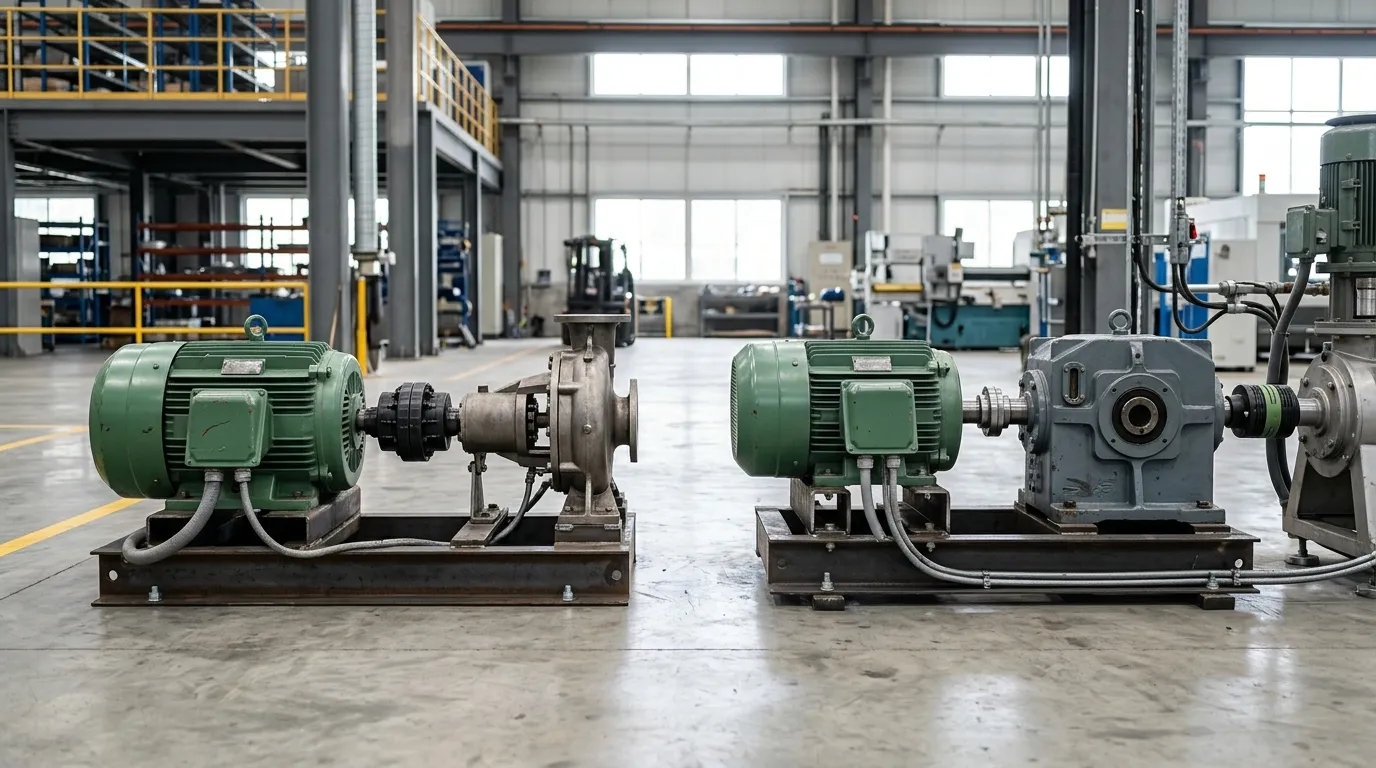
When your load requires low speed and high torque — where a direct-drive motor would run too fast or need excessive power — pair the motor with a gearbox. The gear motor combines an electric motor with a speed reducer, so the gearbox multiplies torque while reducing output speed.
For example, if your conveyor needs 150 RPM but the smallest efficient motor runs at 1,750 RPM, you have two options: a large, expensive motor with a low-speed winding, or a smaller higher-speed motor driving a gearbox with approximately 11.7:1 reduction. The gear motor approach is almost always smaller, cheaper, and more efficient.
This difference matters because the motor's torque at the shaft is not the torque delivered to the load — the gearbox multiplies it. To understand which configuration suits your application, compare gear motor vs electric motor options, then check what size gear motor you need for the output torque and speed your load demands.
Common Motor Sizing Mistakes to Avoid
Oversizing and undersizing are the two most common mistakes, and both are avoidable with accurate load data.
- Oversizing wastes energy across the motor's entire service life. An oversized motor runs at light load, operates at poor efficiency and power factor, and costs more to buy and install.
- Undersizing overheats the motor and shortens its life. According to Malloy Electric, an undersized motor typically fails 12 to 36 months into service, while a properly specified motor lasts into its first decade.
- Ignoring starting torque — a motor sized for running load may stall during startup if the load has high breakaway torque.
- Applying service factor as continuous power — the 1.15 factor is for occasional overloads, not 24/7 operation at 115% load.
- Mismatching duty cycle — a motor rated for continuous duty (S1) run on an intermittent load is fine, but an intermittent-duty motor cannot run continuously.
- Forgetting ambient conditions — high ambient temperature or altitude above 1,000 meters requires derating the motor.
- Selecting a non-inverter-duty motor for VFD use — VFD operation adds voltage spikes and heating that standard motors may not handle.
Pre-Purchase Checklist
Before you order a motor, confirm the following eight items:
- Load torque at operating speed (N·m or ft-lb).
- Speed range (RPM).
- Duty cycle (continuous, intermittent, or cyclic).
- Starting method (direct-on-line, soft-start, or VFD).
- Environment (dust, moisture, chemicals, ambient temperature).
- Enclosure (TEFC, ODP, or explosion-proof).
- Voltage and frequency (230/460 V at 60 Hz, or 400 V at 50 Hz).
- Service factor and efficiency class.
OEMs specifying gear reductions along with the motor should also review our gear reduction motor buying guide for oems to confirm mounting, ratio, and customization requirements.
Final Word
Size an electric motor from the load's torque and speed, add a modest margin for starting torque, duty cycle, and efficiency, then verify the result against standard motor ratings. Worked calculations beat guesswork — measure the actual load, apply the formulas, and confirm the service factor matches your duty cycle. When the load needs low speed and high torque, choose a gear motor and size the motor and reducer as one system.
If you are sizing a motor for a new or replacement application, our engineers can help you verify the calculation. Contact Mingye with your load data — torque, speed, and duty cycle — and we will confirm the right motor and gearbox combination for your application.
Share on Social:


Contact Us
In This Article
Right Angle Geared Motor: Matching Electrical Supply, Variable Speed and Braking
Oct 26, 2026
Planning a Bevel Reducer Installation: Turn Shaft Requirements Into a Practical Drive Layout
Oct 26, 2026
Choosing an Overhead Crane Gearbox by Its Hoisting or Travel Function
Oct 26, 2026
Replacing an Industrial Worm Gearbox: What to Keep and What to Reassess
Oct 25, 2026