


 Home /
Single Stage vs Multi Stage Gearbox: How to Select the Right Ratio
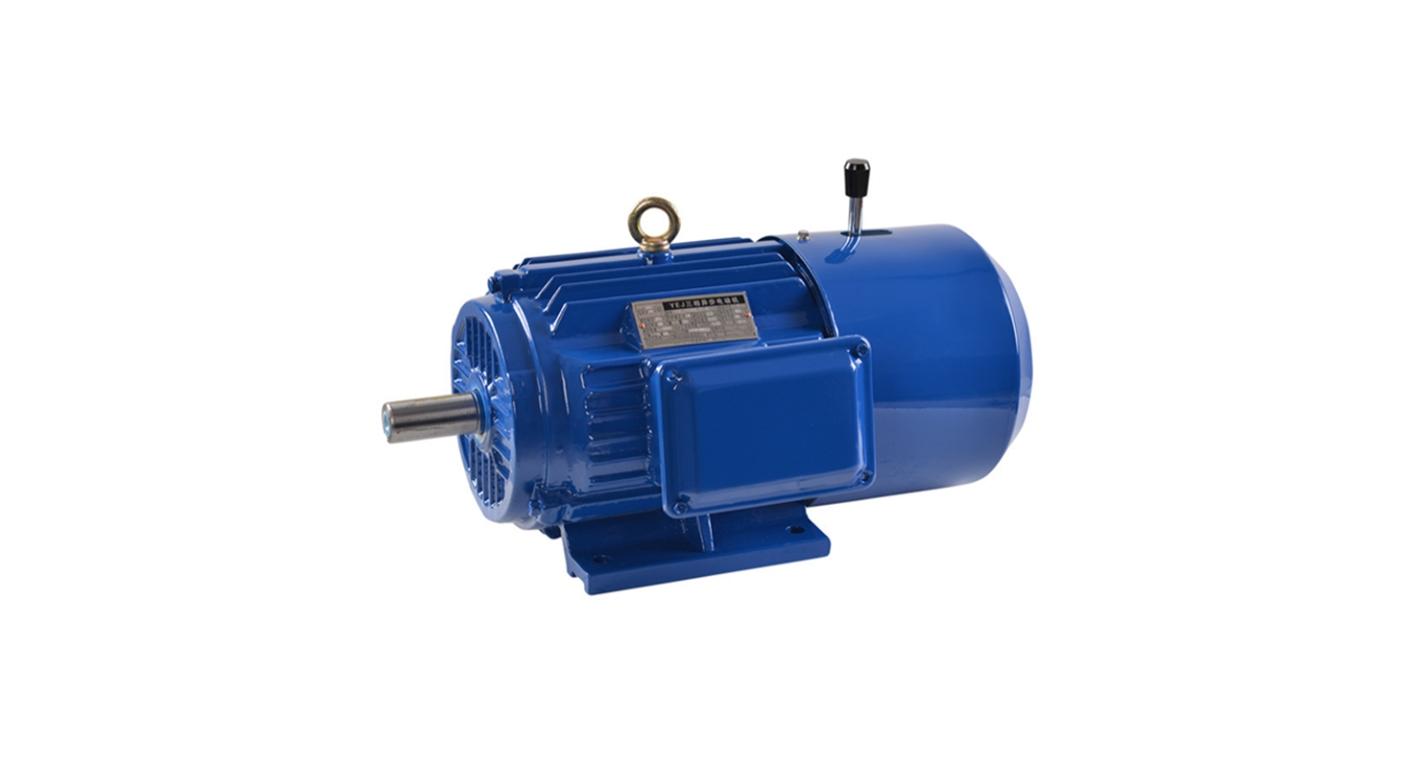
Right Angle Geared Motor: Matching Electrical Supply, Variable Speed and Braking
Oct 26, 2026
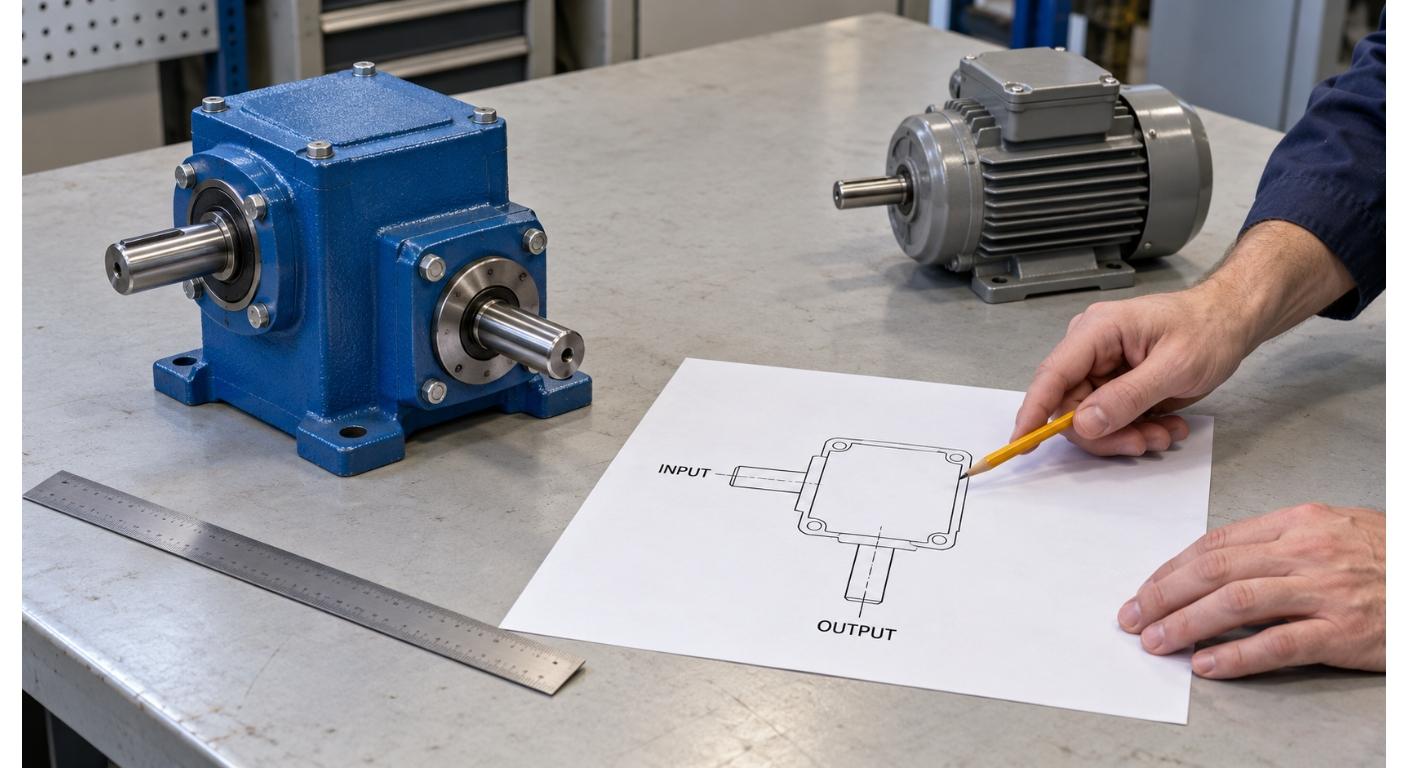
Planning a Bevel Reducer Installation: Turn Shaft Requirements Into a Practical Drive Layout
Oct 26, 2026
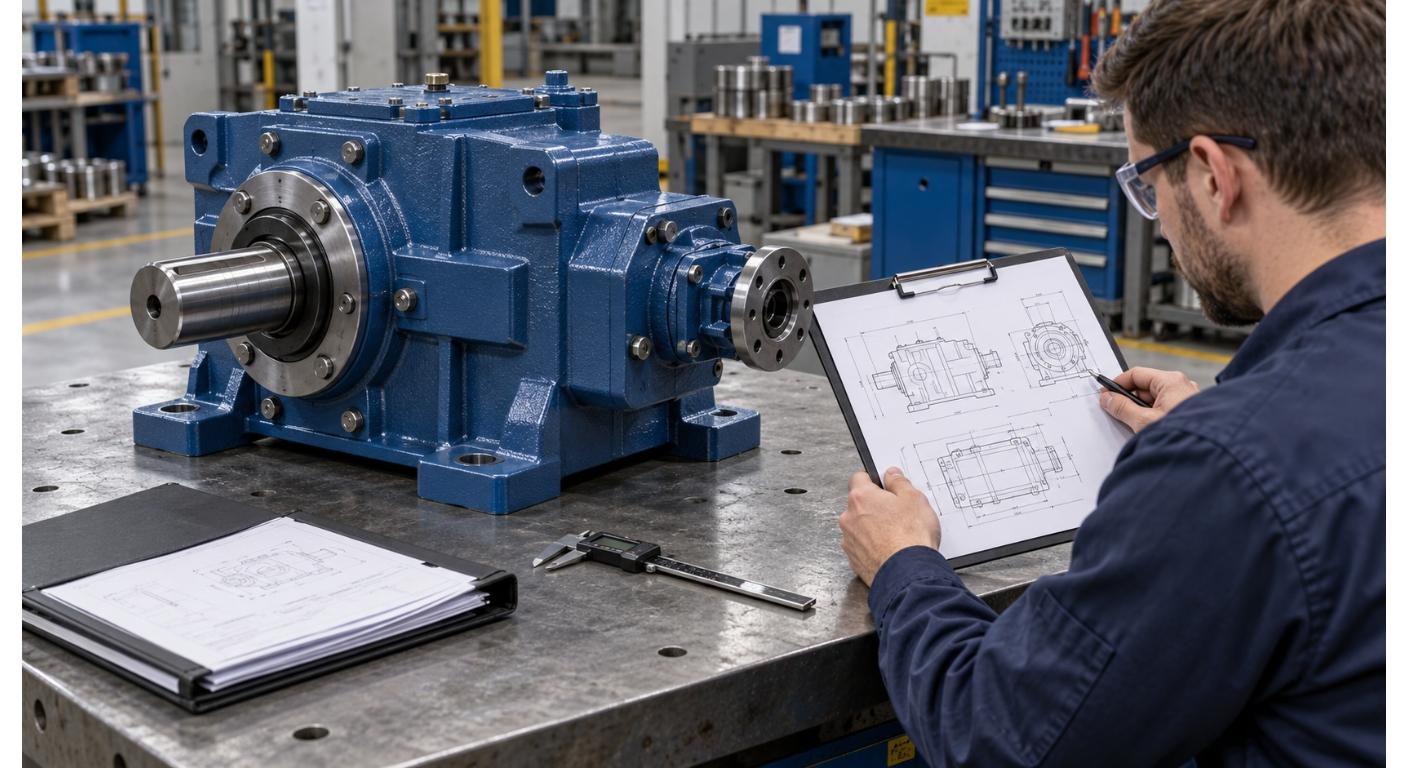
Choosing an Overhead Crane Gearbox by Its Hoisting or Travel Function
Oct 26, 2026
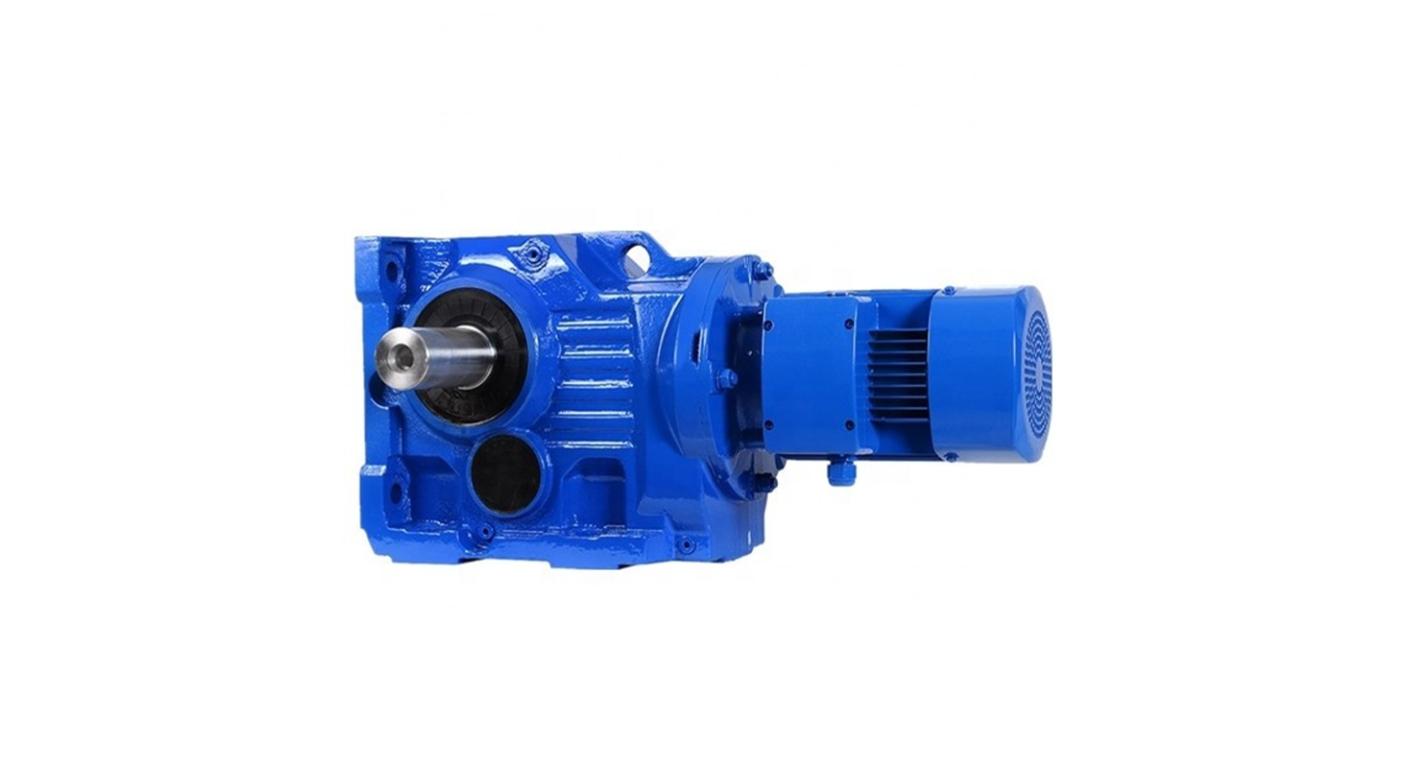
Replacing an Industrial Worm Gearbox: What to Keep and What to Reassess
Oct 25, 2026
A gearbox's reduction stages are the number of gear pairs working in series between input and output, and the practical rule is simple: one stage normally covers ratios up to roughly 10:1 for spur and planetary designs, a second stage extends that to about 100:1, and a third is needed beyond that. The deciding number is your required ratio.
Key takeaways
- Total reduction is the product of the stage ratios: 5:1 × 3:1 = 15:1, and 5 × 5 × 5 = 125:1 across three stages, with output torque gain roughly equal to the ratio once losses are set aside (Motion Control Tips).
- Single-stage spur gearboxes are practically limited to about 10:1, and multi-stage units normally combine single-stage ratios of 3 to 10, so a two-stage gearbox covers roughly 9:1 to 100:1 (Neugart).
- Single-stage gearboxes often exceed 95% efficiency and a well-designed single stage may reach 95–97%, while a four-stage unit can fall to 85–90% depending on design and lubrication (GearKo).
- The rule has exceptions: worm gearing can reach 60:1 or more in a single stage, and right-angle gearboxes are inherently multi-stage because they pair a bevel stage with a planetary stage (Motion Control Tips; Neugart).
- Each parallel-gear stage reverses output direction, so a two-stage gearbox outputs in the same direction as the input, while planetary stages maintain direction (Motion Control Tips).
What Is a Gearbox Reduction Stage?
A reduction stage is one gear pair — or one planetary set — that reduces speed and multiplies torque, and a gearbox's stage count is how many of these stages work in series between the input and the output. According to Motion Control Tips, a multi-stage gearbox combines two or more pairs of gears, with the output of one stage connected to the input of the next.
Because stages sit in series rather than side by side, both the ratio and the efficiency of the gearbox are products rather than sums. That single mechanical fact drives everything below.
In industrial practice the words gearbox and gear reducer are often used interchangeably; if you need the distinction, it is covered in gearbox vs gear reducer.
Single-stage gearbox
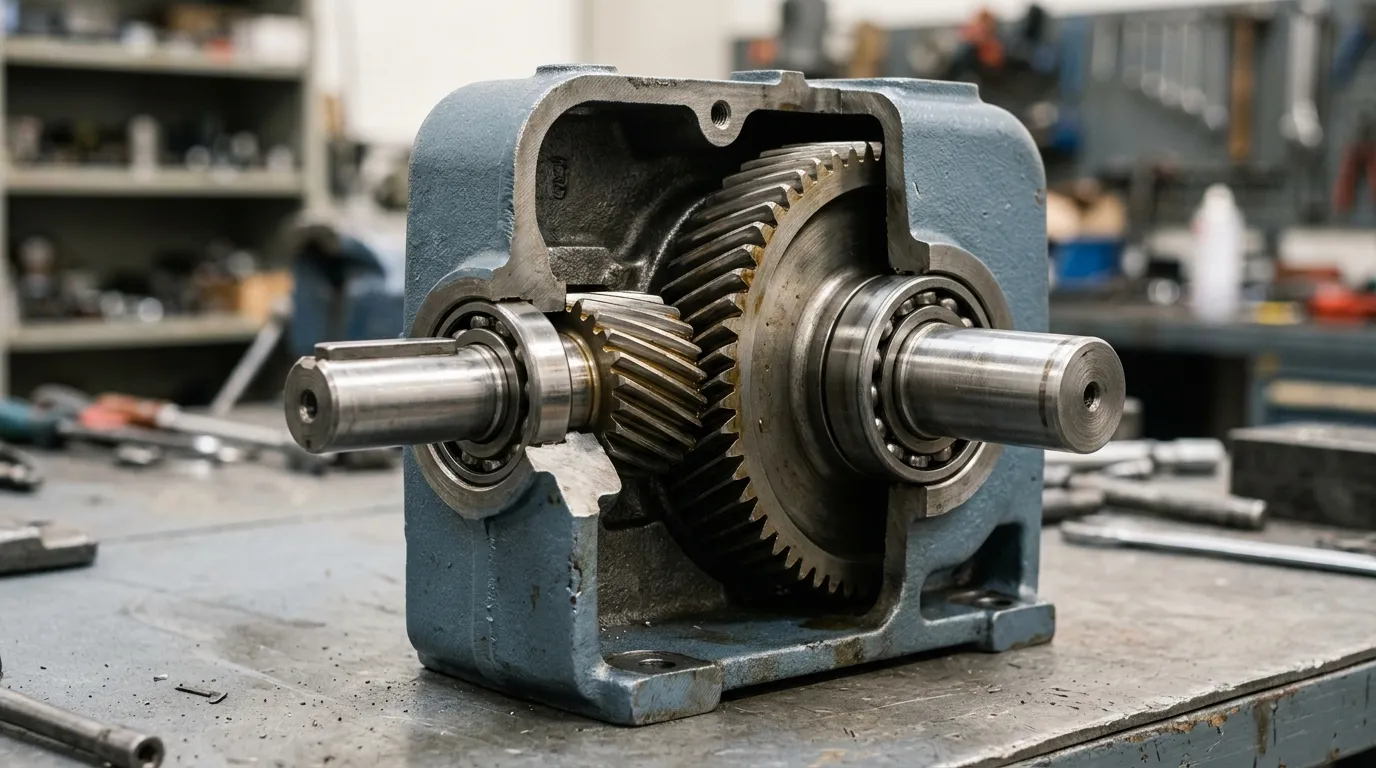
A single-stage gearbox has one gear pair, which makes it the simplest and most efficient arrangement and usually the least expensive per unit of ratio. Its limit is ratio. According to Neugart, single-stage spur gearboxes are practically limited to about 10:1, because beyond that point either the driving or the driven gear becomes very small, which reduces the maximum torque the pair can transmit. GearKo gives a similar single-stage ceiling of about 10:1 for planetary gearboxes.
Multi-stage gearbox
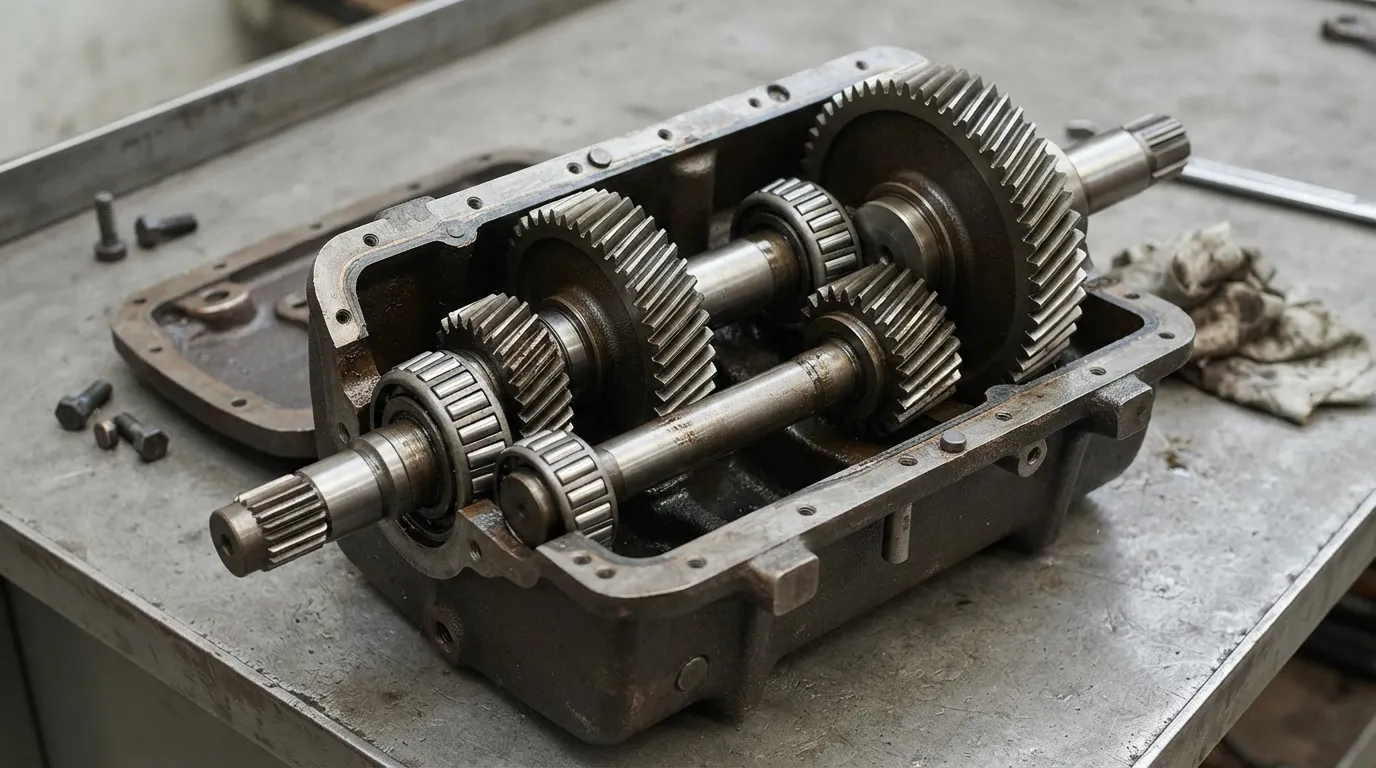
A multi-stage gearbox uses two or more stages in series and is chosen when one gear pair cannot deliver the required reduction safely. According to a Guomao comparison published in July 2026, splitting the ratio across two or three stages keeps gear geometry and shaft loads practical; the cost is that each extra stage adds gears, bearings, seals and oil contact surfaces, which increases friction and heat.
Neugart notes that multi-stage gearboxes normally combine single-stage ratios of 3 to 10, which is why a two-stage unit can cover roughly 9:1 (3 × 3) up to 100:1 (10 × 10).
How stage count changes rotation direction
Each parallel-gear stage reverses the direction of rotation, so a two-stage gearbox returns the output to the same direction as the input, and a three-stage unit reverses it again. According to Motion Control Tips, planetary stages behave differently: they maintain direction rather than reversing it.
This matters at the specification stage. If a machine layout assumes a particular shaft direction, the stage count is part of that decision, not a detail to settle after the ratio.
[DIAGRAM: One, two and three-stage reductions in series with input and output direction arrows]
How the Ratio Adds Up Across Stages
Total reduction is the product of the individual stage ratios — a 5:1 stage followed by a 3:1 stage gives 15:1. Motion Control Tips uses exactly that example and notes the output delivers roughly 15 times the motor torque once losses are set aside, and GearKo gives the three-stage version: 5 × 5 × 5 = 125:1.
Motion Control Tips also observes that in multi-stage gearboxes the highest ratio is usually placed at the input and the lowest at the output side.
The planetary special case
In a planetary stage with the sun gear driven and the ring gear held stationary, the stage ratio is i = 1 + Zr / Zs, where Zr is the ring gear tooth count and Zs is the sun gear tooth count. According to Motion Control Tips, that formula governs the stage, so planetary stage ratios are set by tooth counts rather than by a simple gear-pair relationship.
Three steps to size the stage count
- Calculate the required ratio: motor speed divided by required output speed. According to Guomao, this is done before the stage count is chosen.
- Factor the required ratio into stage ratios of roughly 3 to 10, the range Neugart reports for multi-stage units.
- Multiply the stage ratios back together to confirm the total matches the target.
If you are working backwards from an existing drive instead of a target ratio, that process is set out in gearbox ratio selection.
Single Stage vs Multi Stage Gearbox: Ratio Range Compared
A single stage is the efficient, compact answer up to roughly 10:1; two stages cover about 9:1 to 100:1; and above roughly 100:1 a third stage is normally required. Those bands are useful as a first screen, but they depend on gear type, so the two tables below should be read together.
Table A — practical single-stage ratio by gear type
| Gear type | Practical single-stage ratio | Source |
|---|---|---|
| Spur / helical | About 10:1; beyond this the gear pair becomes very small and torque capacity drops | Neugart |
| Planetary | About 10:1; one design guide gives a practical band of 3:1 to 12:1 | GearKo; Great Taiwan Gear (indicative) |
| Worm | Up to 60:1 or greater in one stage, but with lower efficiency than multi-stage designs | Motion Control Tips |
| Right-angle bevel + planetary | Inherently multi-stage, because a bevel stage is paired with a planetary stage | Neugart |
Table B — configuration comparison
| Configuration | Typical total ratio range | Typical per-stage ratios | Efficiency band | Size and weight tendency | Noise and backlash tendency | Relative part count | Relative cost | Typical applications |
|---|---|---|---|---|---|---|---|---|
| Single-stage | Up to about 10:1 for spur and planetary; commonly 1:1 to 1:6 | One stage | Often above 95%; a well-designed single stage may reach 95–97% | Most compact at low ratios | Fewest meshes, so least cumulative backlash | Lowest | Lowest up-front | Low-ratio conveying, high-efficiency drives |
| Two-stage | Roughly 9:1 to 100:1; commonly 1:6 to 1:100 or more | Two stages, typically 3 to 10 each | Below single-stage, above three and four-stage | Larger than a single stage at the same ratio would allow | More meshes, so more cumulative backlash and noise sources | Higher | Higher | Mixers, extruders, general industrial reduction |
| Three-stage | Roughly 100:1 to 1,000:1 (planetary) | Three stages | Falls again as stages are added | Larger and heavier for the same torque | Increases with stage count | Higher again | Higher again | Hoisting, feeding and high-ratio drives |
| Four-stage | 1,000:1 and above (planetary) | Four stages | Around 85–90% depending on design and lubrication | Largest of the four | Highest scope for cumulative noise | Highest | Highest | Very high reduction, specialist positioning |
The ratio bands above come from Neugart, GearKo, TANHON (page updated September 2026) and Great Taiwan Gear. TANHON gives a commonly cited single-stage band of 1:1 to 1:6 and a two-stage band of 1:6 to 1:100 or more, and works a 3:1 × 4:1 = 12:1 example. These are indicative bands, not guarantees: actual limits depend on gear type, tooth geometry, load and duty cycle.
[DIAGRAM: Efficiency versus stage count chart plotted from the 95–97% single-stage to 85–90% four-stage band]
When Does My Required Ratio Force a Second or Third Stage?
Compare your required ratio with the single-stage ceiling for your gear type: below roughly 8–10:1 a single stage normally suffices, from roughly 10:1 to 100:1 a second stage becomes necessary, and above roughly 100:1 a third stage is normally required — unless worm or right-angle gearing changes the answer. Five steps apply that rule.
- Find the required ratio. Divide motor speed by required output speed. Guomao places this before any stage-count decision.
- Compare it with the single-stage ceiling for your gear type, using Table A rather than one blanket figure.
- Check whether one stage can still carry the load. Neugart points out that as a single-stage ratio rises, the gears get smaller and maximum transmittable torque falls, so a ratio that is theoretically possible may not be practical.
- Add a second stage when the ratio or the load exceeds the single-stage limit, and a third above roughly 100:1.
- Re-check the exception branch. Worm gearing and right-angle designs may meet a given ratio with a different stage count than the rule predicts, and with different efficiency.
Where a source gives a narrower single-stage figure, treat it as an extra caution rather than a contradiction: Chamol Gear suggests single-stage gearing suits ratios of about 1 ≤ i ≤ 8, and that figure comes from a summary page rather than a full specification.
[DIAGRAM: Decision flow from required ratio to one, two or three stages, with a worm and right-angle branch]
Checklist before you accept a stage count
- Required ratio confirmed from motor speed and output speed.
- Single-stage ceiling checked for the actual gear type.
- Torque, duty cycle and start-stop frequency checked alongside the ratio.
- Direction of rotation confirmed for the machine layout.
- Mounting envelope and shaft positions confirmed.
- Thermal and lubrication conditions considered, not only the ratio.
What Each Added Stage Changes: Efficiency, Size, Noise and Cost
Every added stage buys ratio and torque but costs efficiency, part count, heat, noise potential and money. Stage count is a trade-off to be balanced, not a quality ranking.
According to Motion Control Tips, total efficiency is approximately the product of the individual stage efficiencies. GearKo's figures show what that means in practice: single-stage gearboxes often achieve above 95% efficiency and a well-designed single stage may reach 95–97%, while a four-stage gearbox can drop to around 85–90% depending on design and lubrication. Neugart adds a useful nuance — within two-stage planetary gearboxes, a ratio of i = 20 achieves higher efficiency than i = 100, so a higher ratio is not automatically a bigger efficiency penalty at the same stage count.
Worked comparison — efficiency compounds, it does not average. Take a two-stage unit where each stage runs at 97%. Multiplying the stage efficiencies gives 0.97 × 0.97 ≈ 0.94, or about 94% overall — roughly three percentage points lost to the second mesh. The same arithmetic across four stages is what produces the 85–90% band GearKo reports. Treat these figures as illustrations of the mechanism, not as ratings for any specific unit; the actual result depends on design and lubrication.
Size and noise. More stages mean more gears, more bearings and a longer housing for a given torque, and more meshes create more sources of cumulative backlash and noise. That is why a single stage stays the compact choice at low ratios, while a multi-stage unit can still be more compact than an oversized single stage at high ratios.
Cost. Guomao separates up-front cost from lifetime cost. Up-front, each additional stage adds a gear pair, bearings, seals and a longer housing. Over the life of the drive, extra oil contact surfaces and more heat to manage add inspection and maintenance surface. Cost should not decide the stage count on its own, but if budget is the binding constraint, the commercial side is covered under industrial gearbox price.
Efficiency must be judged by load, speed, ratio and duty cycle, not by stage count alone. Two gearboxes with the same stage count can perform very differently in a continuous mixing duty and an intermittent positioning duty.
Gear-Type Exceptions That Break the Rule
Three gear types break the simple "high ratio means many stages" rule, and each is worth checking before you accept a stage count.
Worm gearing. According to Motion Control Tips, worm gears can achieve very high ratios in a single stage — up to 60:1 or greater — without multiple gear trains, but their efficiencies tend to be lower than multi-stage designs. A high-ratio requirement therefore does not always force a second stage; it may force a different gear type instead.
Right-angle gearing. Neugart notes that right-angle gearboxes are inherently multi-stage, because they normally pair a bevel stage with a planetary stage. A right-angle unit with a modest ratio is still a two-stage design, which changes the efficiency expectations you should carry into the selection.
Planetary gearing. Planetary stages keep the output rotating in the same direction as the input, and their stage ratio follows i = 1 + Zr / Zs rather than a simple gear-pair count. The planetary case is worked through in detail under planetary gearbox ratio.
Common Mistakes When Choosing Stage Count
Four errors account for most poor stage-count decisions, and each has a straightforward correction.
- Choosing on ratio alone. Ratio sets the minimum stage count, not the answer. Torque, duty cycle and thermal capacity have to be checked alongside it, which is the sequence Guomao recommends.
- Assuming more stages always means a bigger gearbox. A multi-stage unit can be more compact than an oversized single stage at a high ratio, because the single stage would need impractically small gears (Neugart).
- Ignoring the efficiency penalty. Total efficiency is roughly the product of stage efficiencies, so each stage compounds the loss (Motion Control Tips; GearKo).
- Overlooking direction of rotation. Each parallel-gear stage reverses the output; planetary stages do not (Motion Control Tips). A machine layout that assumes the wrong direction costs a redesign.
Matching Stage Count to Real Industrial Drives
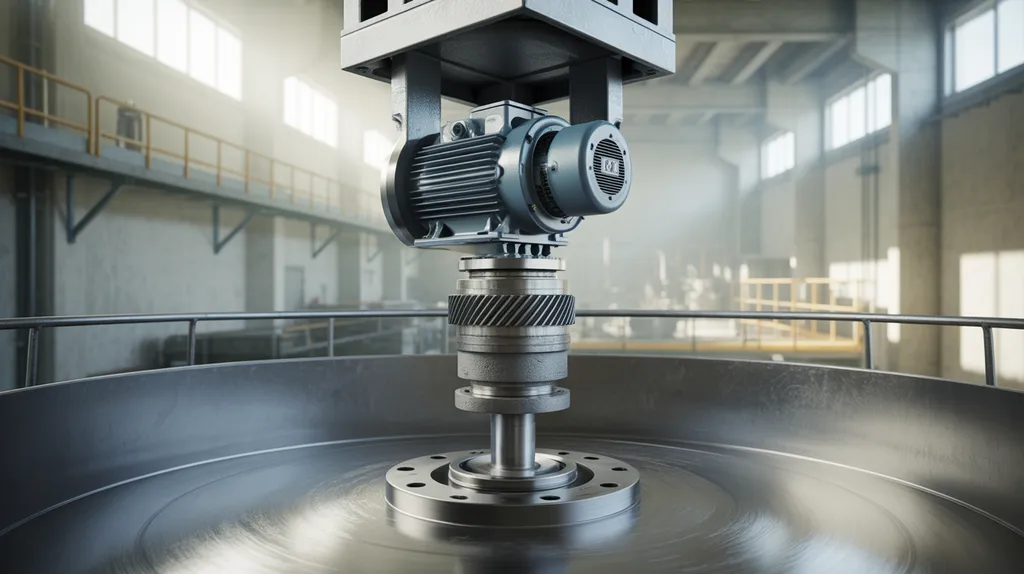
In practice the stage count follows the machine, not the other way round. Conveyors and material handling equipment usually sit in the single-stage or two-stage band, where efficiency and compactness matter more than extreme reduction. Mixers, extruders and paddle-driven equipment typically call for two or three stages to reach the lower output speeds those processes need. High-reduction hoisting, cement, mining and port duty tends toward three stages and above.
These are patterns rather than rules, and the ratio bands above — not a specific machine duty — remain the deciding factor.
Mingye designs, makes and supplies industrial power transmission equipment from Jinshan District, Shanghai, across more than 20 series that span both configurations: R, S, K and F series helical gear motors, HB series heavy-duty industrial gearboxes, heavy-duty planetary reducers, NMRV worm gear motors, cycloidal pinwheel reducers, cylindrical gear reducers, three-phase asynchronous motors and small gear motors, plus special reducers for rubber and plastic machinery, welding rotators and paddle mixers. The company builds both motors and reducers in its own CNC-equipped factory on modular, standardized designs and offers OEM customization of mounting dimensions and transmission ratios.
Getting the Stage Count Right for Your Machine
Send the required output speed, the required torque and the mounting envelope, and the stage count follows from the ratio. If your gear type changes — from helical to worm, or from inline to right-angle — re-run the rule, because the single-stage ceiling moves with it.
Mingye builds motors and reducers in the same factory on modular, standardized designs, with OEM customization of mounting dimensions and transmission ratios and normal delivery in 7–15 days. That combination helps when a stage-count decision and a housing or shaft change arrive together. The rest of the specification process, from ratio through mounting to duty verification, is set out in choosing an industrial gearbox.
If helical inline gear motors are the likely configuration for your drive, helical geared motor covers that family in more detail.
Frequently asked questions
Can a single-stage gearbox give a 100:1 reduction?
Not with spur or planetary gearing. According to Neugart, single-stage spur gearboxes are practically limited to about 10:1, and GearKo gives a similar ceiling for planetary units. Worm gearing is the exception: Motion Control Tips reports worm gears can reach 60:1 or greater in a single stage, though with lower efficiency. Treat every limit as gear-type dependent.
Is a multi-stage gearbox always less efficient than a single-stage one?
Generally yes, because total efficiency is approximately the product of the individual stage efficiencies, according to Motion Control Tips. GearKo's bands run from above 95% for a single stage — possibly 95–97% — down to about 85–90% at four stages. The size of the gap depends on design, load and lubrication, so it is not a fixed penalty.
Does a two-stage gearbox output in the same direction as the motor?
Yes, in a parallel-gear design. According to Motion Control Tips, each parallel-gear stage reverses the direction of rotation, so two stages return the output to the same direction as the input, and a three-stage unit reverses it again. Planetary stages behave differently and maintain direction rather than reversing it.
Does a multi-stage gearbox always cost more?
Up-front, usually. Guomao notes that each extra stage adds a gear pair, bearings, seals and a longer housing, and over the drive's life it adds oil contact surfaces and more heat to manage. But stage count should be chosen on ratio, torque and duty cycle first, so cost is a consequence of the technical decision rather than its driver.
Share on Social:


Contact Us
In This Article
Right Angle Geared Motor: Matching Electrical Supply, Variable Speed and Braking
Oct 26, 2026
Planning a Bevel Reducer Installation: Turn Shaft Requirements Into a Practical Drive Layout
Oct 26, 2026
Choosing an Overhead Crane Gearbox by Its Hoisting or Travel Function
Oct 26, 2026
Replacing an Industrial Worm Gearbox: What to Keep and What to Reassess
Oct 25, 2026