


 Home /
Standard Gearbox vs Custom Gearbox: Which One Fits Your Application?
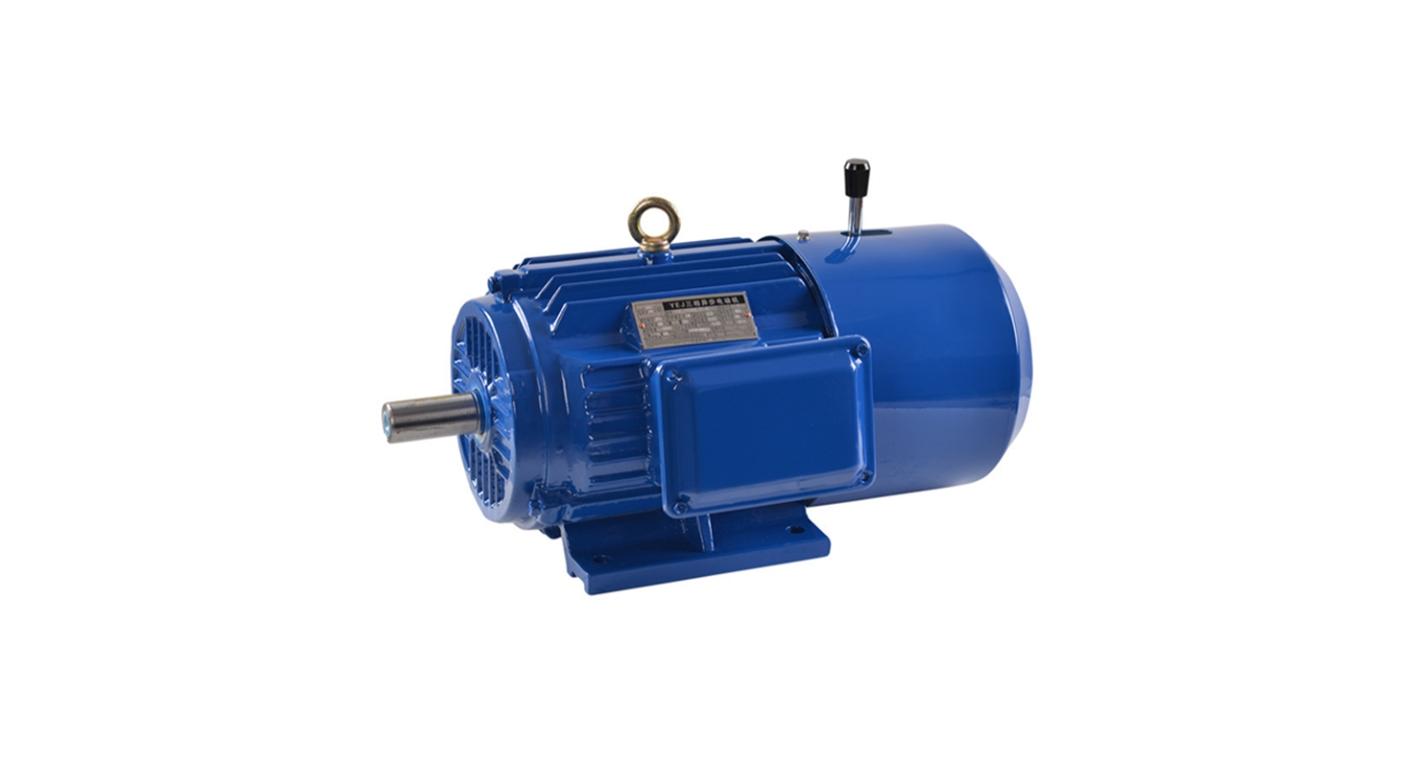
Right Angle Geared Motor: Matching Electrical Supply, Variable Speed and Braking
Oct 26, 2026
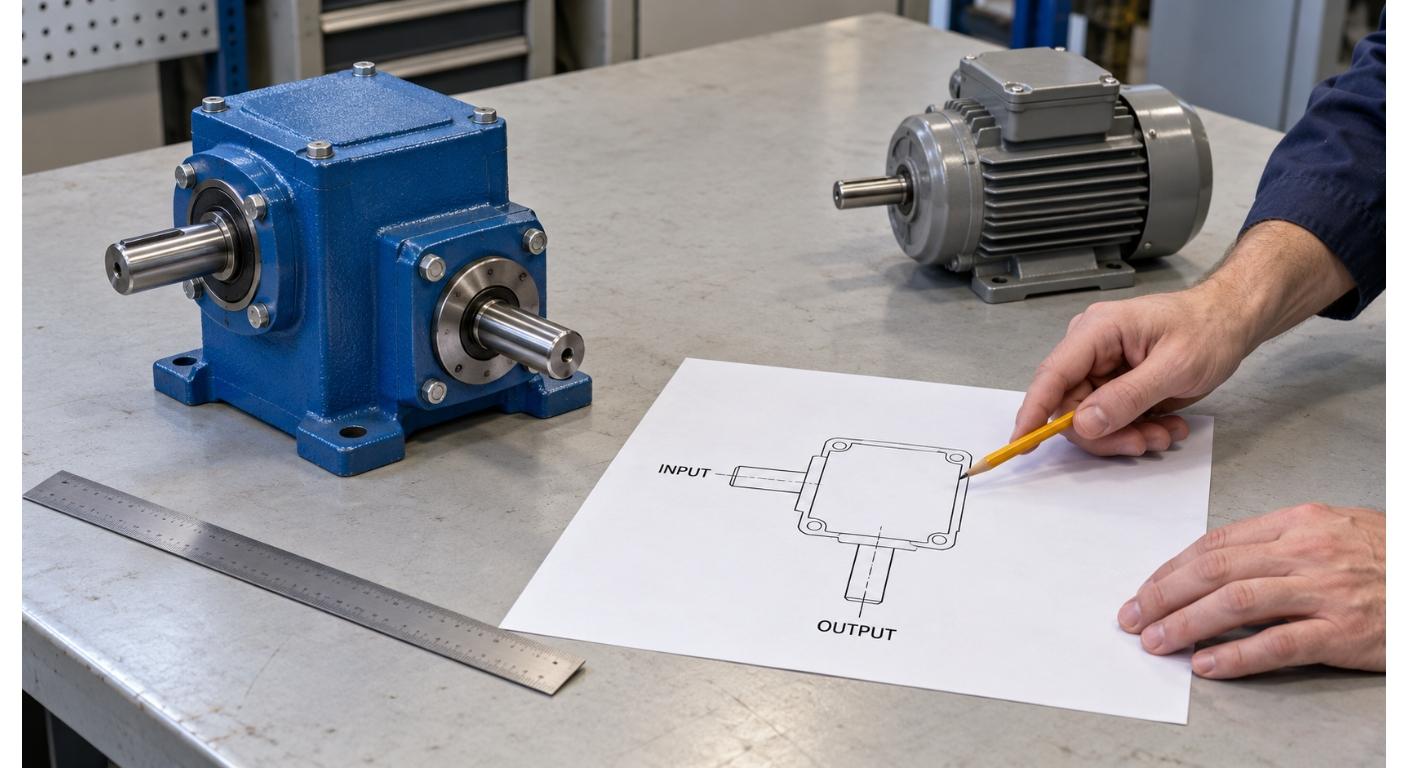
Planning a Bevel Reducer Installation: Turn Shaft Requirements Into a Practical Drive Layout
Oct 26, 2026
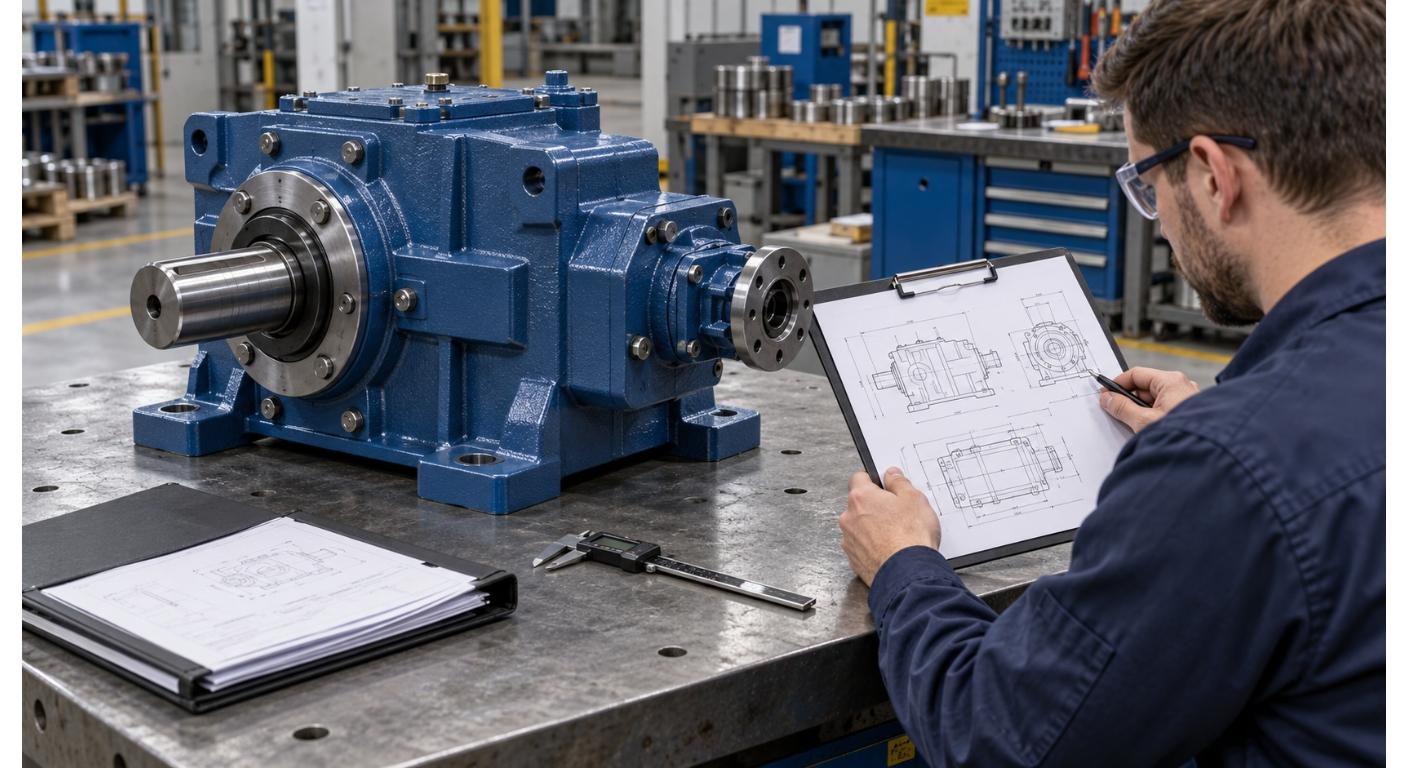
Choosing an Overhead Crane Gearbox by Its Hoisting or Travel Function
Oct 26, 2026
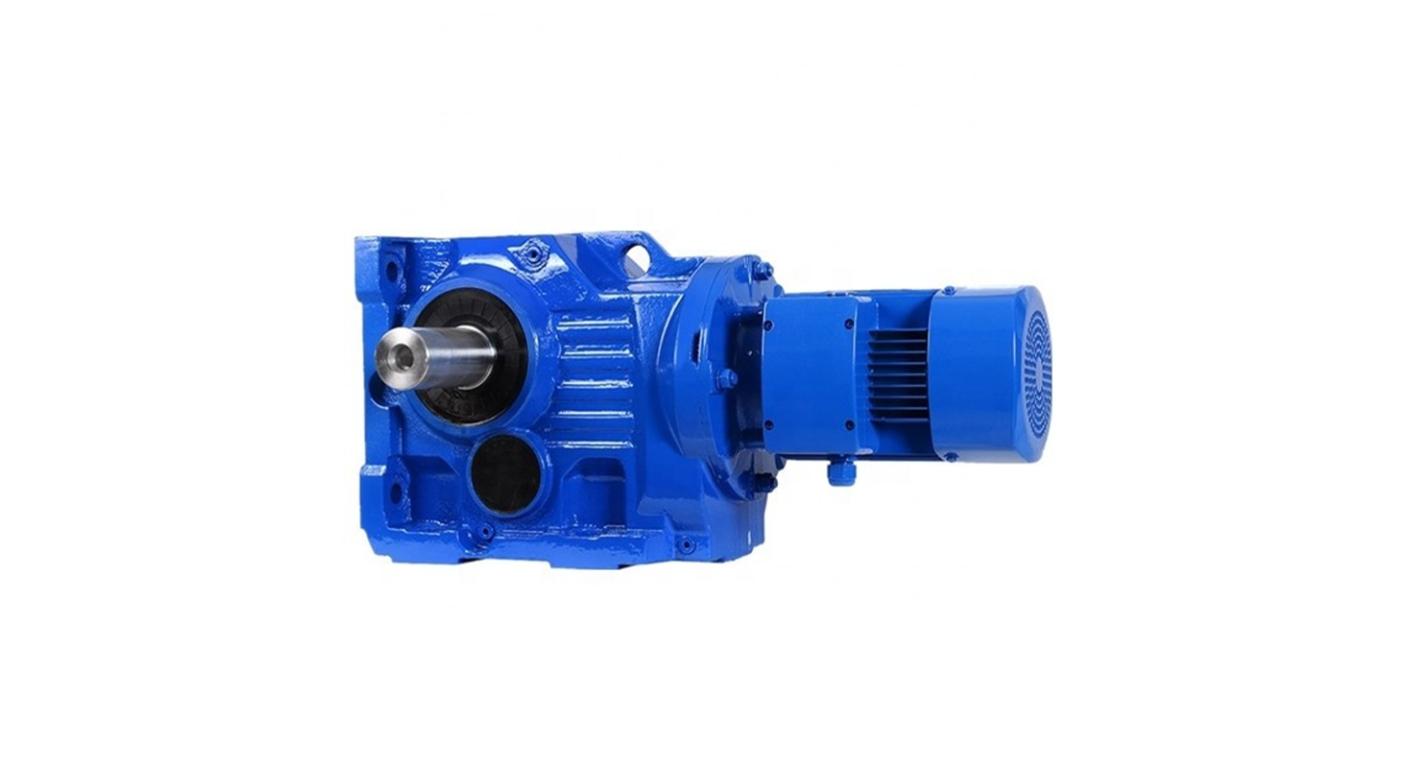
Replacing an Industrial Worm Gearbox: What to Keep and What to Reassess
Oct 25, 2026
Choose a standard gearbox when a catalogue unit meets your torque, ratio, and mounting requirements — it will be cheaper, faster to deliver, and easier to maintain. Choose a custom gearbox when your application's ratio, mounting dimensions, or space envelope cannot be met by any standard unit. A modular custom design can bridge the gap: custom fit with near-standard lead time.
What Is the Difference Between Standard and Custom Gearboxes?
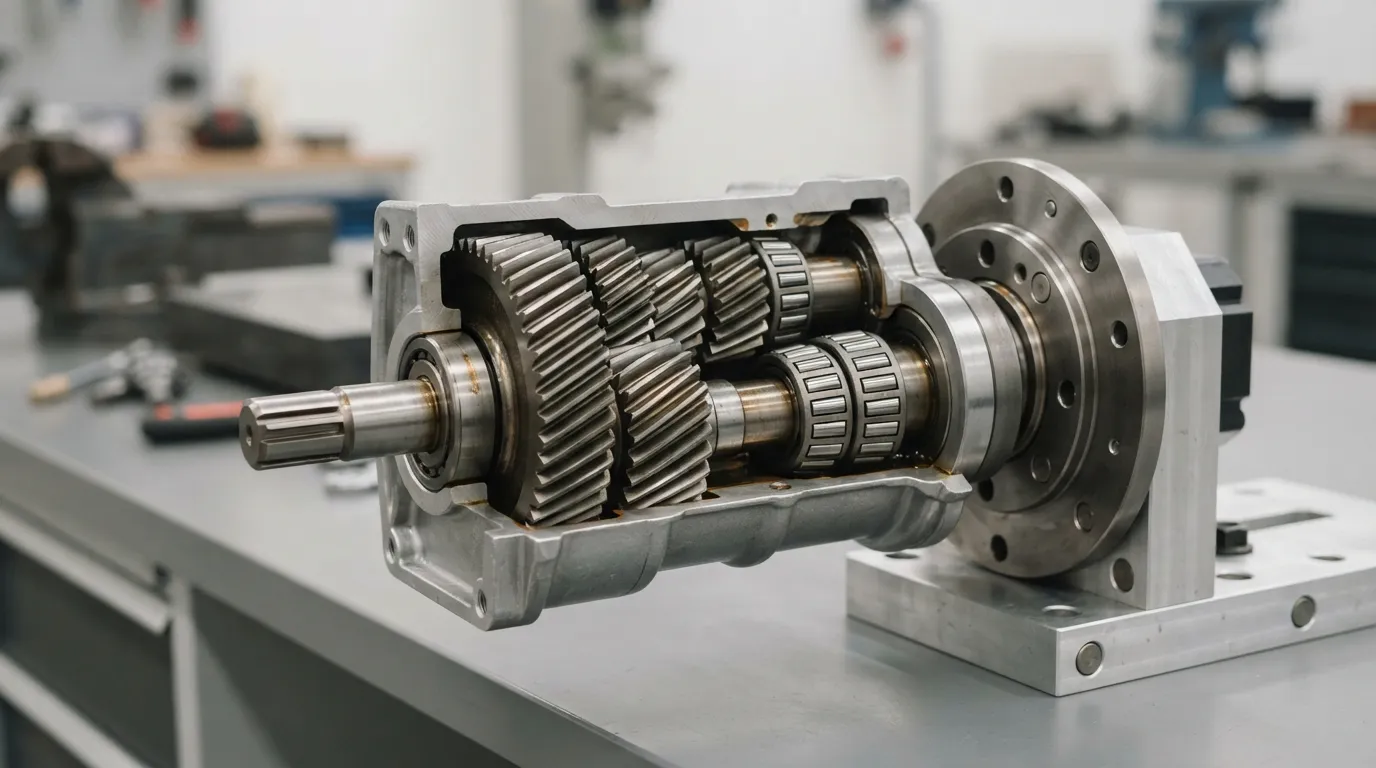
A standard gearbox is a catalogue product with fixed transmission ratios, mounting dimensions, and torque ratings that suit a wide range of general-purpose applications. A custom gearbox is engineered for one specific application, with its geometry, materials, or performance characteristics tailored to particular duty conditions.
Gearboxes convert high-speed, low-torque input from an electric motor into low-speed, high-torque output that drives industrial machinery. According to Venture Manufacturing Co., this conversion is essential for machines to function efficiently. The choice between standard and custom comes down to how closely your application matches what catalogue products already offer.
Custom gearboxes are designed for application-specific use, offer high flexibility, and can be optimized for performance — but they come at a higher cost and demand longer engineering lead times. Most industrial applications, however, can be handled by a standard unit without compromise.
Comparison: Standard vs Modular Custom vs Full Custom
The five dimensions that decide this purchase are cost, lead time, fit, performance, and spare-parts availability — and they trade off differently across standard, modular custom, and full custom options.
| Dimension | Standard Gearbox | Modular Custom Gearbox | Full Custom Gearbox |
|---|---|---|---|
| Initial cost | Lowest — no engineering or tooling charges | Moderate — custom mounting, standard internals | Highest — full design, material selection, and testing |
| Lead time | Short (7–15 days typical) | Near-standard (7–15 days typical) | Long (weeks to months, design-dependent) |
| Fit precision | Limited to catalogue options | Custom mounting and flanges; standard internal geometry | Fully tailored to your machine envelope |
| Performance | General-purpose ratings | Good — standard internals with application-matched interfaces | Fully optimized for duty cycle and service factor |
| Spare parts | High — off-the-shelf from multiple suppliers | Moderate — mix of standard and custom components | Low — depends on the original manufacturer |
According to Venture Manufacturing Co., custom gearboxes require a higher initial investment but can deliver long-run savings through reduced downtime and maintenance. That trade-off only makes sense when a standard unit forces real compromises.
When Should You Stay With a Standard Gearbox?
Stay with a standard gearbox when a catalogue model meets your torque, ratio, and mounting requirements within typical service factors — it is the lower-cost, lower-risk choice.
Standard gearboxes can fit most systems; custom gearboxes provide perfect fitment for specific requirements, according to Venture Manufacturing Co. The decision rule is simple: if you can mount it, match the ratio, and meet the torque with a standard unit, there is no engineering reason to pay more.
Mingye's range covers more than 20 series of standard gearboxes, including R, S, K, and F series helical gear motors, heavy-duty planetary reducers, NMRV worm gear motors, cycloidal pinwheel reducers, and cylindrical gear reducers. These catalogue options serve OEMs and plant engineers across plastics and rubber, mixing, conveying and material handling, packaging, mining, cement, power, and ports.
Applications Where Standard Gearboxes Usually Fit
Most conveying, packaging, mixing, and material handling applications can be met with standard catalogue units when the duty cycle is moderate. Here are typical matches:
- Conveying and material handling → helical gear motor (R or F series)
- Packaging machinery → compact helical gear motor (R or S series)
- Mixing and agitation → right-angle helical-bevel gear motor (K series)
- General power transmission → parallel shaft helical gear motor (F series)
A helical geared motor — a standard gearbox with an integrated motor — covers a large share of these applications. Mingye builds both motors and reducers in its own factory, so the motor-to-gearbox interface is engineered as one unit rather than as a compromise between two suppliers.
When Do You Need a Custom Gearbox?
You need a custom gearbox when ratio, mounting dimensions, space envelope, torque rating, or environmental conditions cannot be satisfied by any catalogue unit without compromising performance or reliability.
According to Venture Manufacturing Co., customization can apply at several levels: mounting options, gear ratios, housing materials, and shaft orientation. In robotics, for example, engineers turn to custom gearboxes when off-the-shelf units cannot deliver the required torque in the available space, when multiple motor inputs are needed, or when weight and brake integration matter — reasons documented in practitioner discussions on Chief Delphi.
Custom gearboxes also serve demanding industries such as aerospace, marine, defense, and energy, where applications range from high-speed power transmission to precision positioning, according to Riley Gear. If your requirement falls outside what a catalogue can deliver, a custom gearbox design is the correct route.
What Can Actually Be Customized?
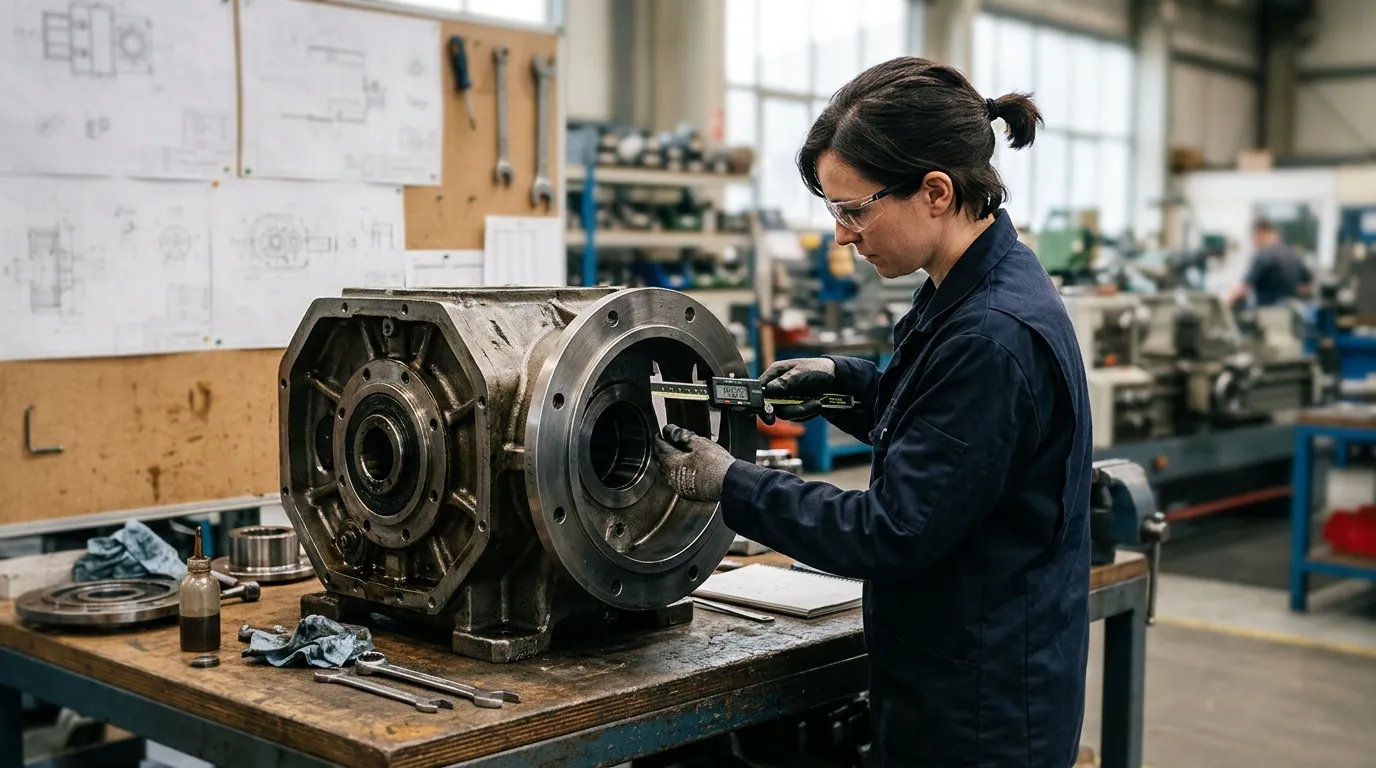
The main customizable parameters are transmission ratio, mounting dimensions, shaft orientation, housing design, and torque rating — not the entire gear design from scratch.
According to SGR Gear, custom gearbox design factors include torque requirements, speed ratio, operating environment, installation space, and service life. Here is what each parameter changes in practice:
| Parameter | What Changes | Typical Driver |
|---|---|---|
| Transmission ratio | Gear tooth counts and reduction stages | Speed matching to process requirements |
| Mounting dimensions | Flange patterns, bolt holes, base plates | Fitting to existing machinery interfaces |
| Shaft orientation | Input/output shaft position and direction | Machine layout constraints |
| Housing design | Material, enclosure rating, mounting feet | Environment, space envelope, corrosion resistance |
| Torque rating | Gear size, material grade, heat treatment | Duty cycle and overload conditions |
For a deeper look at what can be adjusted and what stays fixed, see our guide to gearbox customization torque ratio mounting.
Cost Comparison: Standard vs Custom Gearbox Price
Standard gearboxes are the lowest initial cost option. Custom units carry engineering, tooling, and testing costs that raise the upfront price — but can lower total ownership cost when they reduce downtime or improve efficiency.
The cost difference is not just a single line item. According to SGR Gear, the custom gearbox manufacturing sequence runs from application analysis through design, material selection, gear machining, heat treatment, assembly, and performance testing. Every one of those steps adds cost that a catalogue product spreads across thousands of identical units.
According to Venture Manufacturing Co., custom gearboxes require a higher initial investment but offer long-run savings through reduced downtime and maintenance. A properly sized custom unit can also run more efficiently than an oversized standard unit, which reduces energy consumption over its operating life.
Several factors determine how much more a custom unit costs: engineering hours, material grade, heat treatment requirements, batch size, and the scope of performance testing. For a detailed breakdown of what drives pricing in each gearbox type, see our industrial gearbox price guide.
When you compare quotes, weigh them against the total cost of ownership — purchase price plus maintenance, downtime, and energy over the gearbox's service life — rather than the initial purchase alone.
Lead Time: How Fast Do You Need It?
Standard gearboxes typically ship in days. Modular custom units can match near-standard lead times. Full custom projects take weeks to months depending on design complexity and batch size.
Mingye normally delivers standard and modular units in 7–15 days because it builds on modular, standardized designs rather than starting from a blank drawing. According to Newstart Gear, custom gearbox lead time depends on design complexity and production volume, and flexible manufacturing can reduce turnaround.
A full custom gearbox involves the complete engineering sequence described above: application analysis, design, material selection, gear machining, heat treatment, assembly, and performance testing. Each step takes time, and design approvals add further days. If your project cannot wait for that cycle, a modular custom gearbox is often the practical alternative.
Spare Parts and Maintenance: Standard vs Custom
Standard gearbox spares are available off the shelf from multiple suppliers. Custom units tie you to the original manufacturer for replacement gears, shafts, and seals — so confirm long-term support before ordering.
According to Riley Gear, the company has operated as a custom gearbox manufacturer for more than 70 years, which illustrates a practical point: custom gearbox manufacturers must remain in business and retain your drawings for decades to support your unit. If your custom gearbox supplier cannot guarantee that continuity, you face a single-source risk on every replacement part.
Custom gearbox manufacturing includes documentation requirements — AGMA quality control standards cover documentation alongside gear geometry, material selection, heat treatment, and precision manufacturing, according to Patsnap Eureka. That documentation is what makes future spares possible. Before ordering any custom unit, confirm that you will receive or retain full drawings and that the manufacturer commits to long-term spare parts support.
The custom gearbox design process should include a spare-parts strategy as part of the initial engineering scope, not as an afterthought.
How to Decide in 4 Steps
Follow these four steps: define your duty and torque, check catalogue fit, identify gaps, then choose standard, modular, or full custom.
- Define your duty cycle and torque requirements. Gather the motor power, output speed, torque demand, and service factor (how many hours per day the gearbox runs, and whether it sees shock loads).
- Check whether a catalogue model meets the ratio and mounting. Compare your required transmission ratio and mounting dimensions against the standard R, S, K, and F series, planetary, and worm gearbox ranges. Most applications will match within a few catalogue options.
- Identify the gaps. If no standard unit fits — the ratio is off, the mounting pattern does not match, or the space envelope is too tight — document exactly what is missing. A gap in mounting dimensions alone is easy to solve; a gap in torque rating or thermal capacity is more serious.
- Choose the appropriate route. If there are no gaps, buy standard. If the gaps are only in mounting interfaces or flanges, a modular custom gearbox solves it at near-standard lead time. If the gaps are in performance, geometry, or environmental conditions, a full custom gearbox is justified — and you should choose custom gearbox manufacturer with the right engineering depth.
The Modular Middle Path: Custom Fit, Near-Standard Lead Time
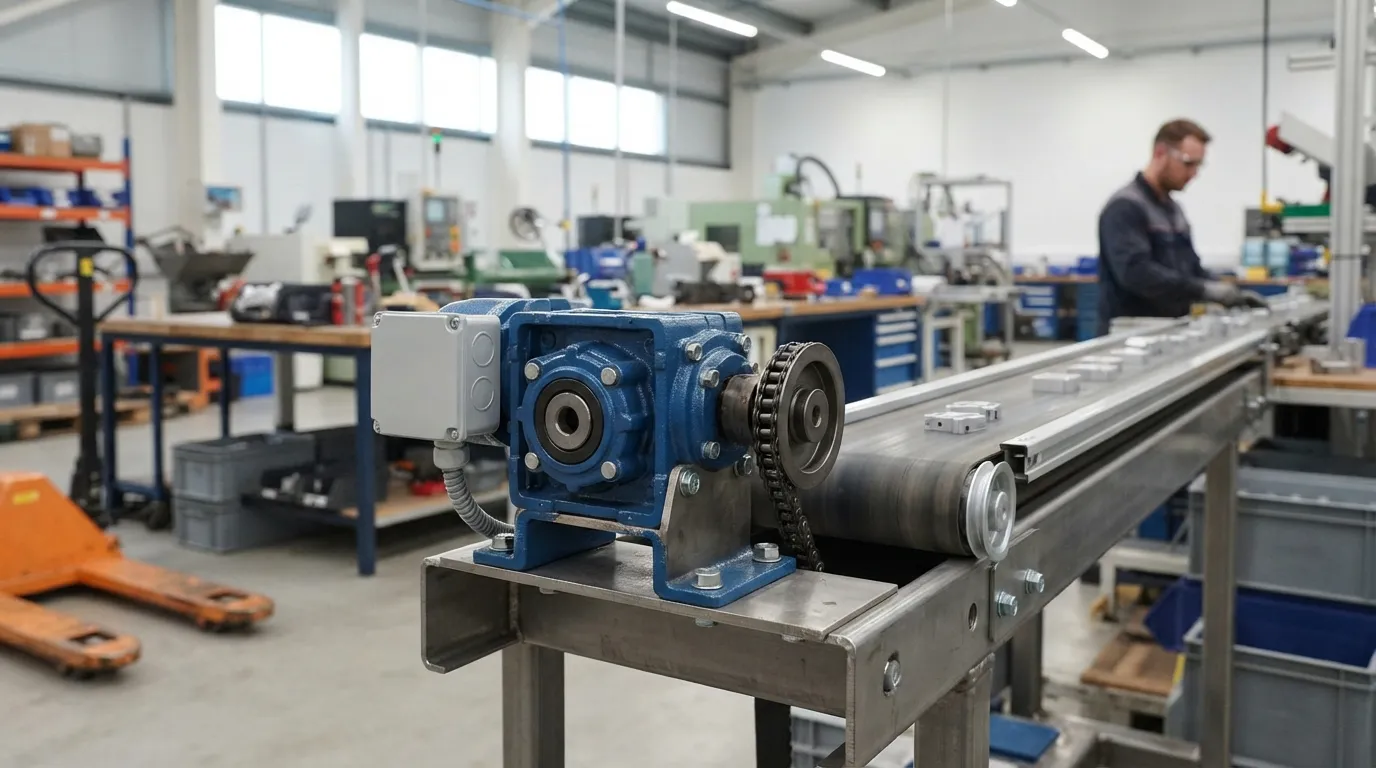
Modular customization uses standard internal gear components with custom flanges, shafts, or mounting interfaces — giving a custom fit while keeping lead times close to standard.
The engineering logic is straightforward: internal gears, bearings, and seals do not need to be redesigned for every application. The ratio and torque rating come from proven, tested standard components; only the interfaces — the mounting flange, bolt pattern, shaft position, or housing feet — are customized to match your machine.
Mingye builds both motors and reducers on modular, standardized designs and offers OEM customization of mounting dimensions and transmission ratios. Because the internal gear geometry stays standard, Mingye normally delivers modular custom units within its standard 7–15 day lead time.
This approach covers a large share of real-world "custom" requirements. Most applications do not need a fundamentally new gear design; they need a standard gearbox that mounts differently. If you are unsure whether your application needs a standard or custom unit, discuss your duty cycle and mounting constraints with a gearbox manufacturer early in the design process — it costs nothing and can save weeks later.
Share on Social:


Contact Us
In This Article
Right Angle Geared Motor: Matching Electrical Supply, Variable Speed and Braking
Oct 26, 2026
Planning a Bevel Reducer Installation: Turn Shaft Requirements Into a Practical Drive Layout
Oct 26, 2026
Choosing an Overhead Crane Gearbox by Its Hoisting or Travel Function
Oct 26, 2026
Replacing an Industrial Worm Gearbox: What to Keep and What to Reassess
Oct 25, 2026