


 Home /
How to Calculate Motor Power from Torque and Speed?
Right Angle Geared Motor: Matching Electrical Supply, Variable Speed and Braking
Oct 26, 2026
Planning a Bevel Reducer Installation: Turn Shaft Requirements Into a Practical Drive Layout
Oct 26, 2026
Choosing an Overhead Crane Gearbox by Its Hoisting or Travel Function
Oct 26, 2026
Replacing an Industrial Worm Gearbox: What to Keep and What to Reassess
Oct 25, 2026
Motor power is calculated as P (kW) = T (N·m) × n (rpm) ÷ 9550, where T is torque, n is speed, and 9550 is the conversion constant. In imperial units, P (hp) = T (lb-ft) × n (rpm) ÷ 5252. For a gear motor, divide the result by the combined gearbox and motor efficiency to get the actual motor power required.
Key Takeaways
- The metric formula is P (kW) = T (N·m) × n (rpm) ÷ 9550; the imperial version is P (hp) = T (lb-ft) × n (rpm) ÷ 5252, or P (hp) = T (lb-in) × n (rpm) ÷ 63025.
- The constant 9550 comes from unit conversion, not from any physical property of motors.
- The formula gives ideal shaft power; divide by gearbox efficiency to determine actual motor power needed.
- A motor delivering 14 N·m at 1450 rpm requires 2.13 kW before efficiency losses.
- The most common calculation errors involve mixing units, using the wrong speed, and forgetting efficiency.
Motor Power Formula from Torque and Speed
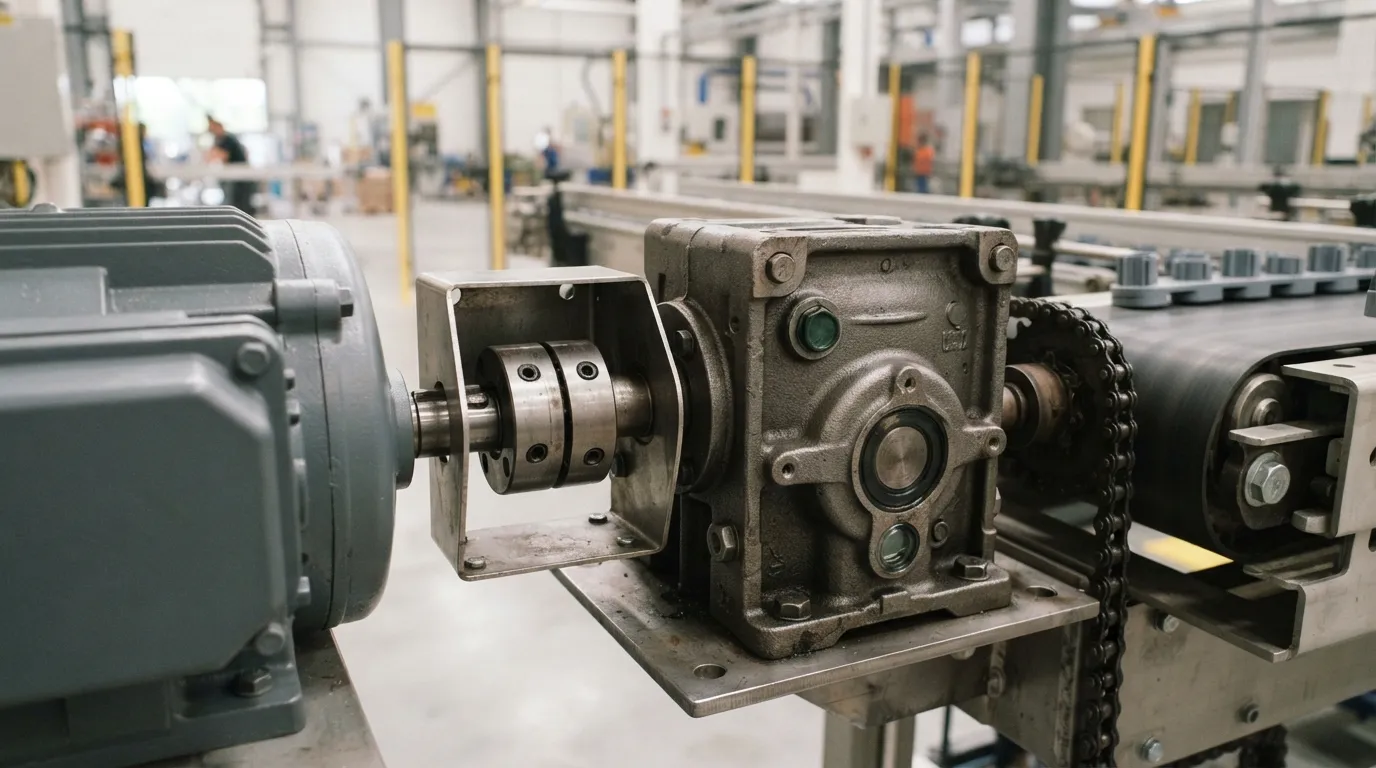
The fundamental relationship between power, torque, and rotational speed is P = T × ω, where P is power, T is torque, and ω is angular velocity in radians per second. When speed is expressed in revolutions per minute (rpm), this relationship becomes the practical engineering formulas below.
Power is the rate at which work is done, measured in watts (W) or kilowatts (kW). Torque is the rotational force that produces the work, measured in newton-meters (N·m) in the metric system or pound-feet (lb-ft) in the imperial system.
| System | Formula | Units | Constant | Use When |
|---|---|---|---|---|
| Metric (kW) | P = T × n ÷ 9550 | N·m, rpm, kW | 9550 | Standard industrial metric |
| Metric (W) | P = T × n ÷ 9.549 | N·m, rpm, W | 9.549 | Small motors and precision calcs |
| Imperial (hp) | P = T × n ÷ 5252 | lb-ft, rpm, hp | 5252 | NEMA motors in North America |
| Imperial (hp) | P = T × n ÷ 63025 | lb-in, rpm, hp | 63025 | Small imperial motors |
According to the Engineering ToolBox, the SI form of this relationship is T (N·m) = P (W) × 9.549 / n (rpm), which rearranges to the same power formula above. WEN Technology lists the equivalent constant as 9,548.8 for the same conversion.
Where Do the 9550 and 5252 Constants Come From?
The constant 9550 is not arbitrary. It combines three unit conversions into one number: rpm to radians per second (2π/60), minutes to seconds (60), and watts to kilowatts (1000). The exact calculation is 60,000 ÷ 2π ≈ 9549.3, which engineering practice rounds to 9550.
Angular velocity in radians per second is calculated as ω = 2πn/60, where n is speed in rpm. Substituting this into P = T × ω and converting watts to kilowatts produces the familiar P (kW) = T (N·m) × n (rpm) ÷ 9550.
The imperial constant 5252 comes from the definition of horsepower: 33,000 ft-lb/min divided by 2π. WEN Technology lists the exact metric constant as 9,548.8, while the rounded value 9550 is common in industrial practice. When precision matters, use 9549.3 or 9.549 for watt-based calculations.
Step-by-Step Worked Example — Metric
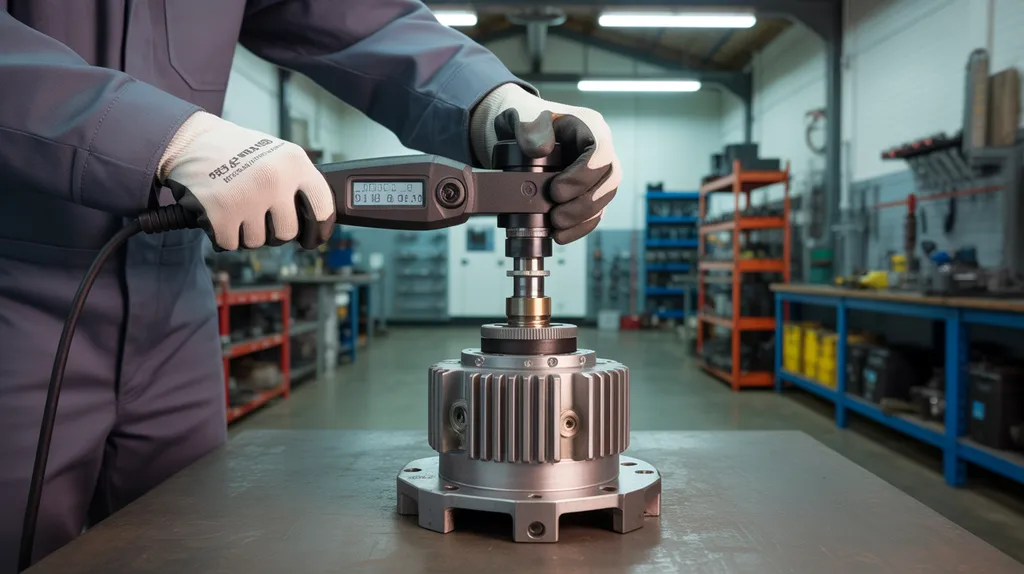
The best way to understand the calculation is to follow a complete example. This example uses metric units throughout.
Step 1: Write down the required torque and speed. A gear motor drives a conveyor that needs 14 N·m of torque at the output shaft, rotating at 1450 rpm.
Step 2: Apply the formula. P (kW) = T (N·m) × n (rpm) ÷ 9550 P = 14 × 1450 ÷ 9550
Step 3: Calculate the result. P = 20,300 ÷ 9550 = 2.13 kW
Step 4: Apply a safety factor for shock loads. If the conveyor has uneven loading or starts under load, multiply by a safety factor of 1.2 to 2.0 depending on the application severity.
Step 5: Record the ideal motor power. The ideal power is 2.13 kW before any efficiency losses are considered. The next standard motor size above this value would be 2.2 kW.
To check your understanding, consider the example from the Engineering ToolBox: an electric motor running at 3600 rpm with a measured power of 2000 W produces 5.3 N·m of torque. Applying the formula in reverse confirms this value.
Step-by-Step Worked Example — Imperial
The imperial calculation follows the same steps with the appropriate constant. This example uses pound-feet and horsepower.
Step 1: Write down the required torque and speed. A machine requires 10 lb-ft of torque at 1750 rpm.
Step 2: Apply the formula. P (hp) = T (lb-ft) × n (rpm) ÷ 5252 P = 10 × 1750 ÷ 5252
Step 3: Calculate the result. P = 17,500 ÷ 5252 = 3.33 hp
Step 4: Apply a safety factor if needed. For applications with shock loads, increase the result by 20–50% before selecting a motor.
Step 5: Record the ideal motor power. The ideal power is 3.33 hp. A standard 3.5 hp or 4 hp motor would be the typical next-size selection.
Remember that 1 hp equals 0.746 kW, and 1 lb-ft equals 1.356 N·m, so you can always convert between systems if the formula constant for your unit system is not readily available.
Unit Conversion Table
Converting between metric and imperial units is often necessary when motor data comes from different suppliers or standards.
| From | To | Multiply By |
|---|---|---|
| N·m | lb-ft | 0.738 |
| lb-ft | N·m | 1.356 |
| kW | hp | 1.341 |
| hp | kW | 0.746 |
| lb-in | N·m | 0.113 |
| N·m | lb-in | 8.851 |
These conversion values come from standard engineering references. The Engineering ToolBox confirms the 1 hp = 0.746 kW and 1 lb-ft = 1.356 N·m relationships used in this table.
How Gearbox Efficiency Changes the Motor Power Required
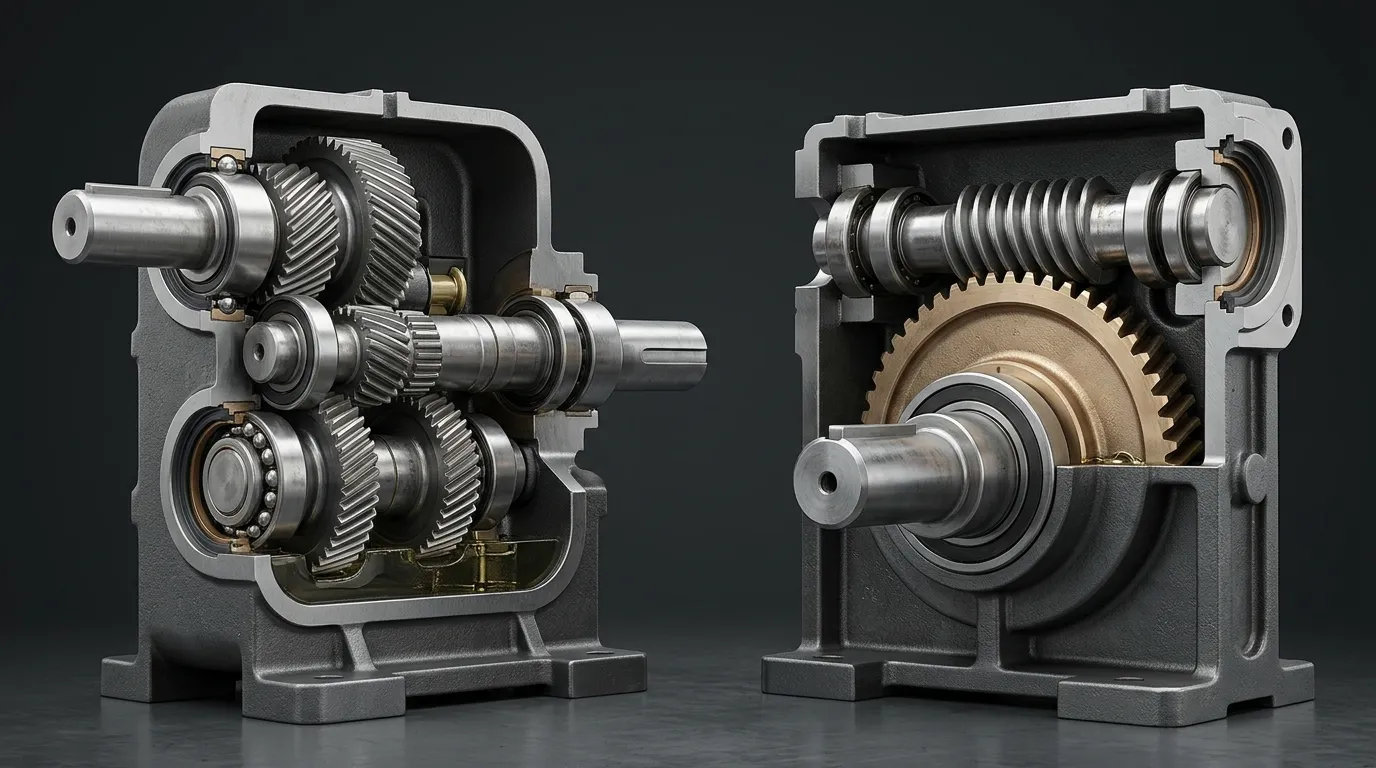
The power formula P = T × n ÷ 9550 gives the ideal output power at the shaft where torque and speed are measured. When a gearbox sits between the motor and the driven load, the motor must supply additional power to overcome friction and other losses inside the gearbox.
The corrected formula is:
Pmotor = (T × n ÷ 9550) ÷ (ηgearbox × η_motor)
Where ηgearbox is gearbox efficiency and ηmotor is motor efficiency, both expressed as decimals.
Gearbox efficiency depends on the type and number of reduction stages. Helical gearboxes typically achieve 94–98% efficiency per stage, while worm gearboxes are generally lower, typically 70–90% depending on the reduction ratio. Motor efficiency for three-phase asynchronous motors commonly ranges from 80–95% at full load.
Step 1: Calculate ideal power. From the earlier metric example: P = 14 × 1450 ÷ 9550 = 2.13 kW.
Step 2: Identify gearbox efficiency. A single-stage helical gearbox might operate at 95% efficiency, or η_gearbox = 0.95.
Step 3: Identify motor efficiency. A typical three-phase motor might operate at 90% efficiency, or η_motor = 0.90.
Step 4: Divide ideal power by the efficiency product. P_motor = 2.13 ÷ (0.95 × 0.90) = 2.13 ÷ 0.855 = 2.49 kW.
Step 5: Round up to the next standard motor rating. The calculated 2.49 kW means a 3 kW motor is required, not the 2.2 kW motor that the uncorrected formula suggested.
This efficiency correction is essential for accurate motor selection. Skipping it leads to undersized motors that overheat or fail under continuous load. When comparing different drive configurations, remember that gearbox ratio selection affects both the output torque and the efficiency of the drive train, so the two choices are linked.
Common Mistakes When Calculating Motor Power
Even experienced engineers make errors when converting torque and speed into motor power. The five mistakes below account for most incorrect calculations.
Mistake 1: Using motor speed instead of gearbox output speed. The torque value in the formula must correspond to the same shaft where the speed is measured. If the torque is measured at the output shaft of a gearbox, use the output speed, not the motor speed. The difference can be a factor of 10 or more with high-ratio gearboxes.
Mistake 2: Mixing metric and imperial units. The constant 9550 only works with N·m, rpm, and kW. The constant 5252 only works with lb-ft, rpm, and hp. Mixing N·m with rpm and hp, or lb-ft with rpm and kW, produces wrong results that may not be obviously incorrect.
Mistake 3: Forgetting efficiency losses. The formula gives ideal power. Real gear motors lose energy as heat through the gearbox and motor. Dividing by the combined efficiency is not optional for applications that run continuously.
Mistake 4: Using 9550 when torque is in pound-feet. A common error is applying the metric constant to imperial torque values. Check your units before calculating.
Mistake 5: Ignoring the safety factor for shock loads. Conveyors with uneven loading, mixers with viscous materials, and equipment that starts under load all require additional power margin. For a deeper understanding of how torque and speed interact specifically in gear motor applications, see our gear motor torque speed calculation guide.
Quick-Reference Table — Common Motor Power Ratings vs Torque at Typical Speeds
The table below shows the ideal torque available from common motor power ratings at typical speeds. Use it to check whether your calculated torque requirement matches a standard motor size.
| Motor Power (kW) | Torque at 100 rpm (N·m) | Torque at 500 rpm (N·m) | Torque at 1450 rpm (N·m) |
|---|---|---|---|
| 0.75 kW | 71.6 | 14.3 | 4.9 |
| 1.5 kW | 143.2 | 28.6 | 9.9 |
| 2.2 kW | 210.1 | 42.0 | 14.5 |
| 3.7 kW | 353.4 | 70.7 | 24.4 |
| 5.5 kW | 525.3 | 105.1 | 36.2 |
| 7.5 kW | 716.3 | 143.3 | 49.4 |
| 11 kW | 1050.5 | 210.1 | 72.4 |
| 15 kW | 1432.5 | 286.5 | 98.8 |
Values are calculated from T = P × 9550 ÷ n and represent ideal torque before efficiency losses. A motor producing 0.75 kW at 2000 rpm delivers 3.6 N·m of torque, matching the Engineering ToolBox's published example.
From Calculation to Motor Selection
Once you have calculated the required motor power and know your output torque and speed, the next step is matching a complete motor and gearbox combination to your application. The calculation gives you the power rating, but the final selection also depends on mounting dimensions, transmission ratio, duty cycle, and environmental conditions.
Understanding what size electric motor you need is the immediate next step after completing the power calculation. For a full selection framework that covers all the variables beyond the basic power requirement, start with our guide to choosing an industrial electric motor.
OEMs specifying complete drive trains should also consult our gear reduction motor buying guide for oems, which covers the additional considerations for production equipment. Where helical geared motors are suitable for your application, they offer higher efficiency than alternative designs. Mingye engineers can review your duty data and help match a motor and gearbox to your calculated torque and speed requirements — contact us with your specifications.
FAQ
What is the formula for motor power from torque and speed?
The metric formula is P (kW) = T (N·m) × n (rpm) ÷ 9550. In imperial units it is P (hp) = T (lb-ft) × n (rpm) ÷ 5252, or P (hp) = T (lb-in) × n (rpm) ÷ 63025.
What does the 9550 constant mean?
The 9550 converts rpm to radians per second, minutes to seconds, and watts to kilowatts in one factor. It equals 60,000 ÷ 2π ≈ 9549.3, rounded to 9550 for everyday engineering use.
Does gearbox efficiency affect motor power calculation?
Yes. The formula gives ideal shaft power. Divide it by the combined gearbox and motor efficiency to get the actual motor power needed: Pmotor = (T × n ÷ 9550) ÷ (ηgearbox × η_motor).
Share on Social:


Contact Us
In This Article
Right Angle Geared Motor: Matching Electrical Supply, Variable Speed and Braking
Oct 26, 2026
Planning a Bevel Reducer Installation: Turn Shaft Requirements Into a Practical Drive Layout
Oct 26, 2026
Choosing an Overhead Crane Gearbox by Its Hoisting or Travel Function
Oct 26, 2026
Replacing an Industrial Worm Gearbox: What to Keep and What to Reassess
Oct 25, 2026