


 Home /
How to Select a Planetary Gearbox for High Torque?
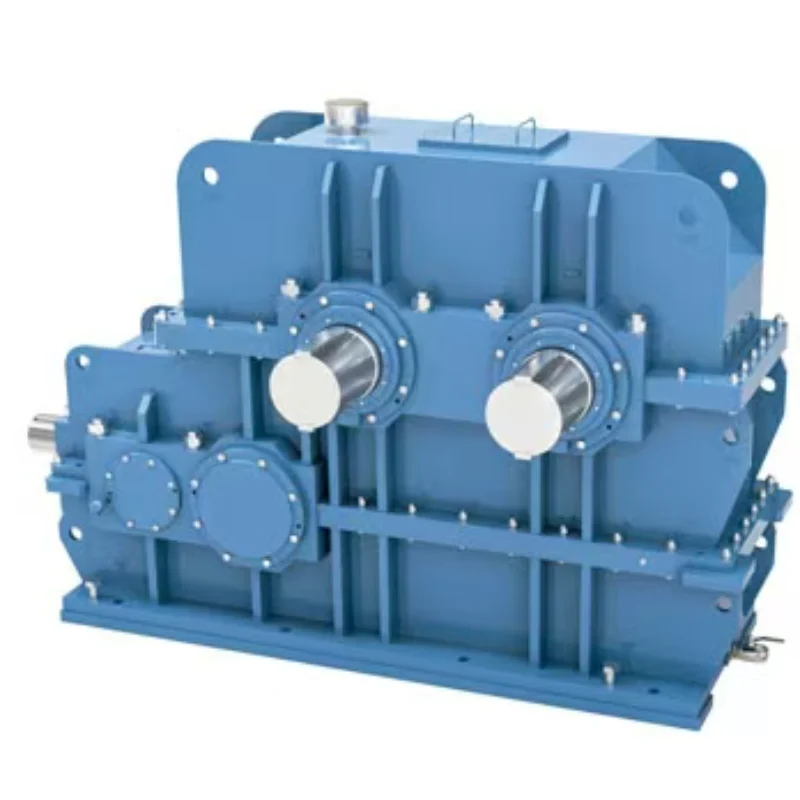
Rubber Internal Mixer Gearbox: Read the Batch Load Profile, Not Just Motor kW
Oct 22, 2026
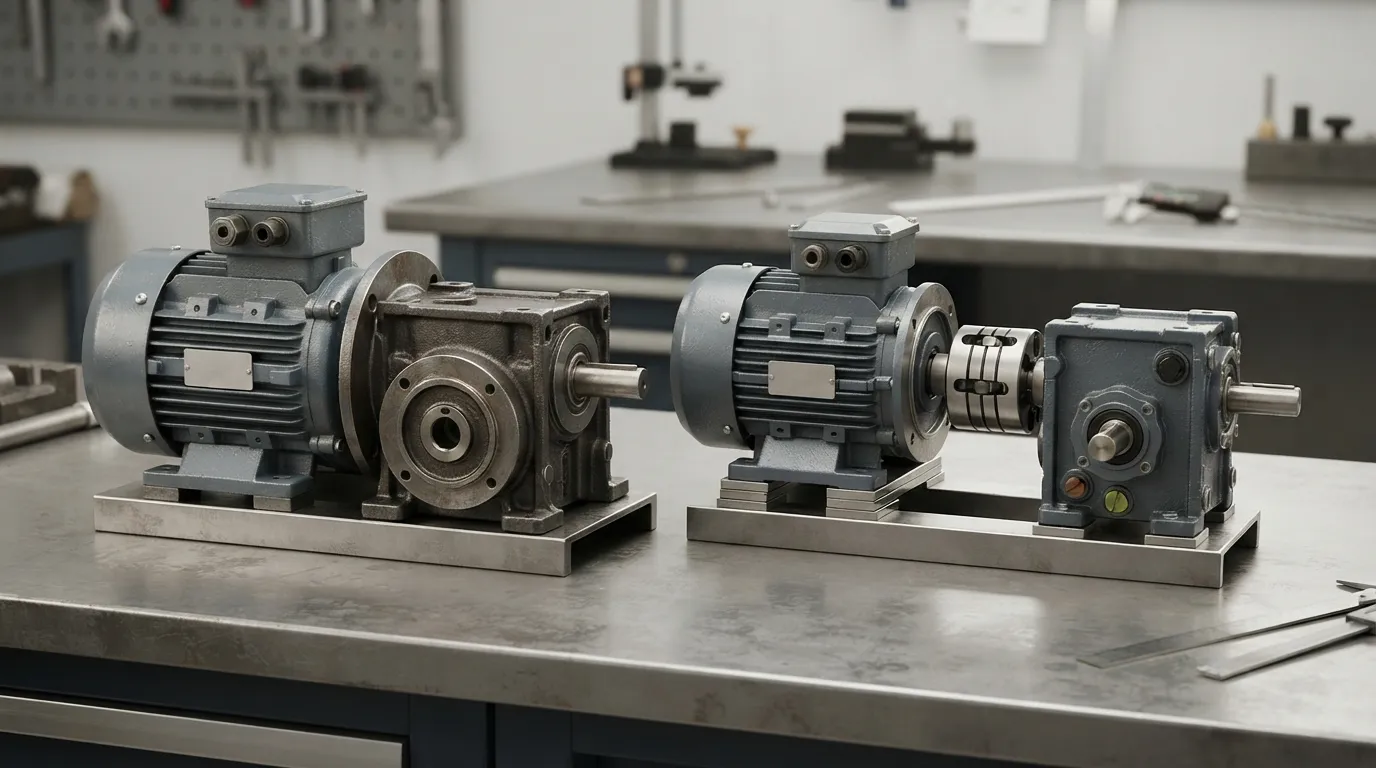
Hot Industrial Gearbox Coupling After Cold Alignment: What to Check
Oct 22, 2026
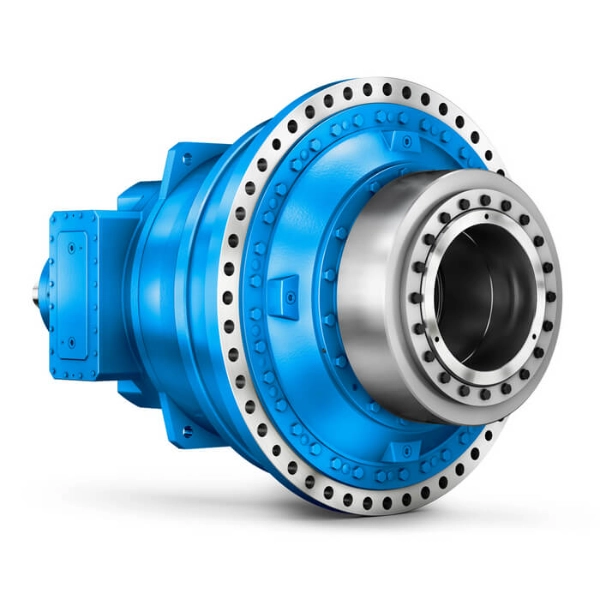
Hydraulic Slewing Drive Won't Rotate: Separate Motor, Brake and Gearbox Faults
Oct 22, 2026
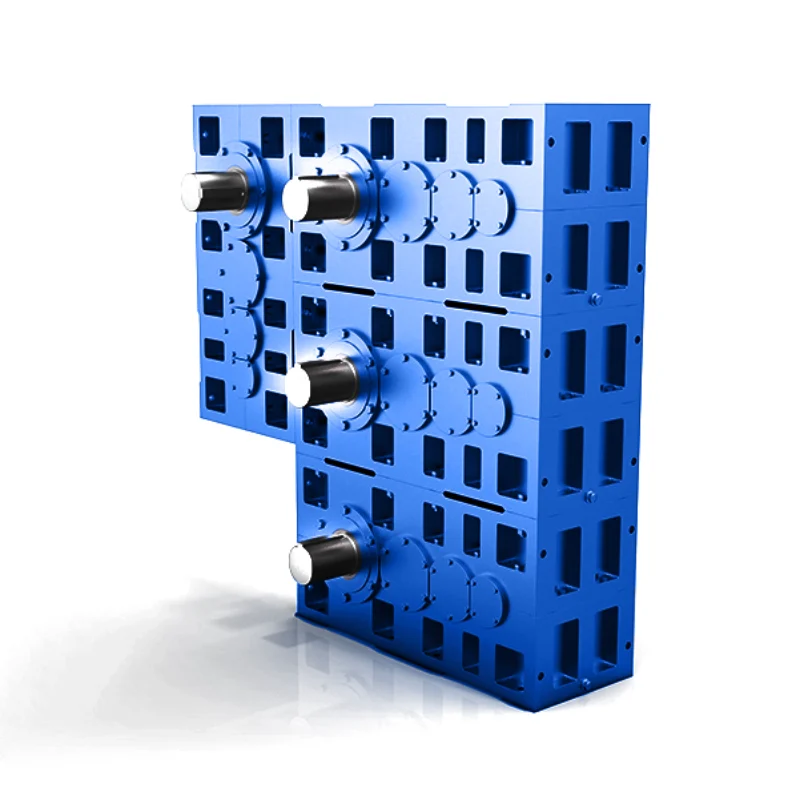
Calender Roll Gap Changes: What Must the Drive Coupling Accommodate?
Oct 22, 2026
To select a planetary gearbox for high torque, size the unit on peak torque multiplied by a service factor — not just nominal torque — then verify the output bearing and shaft can handle the radial and axial loads from your application. Heavy-duty planetary reducers from manufacturers like Mingye are designed for the continuous high loads found in mills, mixers, and hoists.
What Torque Values Matter for a Planetary Gearbox?
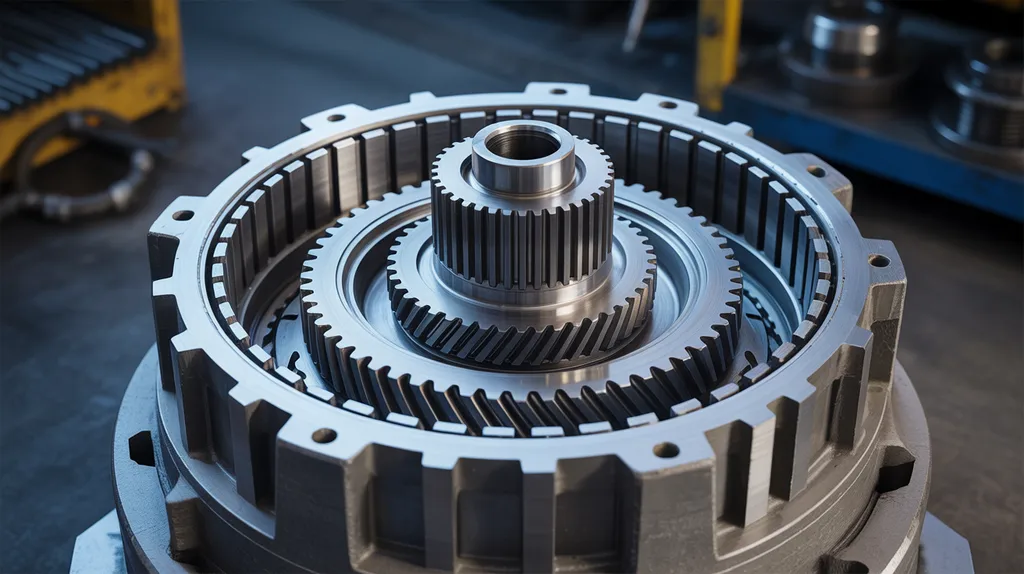
Three torque values matter when selecting a planetary gearbox: nominal torque, peak torque, and emergency stop torque. For high-torque applications, peak torque with a service factor governs the selection, not nominal torque alone.
Nominal torque is the continuous torque the gearbox can transmit under rated conditions. According to Sesame Motor, nominal torque typically refers to 20,000 hours of operation at nominal input speed. This is the baseline rating found in most manufacturer catalogs.
Peak torque is the maximum torque the gearbox can handle during acceleration, shock loads, or momentary overloads. This value is critical for applications with variable loading or frequent start-stop cycles.
Emergency stop torque is the absolute maximum torque the gearbox can withstand for a very short duration. According to Sesame Motor, emergency stop torque is typically 3× nominal output torque.
| Torque Type | Definition | When It Governs Selection | Typical Relationship to Nominal |
|---|---|---|---|
| Nominal torque | Continuous torque under rated conditions | Steady, uniform loads with low variability | 1× (baseline rating) |
| Peak torque | Maximum torque during acceleration or shock | Variable loads, frequent starts, impact loading | 1.5–2× nominal (application-dependent) |
| Emergency stop torque | Absolute maximum for very short duration | Worst-case overload, safety checks | Approximately 3× nominal |
How to Calculate the Required Output Torque
Calculate the required output torque using the formula T (Nm) = (P × 9546) / N, where P is motor power in kilowatts and N is output speed in RPM.
According to Top Gear Transmission, this formula provides the fundamental torque requirement before any application factors are applied.
Numbered steps to calculate required output torque:
- Determine the motor power in kilowatts (kW) from the motor nameplate or specification sheet.
- Determine the required output speed in RPM at the driven equipment.
- Apply the formula: T = (P × 9546) / N.
- Multiply the result by the application service factor (covered in the next section).
This calculation gives you the nominal torque requirement. The peak torque requirement is then derived by applying the service factor and considering the specific load profile of your application.
What Is a Service Factor and How Do You Apply It?
A service factor is a multiplier applied to the calculated torque to account for load characteristics, duty cycle, and operating conditions. For typical industrial high-torque applications, service factors of 1.5 to 2.0 are common, according to TEA GmbH.
The service factor protects the gearbox against unexpected loads, starting torque spikes, and long-term fatigue. Choosing a higher service factor increases reliability but also increases size and cost.
| Application Type | Duty Cycle | Indicative Service Factor |
|---|---|---|
| Continuous uniform load | 24/7 operation, steady load | 1.0–1.25 |
| Moderate shock load (mixers, agitators) | 8–16 hours/day, some load variation | 1.25–1.5 |
| Heavy shock load (hoists, mills, crushers) | Intermittent or continuous, high impact | 1.5–2.0 |
| Intermittent operation with frequent starts | Reversing or frequent start-stop cycles | 1.5–2.0+ |
The service factor is applied by multiplying the calculated nominal torque: Required torque = Nominal torque × Service factor. This final value is what you compare against the gearbox's rated output torque.
How Does Gear Ratio Affect Torque Output?
Gear ratio multiplies input torque while reducing output speed — a 10:1 ratio reduces speed by 10× and increases torque by approximately 10× (minus efficiency losses).
Internal gear ratio follows the Willis equation: i = 1 + (zring / zsun), where zring is the number of teeth on the ring gear and zsun is the number of teeth on the sun gear, according to TEA GmbH.
Practical ratio ranges depend on the number of stages:
- Single-stage planetary gearboxes: Ratios of 3:1 to 10:1
- Two-stage planetary gearboxes: Ratios of 9:1 to 100:1
- Three-stage planetary gearboxes: Ratios up to 1000:1
When selecting a ratio for high torque, remember that higher ratios multiply torque more aggressively but introduce more stages and efficiency losses. The trade-off is between torque capacity and mechanical complexity. For deeper guidance on ratio selection, see our planetary gearbox ratio guide.
What Efficiency Should You Expect from a Planetary Gearbox?
Single-stage planetary gearboxes achieve 95–98% efficiency, while two-stage units achieve 92–95%, according to Reckon Drives. The efficiency directly affects how much input power reaches the output shaft as usable torque.
Planetary gearboxes achieve this high efficiency through multiple gear engagements sharing the load, as explained by STOBER. Unlike worm gearboxes that can drop below 50% efficiency at certain ratios, planetary designs maintain high efficiency across their ratio range.
| Stage Count | Ratio Range | Efficiency Range |
|---|---|---|
| Single-stage | 3:1 to 10:1 | 95–98% |
| Two-stage | 10:1 to 100:1 | 92–95% |
Efficiency matters for high-torque selection because lower efficiency means you need more input power to achieve the same output torque, and more energy is lost as heat. For continuous high-torque applications, this can create thermal challenges that require a larger gearbox than torque calculations alone would suggest.
How to Verify Output Bearing and Shaft Loads
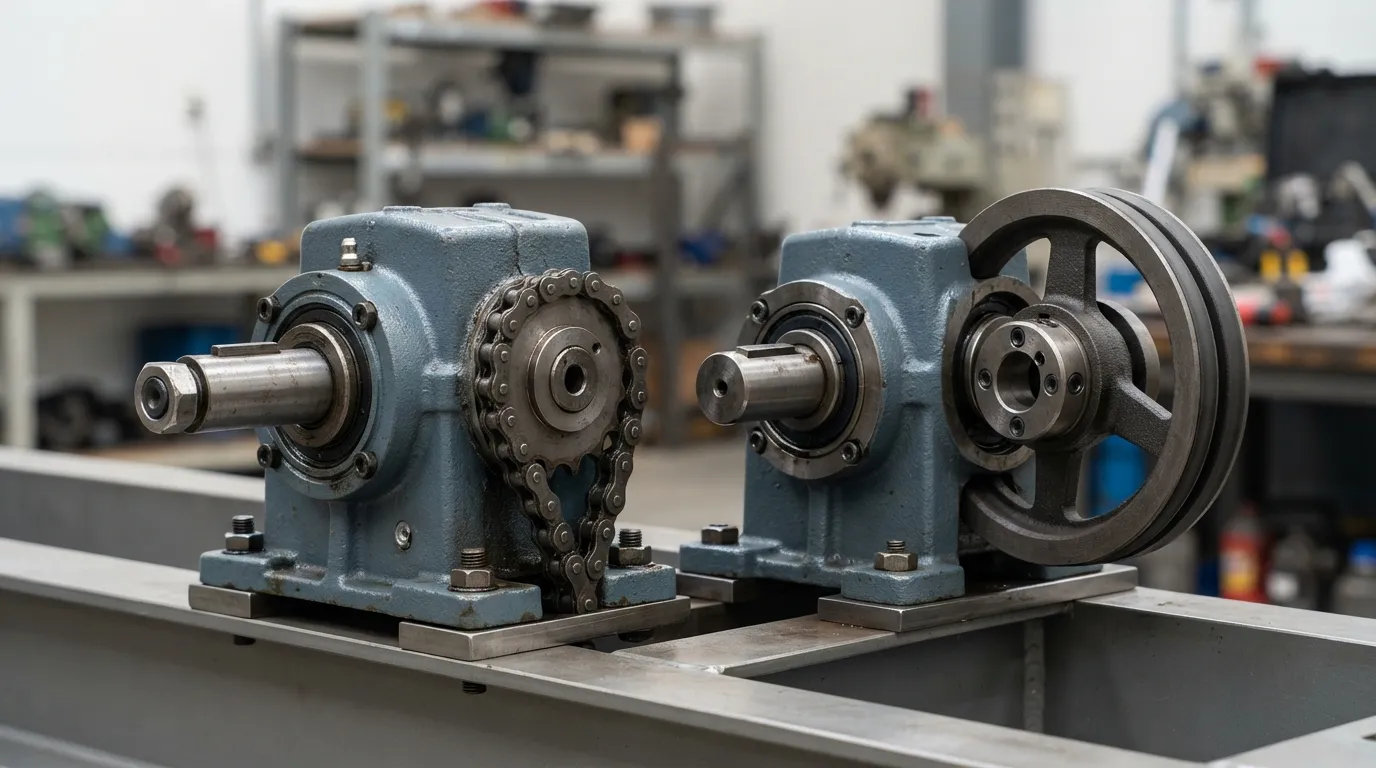
Calculate the overhung load using the formula OHL = (19100000 × P) / (d × n) × Fc, where P is power in kW, d is the sprocket or pulley diameter in mm, n is shaft RPM, and Fc is the connection factor, then compare against the gearbox's rated bearing capacity.
According to Top Gear Transmission, the connection factor accounts for how the driven component transmits load to the shaft. Different connection types impose different loading patterns on the output bearing.
| Connection Type | Factor (Fc) |
|---|---|
| Chain sprocket | 1.0 |
| Gear | 1.06 |
| Sprocket | 1.5 |
| V-belt | 2.5 |
| Friction wheel | 3.5 |
V-belt drives impose the highest overhung loads because belt tension must be maintained to prevent slipping. If your application uses a V-belt, the output bearing must be sized for substantially higher radial load than a direct-coupled chain sprocket.
This bearing and shaft verification is one of the most commonly skipped steps in gearbox selection — it is a mandatory check, not optional. For related methodology on torque sizing, see our industrial gearbox torque sizing guide.
Worked Example: Selecting a Planetary Gearbox for a Mixer
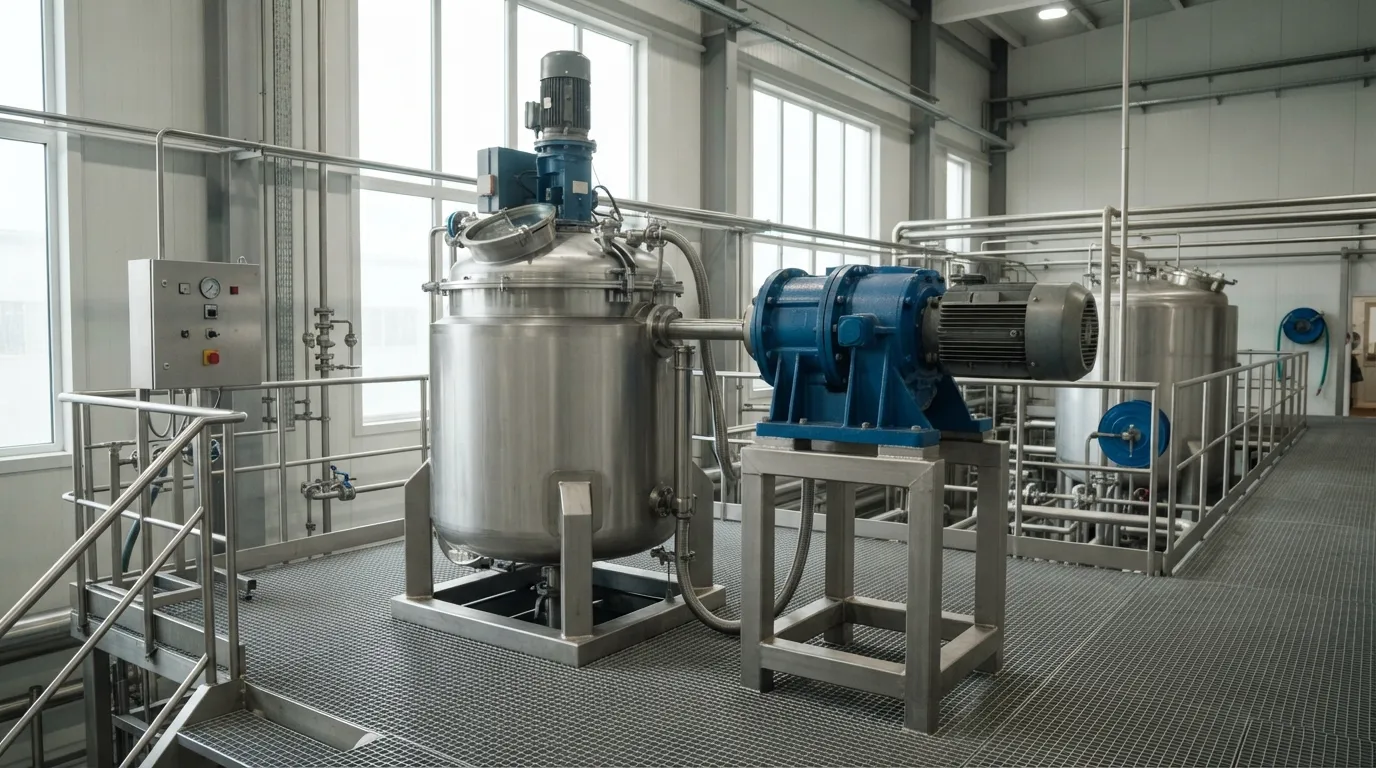
This example applies all previous steps to a 15 kW mixer application at 30 RPM output with a 1.8 service factor, demonstrating each calculation and verification step.
Step 1: Define requirements.
- Motor power: 15 kW
- Required output speed: 30 RPM
- Application: Mixer with moderate shock load
- Service factor: 1.8 (based on the duty cycle and load variation)
Step 2: Calculate nominal torque. T = (15 × 9546) / 30 = 4,773 Nm
Step 3: Apply the service factor. Required torque = 4,773 × 1.8 = 8,591 Nm
Step 4: Select the ratio. If motor speed is 1,500 RPM: Ratio = 1,500 / 30 = 50:1 A two-stage planetary gearbox with a 50:1 ratio would be appropriate (within the 9:1 to 100:1 range for two-stage units).
Step 5: Verify output shaft loading. Assume a chain sprocket at 200 mm diameter drives the mixer. OHL = (19100000 × 15) / (200 × 30) × 1.0 = 4,775 N
This overhung load must be within the gearbox's rated output bearing capacity. If the calculation exceeds the rating, a larger gearbox or a different output configuration is required.
Step 6: Confirm the selection. The selected gearbox must have:
- Output torque rating ≥ 8,591 Nm (including service factor)
- Ratio of 50:1 (or nearest standard)
- Output bearing rating ≥ 4,775 Nm overhung load at the specified speed
Common Mistakes in High-Torque Planetary Gearbox Selection
The most common mistakes in high-torque planetary gearbox selection are sizing on nominal torque instead of peak torque, ignoring output bearing loads, skipping thermal verification, and selecting a ratio for speed without checking the resulting torque multiplication.
- Sizing on nominal torque only. Peak torque with service factor governs high-torque applications. Undersizing on peak torque leads to premature failure.
- Ignoring overhung load on the output bearing. The output bearing must handle radial loads from sprockets, pulleys, or gears — not just the torque. This is a common cause of field failures.
- Not accounting for duty cycle. A 24/7 operation with heavy loads requires a higher service factor than intermittent use. The duty cycle directly affects thermal rating.
- Selecting ratio for speed without checking torque. Speed reduction always multiplies torque. Verify that the resulting torque does not exceed the gearbox rating.
- Overlooking thermal limits. Continuous high-torque operation generates heat. Even if torque is within rating, the gearbox may overheat without adequate heat dissipation.
Heavy-Duty Planetary Reducers for Industrial Applications
Mills, mixers, hoists, and conveying equipment require heavy-duty planetary reducers rated for continuous high torque with robust bearing support. These applications demand gearboxes built for sustained loading, not just occasional peaks.
For a broader view of where planetary gearboxes fit across industries, see our planetary gearbox applications overview.
Heavy-duty planetary reducers differ from precision servo planetary gearboxes. Precision planetary gearboxes prioritize low backlash and positioning accuracy for servo applications. Heavy-duty industrial planetary reducers prioritize torque capacity, bearing life, and thermal performance for continuous process equipment.
Manufacturers like Mingye build heavy-duty planetary reducers specifically for this type of industrial duty. Mingye designs and manufactures both motors and reducers in-house at its CNC-equipped facility in Shanghai, serving OEMs and plant engineers across plastics and rubber, mixing, conveying, mining, cement, power, and port industries. Mingye offers OEM customization of mounting dimensions and transmission ratios to match specific application requirements.
When your application involves continuous high torque with shock loads — a mixer with varying viscosity, a hoist with start-stop cycles, a mill with heavy media — these are the conditions heavy-duty planetary reducers are designed to handle. A standard planetary gearbox sized for servo duty will not provide the bearing capacity or thermal margin required. For a full step-by-step framework covering all selection criteria, see our how to choose planetary gearbox guide.
Share on Social:


Contact Us
In This Article
Rubber Internal Mixer Gearbox: Read the Batch Load Profile, Not Just Motor kW
Oct 22, 2026
Hot Industrial Gearbox Coupling After Cold Alignment: What to Check
Oct 22, 2026
Hydraulic Slewing Drive Won't Rotate: Separate Motor, Brake and Gearbox Faults
Oct 22, 2026
Calender Roll Gap Changes: What Must the Drive Coupling Accommodate?
Oct 22, 2026