


 Home /
Gear Motor vs Stepper Motor: Differences in Torque, Speed and Control
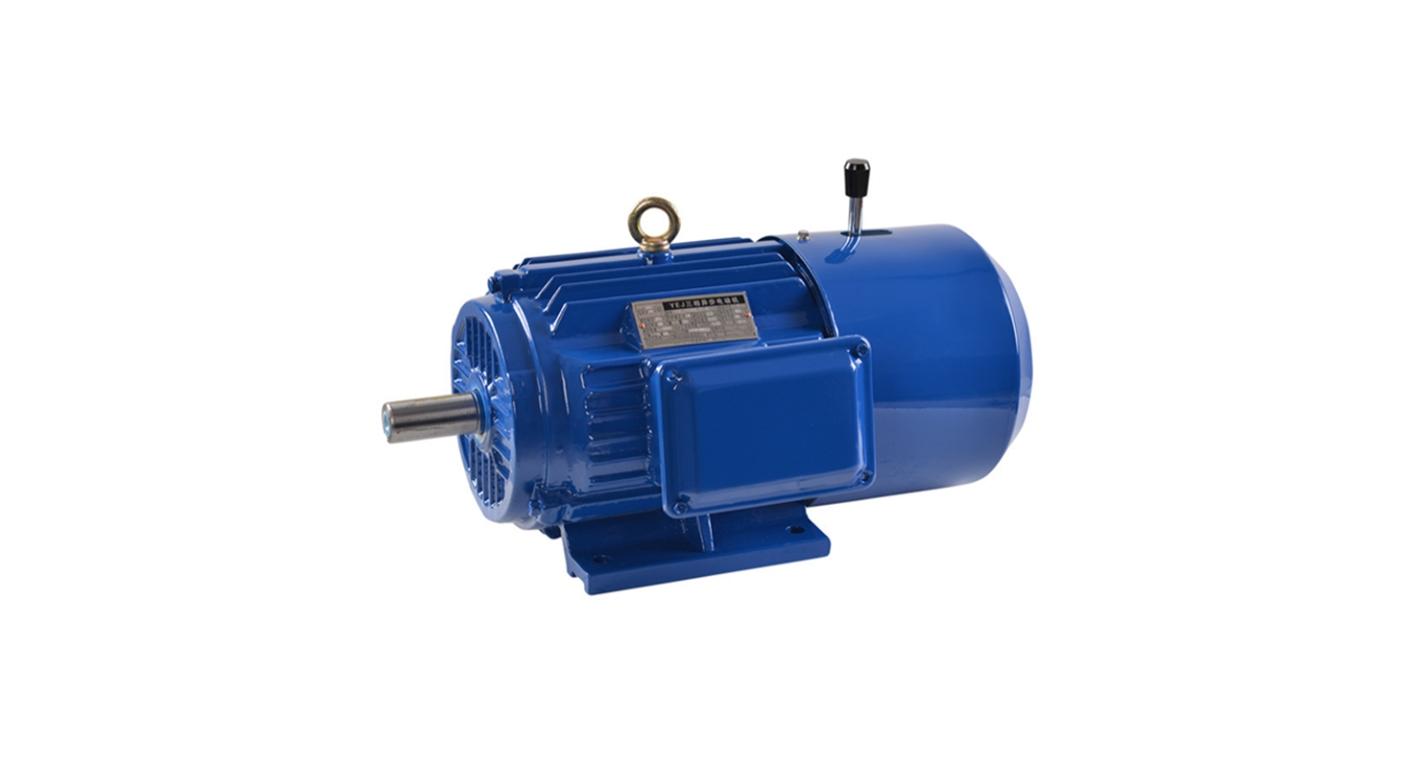
Right Angle Geared Motor: Matching Electrical Supply, Variable Speed and Braking
Oct 26, 2026
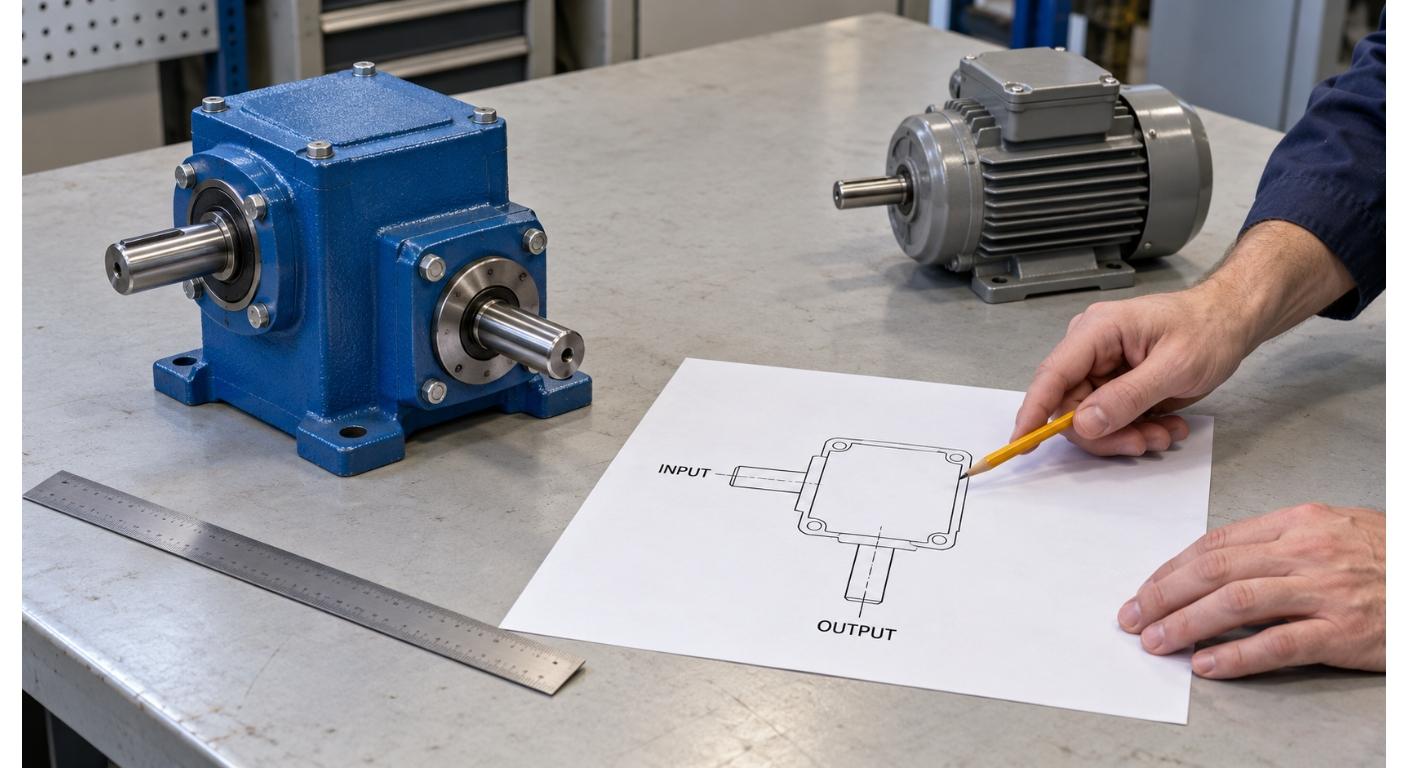
Planning a Bevel Reducer Installation: Turn Shaft Requirements Into a Practical Drive Layout
Oct 26, 2026
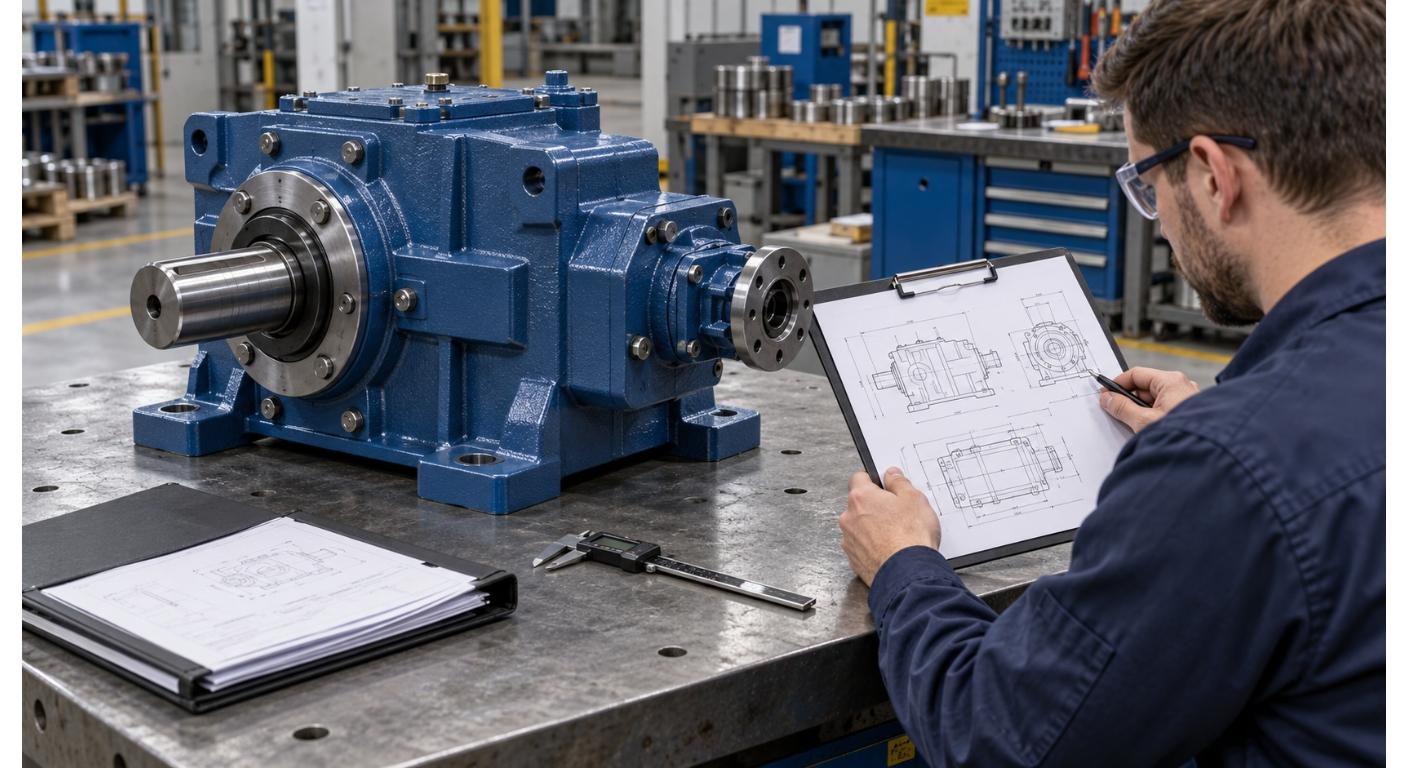
Choosing an Overhead Crane Gearbox by Its Hoisting or Travel Function
Oct 26, 2026
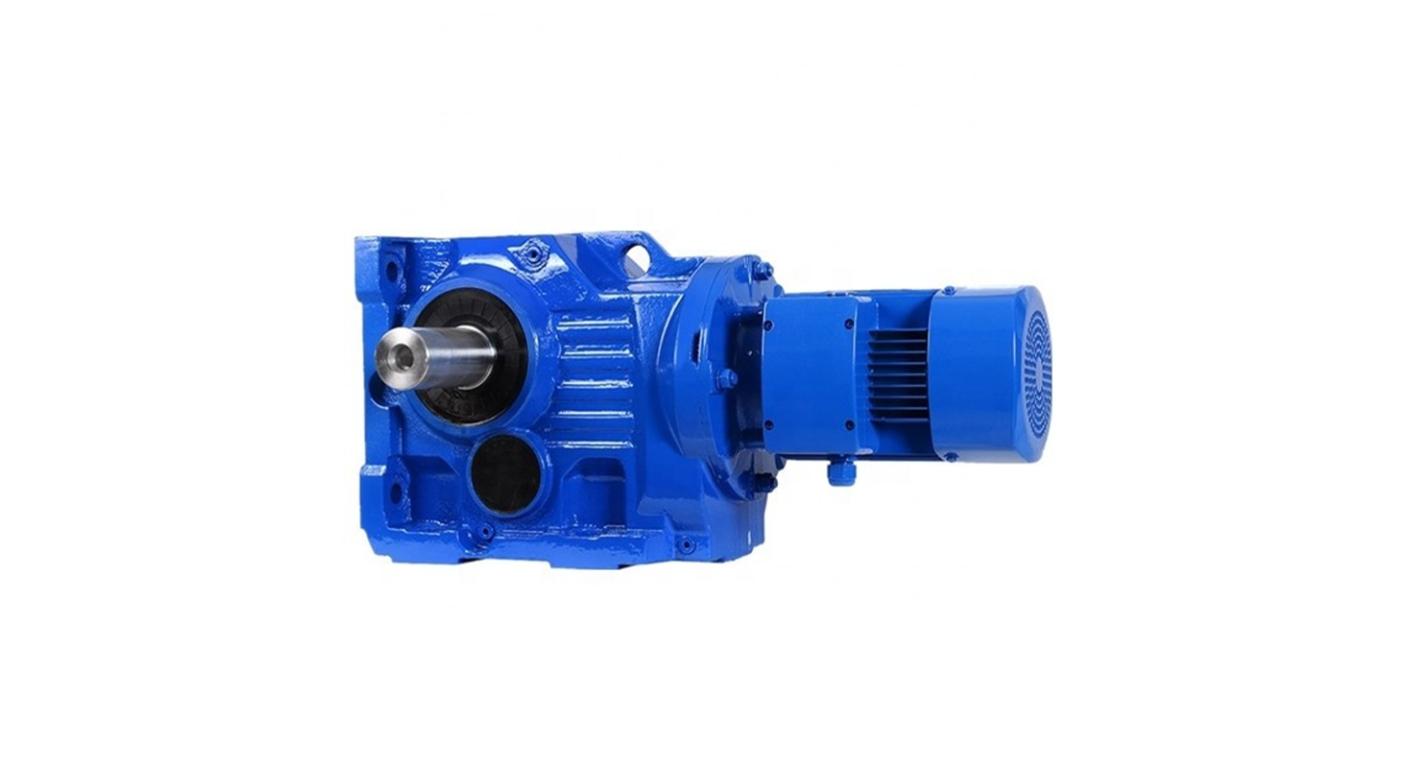
Replacing an Industrial Worm Gearbox: What to Keep and What to Reassess
Oct 25, 2026
Gear motors and stepper motors solve different motion problems: a gear motor delivers continuous torque across a wide speed range for industrial duty, while a stepper motor provides precise open-loop positioning at low speeds for indexing applications. The right choice depends on whether your priority is sustained power or accurate position control.
Key Takeaways
- Stepper motors deliver peak torque at low speed and lose torque sharply above roughly 1,000 rpm; gear motors sustain rated torque across a wide continuous-duty range.
- Stepper motors run open-loop (no feedback), simplifying control but risking lost steps under load; gear motors combined with encoders offer closed-loop precision for demanding positioning.
- Steppers draw constant current even when stationary, generating heat and wasting energy; gear motors run efficiently at rated load.
- The practical rule: choose a stepper for indexing and light positioning, a gear motor for continuous industrial duty requiring torque, speed range, and reliability.
- Cost differences go beyond purchase price — drivers, controllers, heat management, and downtime affect total cost of ownership, especially in 24/7 operations.
What Is a Gear Motor?
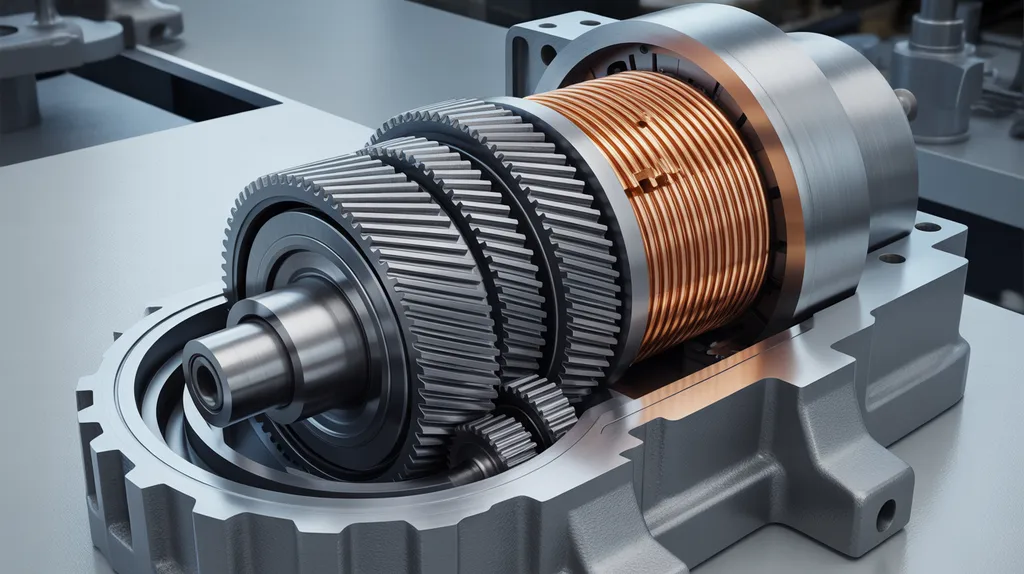
A gear motor combines an electric motor with a gearbox to reduce output speed and increase torque for industrial drive applications. The gearbox uses meshing gears to trade rotational speed for mechanical advantage, allowing a relatively small motor to drive heavy loads at controlled speeds.
Industrial gear motors come in several configurations. Helical gear motors (available in R, S, K, and F series designs) offer high efficiency and smooth operation. Worm gear motors provide compact right-angle drives with high reduction ratios. Planetary reducers deliver high torque density in a compact package, while cycloidal reducers offer shock-load resistance for demanding applications. Mingye builds both motors and reducers on modular, standardized designs, which simplifies replacement and customization.
For a deeper look at how gear motors differ from standard electric motors, see our comparison of gear motor vs electric motor.
What Is a Stepper Motor?
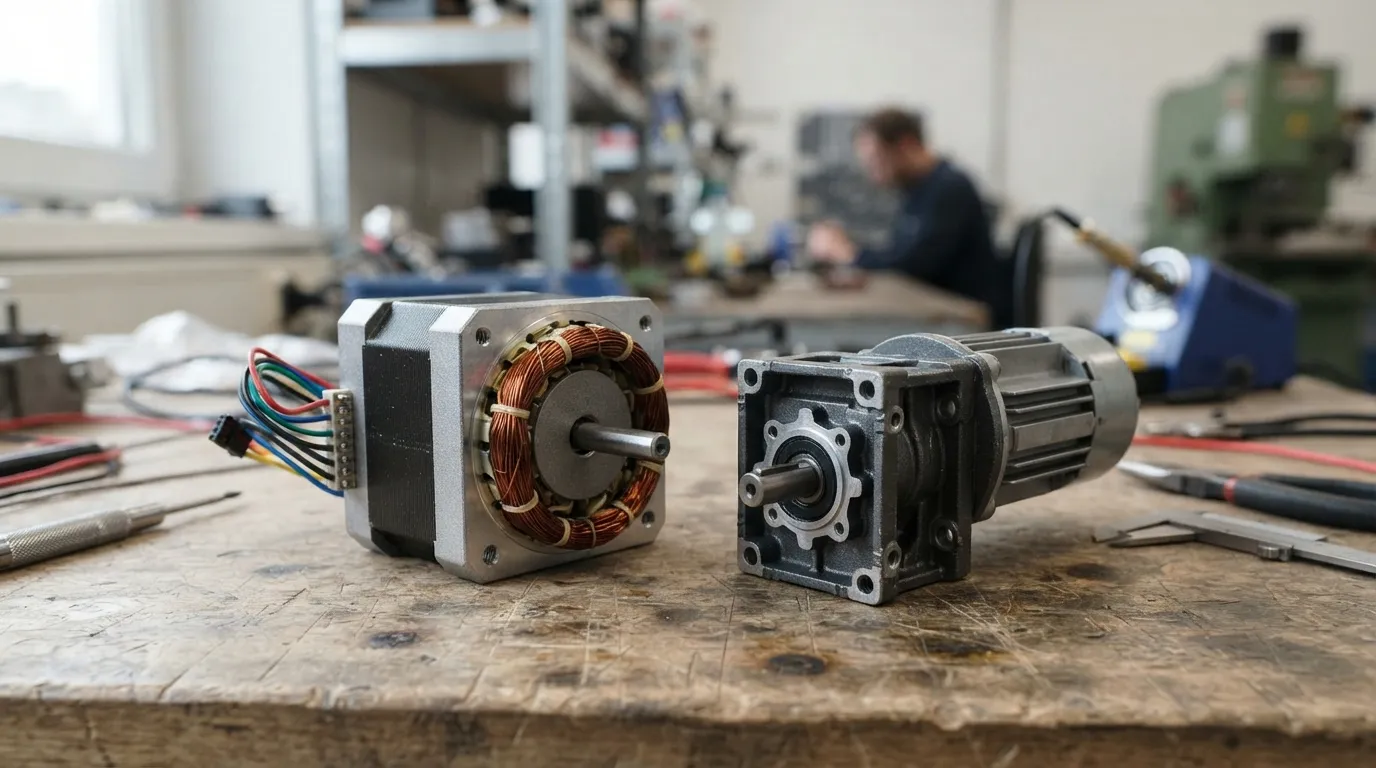
A stepper motor converts electrical pulses into fixed angular step increments, with rotation speed proportional to pulse frequency. Each pulse moves the motor shaft by a precise angle, which makes steppers inherently suited for position control without feedback.
According to Anaheim Automation, hybrid stepper motors commonly use step angles of 0.9°, 1.8°, 3.6°, and 4.5°, with 1.8° being the most common. Permanent magnet steppers generally have larger step angles of 45° or 90° and exhibit high torque with good damping, while variable reluctance steppers achieve higher step rates of 5° to 15° but have no detent torque — meaning they offer no resistance to rotation when unpowered.
Hybrid stepper motors are best suited for stable loads with speeds under 1,000 rpm, according to Anaheim Automation. This speed limitation shapes where steppers make sense and where they fall short.
Gear Motor vs Stepper Motor: Side-by-Side Comparison Table
| Attribute | Gear Motor | Stepper Motor |
|---|---|---|
| Torque characteristics | Sustained torque across speed range | Peak torque at low speed; drops above ~1,000 rpm |
| Speed range | Wide; depends on gear ratio | Typical max ~2,000 rpm; best below 1,000 rpm |
| Control method | Closed-loop possible with encoder | Open-loop standard (no feedback) |
| Positioning accuracy | Depends on encoder/feedback | High repeatability without feedback |
| Efficiency at rated load | High | Lower; constant current draw |
| Heat generation | Moderate, design-dependent | High under load/hold; constant current |
| Noise | Varies by gear type | Audible high-frequency noise |
| Cost | Higher initial; lower TCO for continuous duty | Lower initial; higher system cost with driver/controller |
| Duty cycle | Continuous industrial duty | Intermittent; indexing |
| Typical applications | Conveyors, mixers, material handling | Positioning tables, indexing, light robotics |
Torque Comparison: Where Each Motor Delivers
Stepper motors produce high torque at low speed but lose torque rapidly above roughly 1,000 rpm; gear motors maintain rated torque across their speed range, especially with helical and planetary designs.
According to Oriental Motor, a stepper motor features greater output torque than an AC motor of the same frame size at low speeds. This makes steppers attractive for applications requiring high torque at standstill or very low speeds, such as clamping mechanisms or index tables.
However, this advantage disappears as speed increases. Hybrid steppers are best suited for stable loads with speeds under 1,000 rpm, per Anaheim Automation. Beyond this range, torque falls off sharply, and the motor may stall entirely.
Gear motors, by contrast, deliver rated torque continuously across their operating speed range. The gearbox multiplies motor torque while allowing the motor itself to run at efficient speeds. Planetary gear reduction, for example, distributes torque through multiple planetary gears, allowing greater torque transmission than single-gear-mesh spur mechanisms, according to Oriental Motor.
For industrial applications requiring sustained torque — such as conveyor drives or paddle mixers — a helical geared motor provides the consistent power output that steppers cannot sustain. Mingye's helical gear motor series covers a wide range of torque requirements for continuous-duty applications.
Speed Range and Speed-Torque Characteristics
Stepper motors operate best below 1,000 rpm and have a practical ceiling around 2,000 rpm; gear motors serve a much wider speed band through gear ratio selection.
Stepper rotation speed is directly proportional to pulse frequency, according to Anaheim Automation. This linear relationship makes speed control simple in theory — just change the pulse rate. But in practice, the torque drop-off at higher speeds limits useful operation. A stepper that delivers excellent torque at 200 rpm may deliver only a fraction of that torque at 1,500 rpm.
Gear motors achieve speed variation through gear ratio selection. A three-phase asynchronous motor running at 1,400–1,450 rpm can be paired with gearboxes offering ratios from roughly 3:1 to over 100:1, producing output speeds from several hundred rpm down to fractions of a revolution per minute — all while maintaining rated torque at the output shaft.
The choice between AC and DC gear motors affects speed control capabilities. AC gear motors run at fixed speeds (or variable speeds with a VFD), while DC gear motors offer inherent speed control through voltage adjustment. Our comparison of ac vs dc gear motor options explains these differences in detail.
For industrial applications requiring both wide speed range and sustained torque — such as material handling systems or packaging lines — gear motors provide the flexibility that steppers lack.
Control: Open-Loop Positioning vs Industrial Drive Control
Stepper motors provide open-loop position control without feedback, which simplifies systems but risks lost steps under load; gear motors typically run without positioning feedback but can be paired with encoders for closed-loop control where needed.
Stepper motors are classified as open-loop systems because they lack feedback to maintain control of position, according to Anaheim Automation. This is their defining advantage: no encoder, no complex control loop, just pulses in — position out. For applications with predictable, stable loads, this simplicity translates to reliable, repeatable positioning.
The trade-off emerges under variable loads. If a stepper encounters resistance that exceeds its available torque, it loses steps — the rotor falls behind the commanded position, and the controller has no way to detect the error. The result is a silently mispositioned system.
Gear motors, by themselves, do not provide positioning. They rotate continuously. For positioning applications, an encoder or other feedback device must be added, converting the system to closed-loop control. This adds cost and complexity but eliminates the lost-step risk.
For applications requiring both continuous torque and precise positioning, a servo motor — which combines a motor with built-in feedback — may be the better choice. Our comparison of gear motor vs servo motor helps engineers understand when servo technology justifies its higher cost.
Efficiency, Heat, and Noise: What the Spec Sheets Don't Tell You
Stepper motors draw constant current whether running or holding, generating heat and wasting energy; gear motors run efficiently at rated load with heat and noise depending on gear type and duty cycle.
According to discussions among experienced engineers on the Arduino Forum, steppers draw the same current whether running or stationary, making them inherently inefficient for sustained operation. This constant current draw produces continuous heat, which is especially problematic when a stepper holds position under load — it generates maximum heat while doing no useful work.
The heat has practical consequences beyond energy waste. It shortens bearing life, demands ventilation or active cooling, and increases energy costs in 24/7 operations. These factors rarely appear in the initial price comparison but significantly affect total cost of ownership.
Gear motors, by contrast, draw current proportional to the load they carry. At rated load, they operate efficiently, with heat generation depending on gear type and duty cycle. A properly sized gear motor running continuously at rated output maintains acceptable operating temperatures without special cooling.
Stepper noise is another differentiator. Steppers produce audible high-frequency noise, particularly at certain resonance frequencies, according to Arduino Forum discussions. Geared stepper motors have significantly smaller vibration than non-geared steppers, especially in the resonance frequency range, according to ZHAOWEI — but they still produce more audible noise than most industrial gear motors.
Cost Comparison: Purchase Price vs Total Cost of Ownership
Stepper systems appear cheaper initially, but the full system cost — driver, controller, heat management, and downtime for intermittent duty — can exceed a gear motor's total cost of ownership in continuous industrial applications.
A bare stepper motor carries a low price tag. But a stepper motor cannot run alone; it requires a driver, a controller, and a power supply. Add these components, and the system price multiplies. For industrial-grade components with adequate cooling, the gap narrows considerably.
Gear motors, especially three-phase AC units, are simpler systems. A motor starter or variable frequency drive (VFD) is often sufficient. The motor itself costs more than a bare stepper, but the complete drive system may cost less than a full stepper system — and the gear motor lasts longer under continuous load.
The efficiency difference compounds over time. A stepper drawing constant current, even when idle, consumes energy continuously. In a 24/7 operation, this waste adds up to real money. The Arduino Forum discussions note that steppers are particularly inefficient for battery-powered applications, with constant current draw draining power even at standstill.
Operating costs also include downtime. A stepper that loses steps under an unexpected load produces scrapped parts and production interruptions. A gear motor with an overload relay stops safely and restarts quickly.
For OEMs evaluating drive systems, our gear reduction motor buying guide for oems provides a framework for comparing complete system costs.
What Is a Geared Stepper Motor? (And Why It Blurs the Line)
A geared stepper motor combines a stepper with a gearbox to increase torque, reduce inertia mismatch, and smooth motion, making it a viable middle option for some positioning applications.
According to ZHAOWEI, geared stepper motors improve performance by reducing the load-to-motor inertia ratio (through the square of the gear ratio), increasing load torque, and reducing motor oscillation. This makes the combination attractive when a stepper's inherent torque is insufficient but its positioning capability is desired.
Geared stepper backlash can be limited to 3%, according to ZHAOWEI. For higher precision, Oriental Motor's planetary gearheads for steppers achieve specified backlash of three arc minutes through component accuracy and a backlash-elimination mechanism.
The key distinction, according to Oriental Motor, is design intent: gearheads for steppers prioritize high accuracy positioning, while gearheads for AC motors prioritize continuous power use with emphasis on torque, life, and noise. This means a geared stepper remains fundamentally a positioning device, not a continuous-duty power source.
Geared steppers fill a specific niche: applications needing more torque than a bare stepper can provide, but still within the stepper's speed and duty-cycle limits. They do not overcome the fundamental stepper limitations of heat generation and torque falloff at speed.
Which Should You Choose? A Decision Rule for Engineers
Choose a stepper for indexing and light positioning at low speeds; choose a gear motor for continuous industrial duty requiring sustained torque, wide speed range, and reliability.
Follow these steps to make the right selection:
- Define the motion profile. Is the application continuous rotation or start-stop positioning?
- Define speed range and required torque across that range. Identify the torque needed at each operating speed.
- Determine duty cycle. Hours per day, cycles per minute, and whether the motor runs continuously or intermittently.
- Assess positioning accuracy requirements. Consider step angle, backlash, and whether closed-loop feedback is needed.
- Evaluate environmental constraints. Heat tolerance, noise limits, and available ventilation.
- Calculate total cost. Motor + driver/controller + energy consumption + maintenance + downtime risk.
- Apply the rule. Indexing and light positioning → stepper. Continuous industrial duty → gear motor.
This decision framework extends beyond the gear motor vs stepper comparison. For a comprehensive approach to motor selection across all technologies, our guide on choosing an industrial electric motor covers the full range of considerations.
Application Map: Which Motor Fits Which Industry
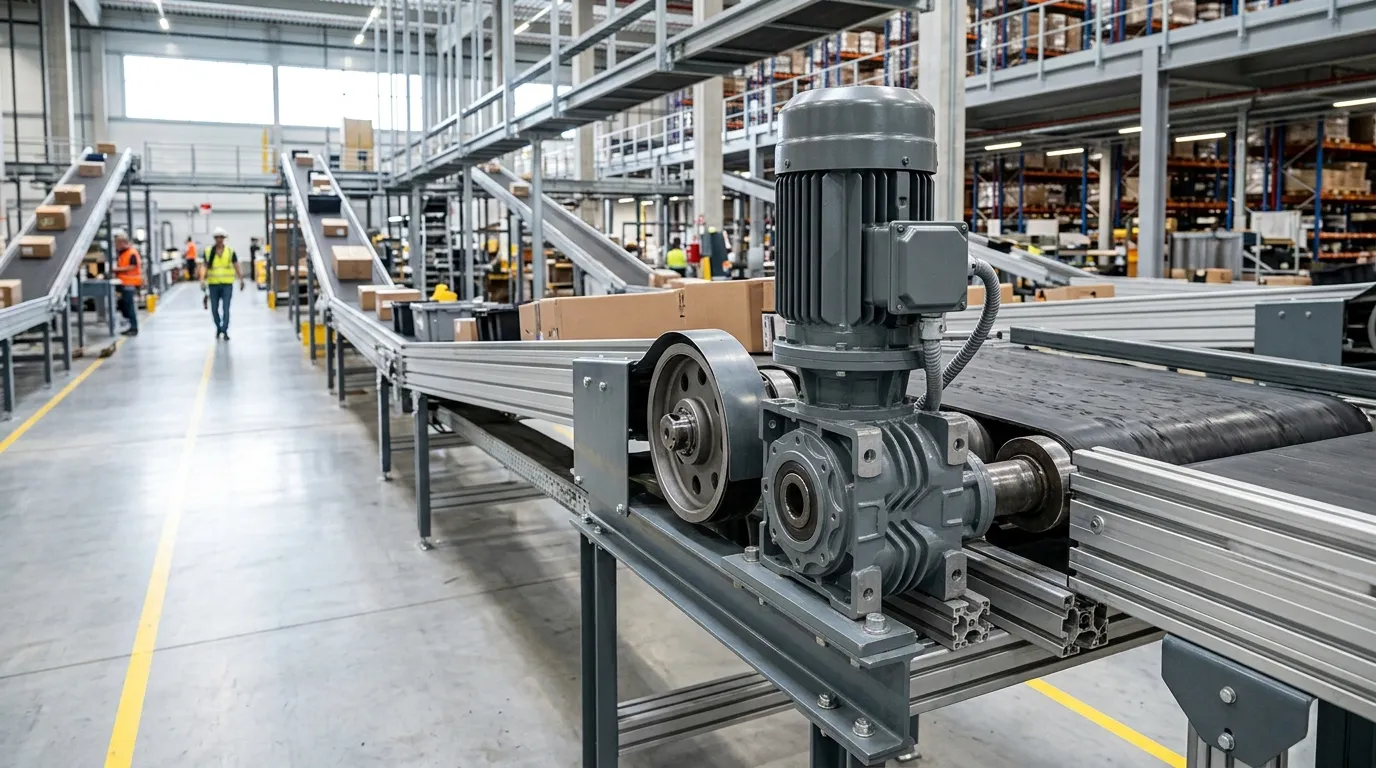
Plastics/rubber mixing, conveying, packaging lines, and material handling favor gear motors for continuous duty; light indexing and inspection stations suit steppers.
| Application | Recommended Motor | Reason |
|---|---|---|
| Conveyor drive (continuous) | Gear motor | Sustained torque, wide speed range, 24/7 reliability |
| Indexing table (light load) | Stepper | Open-loop positioning, cost-effective |
| Paddle mixer | Gear motor | High torque at low speed, continuous duty |
| Packaging line (intermittent) | Stepper or geared stepper | Positioning accuracy without continuous duty heat |
| Material handling (heavy) | Gear motor | Power density, durability |
| Welding rotator | Gear motor | Continuous rotation with controlled speed |
In plastics and rubber processing, paddle mixers and extruder drives demand continuous torque at low speeds — a gear motor application. Mingye supplies special reducers for rubber and plastic machinery and paddle mixers, reflecting the specific torque and duty requirements of these industries.
In conveying and material handling, conveyors run continuously, often 24/7. Gear motors provide the sustained torque and reliability these systems require. Mingye's helical gear motor series serves these applications across mining, cement, and ports.
In packaging, the picture is mixed. High-speed intermittent motion — such as indexing a product into position — may suit a stepper. But continuous web handling or long-run conveyor sections favor gear motors. Evaluate each axis of the machine separately.
For welding rotators, continuous rotation with controlled speed is essential. Mingye supplies special reducers for welding rotators, which require smooth, consistent rotation under heavy loads.
Common Disadvantages You Should Know
Gear motors bring backlash, weight, and higher initial cost; steppers bring heat, noise, efficiency loss, and torque falloff at speed.
Gear motor disadvantages:
- Backlash: Clearance between gear teeth varies by gear type. Planetary gears offer the least; worm gears offer more. This affects positioning accuracy in reversible applications.
- Weight and size: The gearbox adds bulk compared to a bare motor, which may complicate integration in space-constrained designs.
- Lubrication maintenance: Gearboxes require periodic oil changes or grease replenishment, adding maintenance overhead.
- Higher initial cost: A gear motor costs more than a bare motor of equivalent power.
Stepper motor disadvantages:
- Heat generation: Constant current draw produces continuous heat, especially when holding position.
- Noise: Steppers produce audible high-frequency noise, particularly at resonance speeds.
- Torque falloff at speed: Torque drops sharply above roughly 1,000 rpm, limiting useful operating range.
- Lost steps under overload: Without feedback, the controller cannot detect when the motor stalls or loses steps.
- Efficiency loss: Constant current draw wastes energy, especially at standstill.
The maintenance burden of gear motors is modest and predictable — scheduled lubrication is typically sufficient. The heat and energy costs of steppers, by contrast, accumulate every hour of operation.
What Are the Disadvantages of Gearbox Motors?
Gearbox motors bring backlash (clearance between gear teeth), which varies by gear type — planetary gears offer the least, worm gears more. They also add weight, require lubrication maintenance, and carry a higher initial cost than a bare motor. Selecting the right gear type minimizes these effects for specific applications.
What Are the Disadvantages of Stepper Motors?
Steppers generate significant heat because they draw constant current even when stationary. They lose torque sharply above roughly 1,000 rpm, run noisily, and can lose steps under overload without feedback. Their efficiency drops at higher speeds, making them impractical for continuous high-speed industrial duty.
How to Tell If a Motor Is a Stepper Motor?
Stepper motors typically have many wire leads (often 4, 6, or 8), a metal body with visible windings, and move in small, discrete "steps" when powered slowly. When turned by hand, many steppers produce a detent "cogging" feel. Their nameplate often lists step angle (e.g., 1.8°) rather than continuous torque ratings.
What Are the Key Differences Between a Stepper Motor and a Standard Motor?
A stepper moves in fixed angular increments controlled by electrical pulses and runs open-loop without feedback. A standard motor (including gear motors) rotates continuously and typically requires an encoder or other feedback for precise positioning. Steppers excel at position control; standard motors excel at continuous power delivery.
For engineers evaluating gear motor options for continuous industrial duty, Mingye builds helical, worm, planetary, and cycloidal gear motors in its own CNC-equipped factory, with OEM customization of mounting dimensions and transmission ratios. If your application calls for sustained torque across a wide speed range — not just indexing — exploring Mingye's 20+ gear motor series is a practical next step.
Share on Social:


Contact Us
In This Article
Right Angle Geared Motor: Matching Electrical Supply, Variable Speed and Braking
Oct 26, 2026
Planning a Bevel Reducer Installation: Turn Shaft Requirements Into a Practical Drive Layout
Oct 26, 2026
Choosing an Overhead Crane Gearbox by Its Hoisting or Travel Function
Oct 26, 2026
Replacing an Industrial Worm Gearbox: What to Keep and What to Reassess
Oct 25, 2026