


 Home /
 Noise Control and Vibration Reduction in a Worm Gear Reducer
Rubber Internal Mixer Gearbox: Read the Batch Load Profile, Not Just Motor kW
Oct 22, 2026
Hot Industrial Gearbox Coupling After Cold Alignment: What to Check
Oct 22, 2026
Hydraulic Slewing Drive Won't Rotate: Separate Motor, Brake and Gearbox Faults
Oct 22, 2026
Calender Roll Gap Changes: What Must the Drive Coupling Accommodate?
Oct 22, 2026
Worm gear reducers are commonly used in small applications requiring power transfer at 90 degrees, bidirectional position control, and low-speed reductions, along with some low reductions in speed. In addition, a high level of noise will not be attributed to the reduction gear itself. Many design and operational factors can affect the noise and vibration of worm gear reducers. Examples of some of the factors include the design of the gear, alignment, lubrication, bearing support, housing rigidity, the method of mounting the reducer, and the nature of the loading.
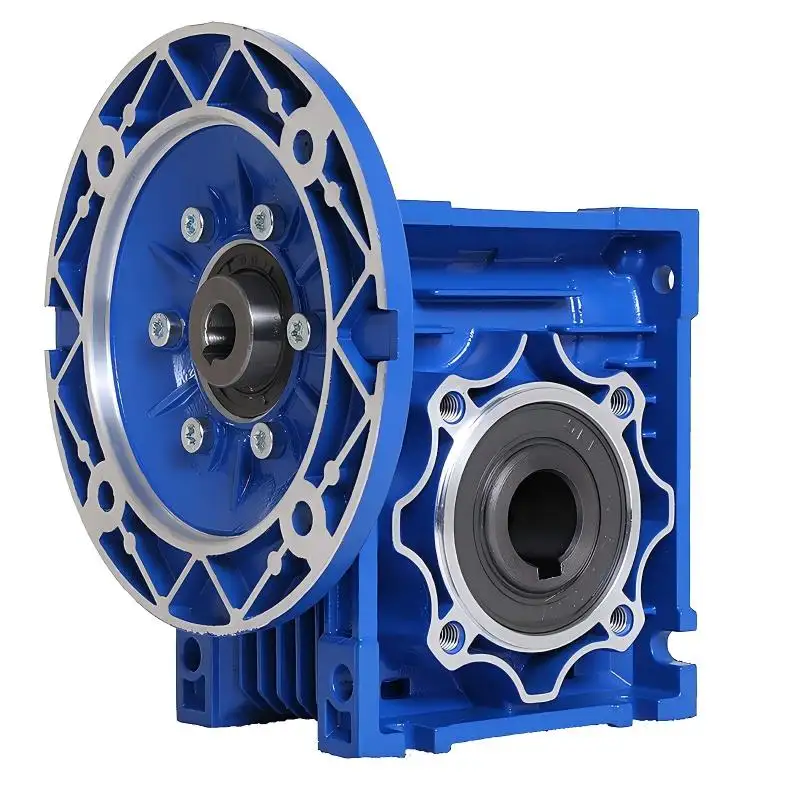
The first step to achieving effective noise reduction is to treat the reducer and the driven machine as an integrated mechanical system.
What Causes Worm Gear Reducers to Be Noisy?
Worm gear reducers reduce the noise of the transmission of power by virtue of the principle of sliding contact between the worm and the worm wheel. However, several factors such as friction, tooth errors, deflection of the shaft, and unstable loading can produce vibration. The vibration will be transmitted through the bearing and housing and will be emitted as noise, be it airborne or noise that will be borne by the structure.
Some of these factors and their effects are:
•Gear mesh variation: Irregular contact, periodic contact, or run out can be caused by profile errors.
•Lubrication: Inadequate lubrication can lead to an increase of the friction, wear, and heat of the surfaces.
•Misalignment of bearings and shafts: Some contact patterns can be misaligned, and excessive load can be local.
•Excessive backlash: Vibration can occur during stoppage, start-up, or reversal of a load.
•Resonance of the Housing: Flexing of the housing or base can create a situation in which certain frequencies are amplified.
•Unexpected Loads: Distortion of the frame, imbalance, coupling errors, and side loads may have a negative effect on a worm gear reducer.
Basic Strategies to Reduce Noise and Vibration
1. Stabilizing Gear Contact Patterns
Worm and wheel sets manufactured to a precision geometry ensure that the load is distributed across the intended contact area. By optimizing center distance, the severity of both impacts and localized friction may be minimized.
The contact improves, and the following benefits are obtained: reduction of the operating temperature and stress, a reduction in tonal noises, and a reduction of the wear rate.
2. Proper Lubricant Films
The majority of the contacts in a worm gear reducer are sliding contacts. Therefore, the choice of lubricant is very important and must be tailored to the load and speed, the temperature, and the materials of the gears.
Low-viscosity lubricants may result in insufficient lubricant films, while high-viscosity lubricants may result in excessive churning and a poor lubricant film upon starting.
Lubricant films may be disrupted by underfilling, while overfilling creates high temperatures and foam.
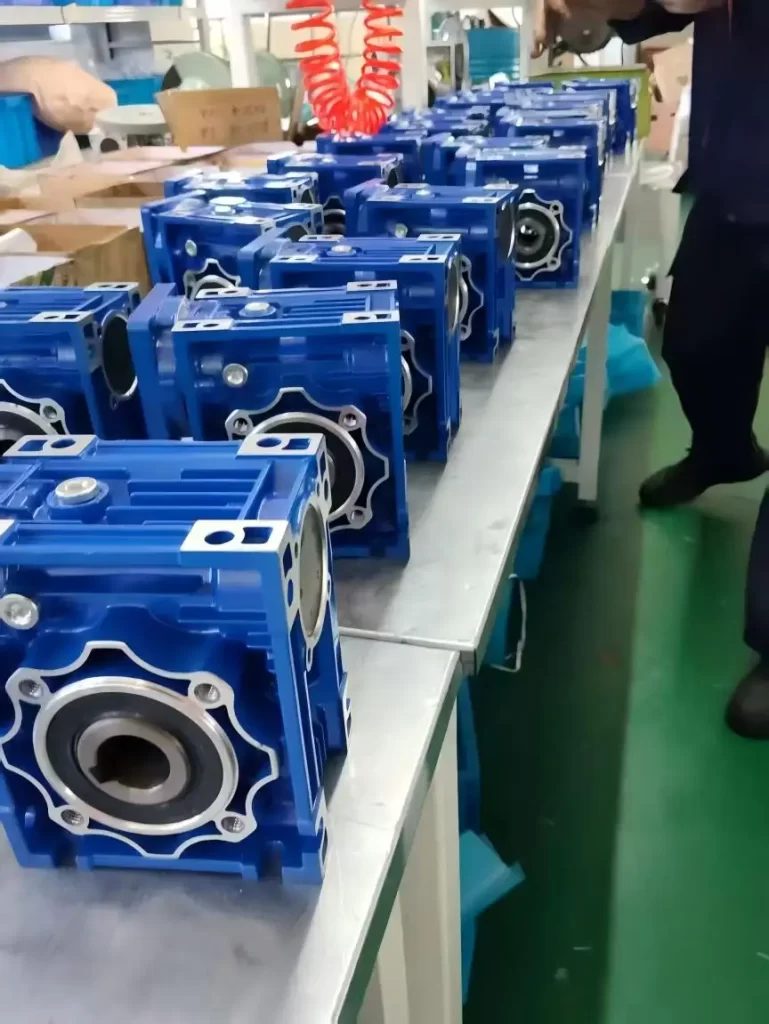
3. Control of Bearings, Shafts, and Alignment
Bearings control both the radial and axial movements of the shaft. An excessive amount of play in the bearings, excessive preload, and poor fits of the bearings may all result in contact problems.
Verify the following during installation:
•Alignment of the motor and reducer
•Condition of the coupling and runout of the shaft
•Torque of the fasteners and flatness of the base
•Any external loads, both radial and axial
4. Manage the Response of the Housing and Mounting
The housing transmits forces resulting from gear-mesh reactions and supports the shafts and bearings. Wall thickness, mounting geometry, and design of ribs and bearing seats affect the transmission of vibrations.
A heavier housing is not automatically quieter. The objective is adequate stiffness with structural resonances separated from dominant operating frequencies.
| Factor | Typical Effect | Practical Control |
| Gear accuracy | Whine or cyclic vibration | Control profile, lead, runout, and contact |
| Backlash | Rattle during reversal | Sets a suitable operating clearance. |
| Lubrication | Friction, noise, and heat | Use the specified grade and oil level. |
| Bearing support | Rumble, or unstable mesh | Control fits, preload, and alignment |
| Housing and base | Structure-borne noise | Use rigid, undistorted mounting. |
| Load condition | Knock or torsional oscillation. | Reduce shock and size for actual duty |
Mingye's Approach to Worm Gear Reducer Stability
At Mingye, we view low-noise performance as the result of coordinated design and application control rather than one isolated feature. Our approach focuses on:
•Matching ratio, speed, torque, and duty cycle to the application
•Maintaining repeatable gear, shaft, bore, and bearing-seat geometry
•Supporting alignment through suitable housing design
•Providing lubrication and mounting guidance
•Reviewing linkage arrangements for synchronized systems
This helps reduce unexpected vibration while protecting bearings, seals, and gear surfaces.
Noise Control in the SWL Series Worm Gear Screw Reducer
The Mingye SWL Series converts rotary input into linear lifting or positioning motion. It supports motor, manual, combined, and synchronized multi-unit arrangements. Mingye lists lift speeds of 150–1,800 mm/min, input power of 0.5–21.8 kW, screw leads of 5–16 mm, and load ratings from 2 to 100 tonnes, depending on configuration.
| SWL Parameter | Published Range or Option |
| Lift speed | 150–1,800 mm/min |
| Input power | 0.5–21.8 kW |
| Screw lead | 5–16 mm. |
| Rated load | 2–100 t |
| Structure | Direct motor, single shaft, or double shaft |
For an SWL worm gear reducer, vibration control also requires correct screw guidance, axial loading, linkage phasing, and frame rigidity. External guides should carry side loads rather than the lifting screw. In multi-point systems, shafts, couplings, and load distribution must be coordinated to limit torsional wind-up.
Self-locking must be assessed carefully. It depends on lead angle, thread type, friction, lubrication, shock, and vibration. Where uncontrolled movement creates a safety risk, a brake or independent holding device may still be necessary.
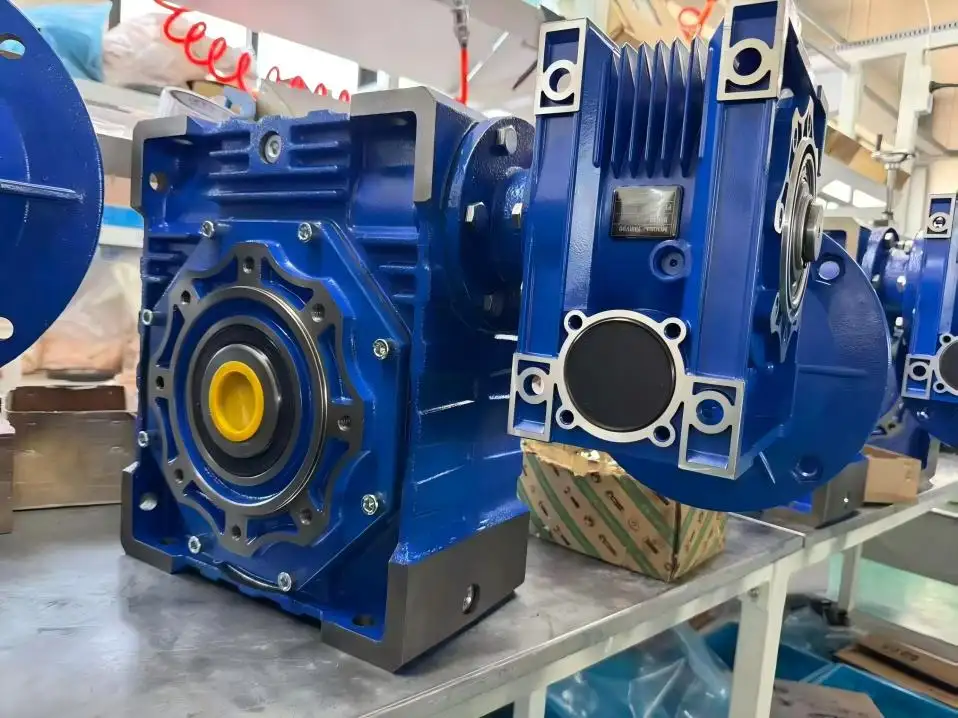
Pragmatic Approach to Quieter Operation
Prior to calling a worm gear reducer into active service:
•Confirm both the appropriateness of the torque and the size of the unit for the operating load and the duty cycle.
•Ensure that the reducer has been mounted to a flat, rigid, aligned, and level base.
•Check the lubricant with respect to its type, quantity, and placement.
•Remove all transferred belt tensions, side loads, and frame strains from the shafts.
•Record the baseline measurements for temperature, acoustics, and vibrations.
•Examine the sudden onset of whining, rumbling, or knocking acoustics and the sudden abnormal increase in temperature of the unit.
When properly selected, worm gear reducers will produce a stable and repeatable sound. They will not be completely silent. With the proper lube, contact, and alignment, along with the housing response and integration of the system, Mingye will enable equipment builders to achieve sound motion with low vibration and an extended service life of the system.
FAQs
Q1. What generates a high-pitched whining sound?
High-pitched whining can be caused by a variety of issues, such as gear-mesh errors, high operating speeds, suboptimal contact patterns, or bearing issues.
Q2. Is a Worm Gear Reducer completely quiet?
Not completely. A Worm Gear Reducer will exhibit normal, steady, and consistent sounds of mechanics and should not be transient.
Q3. Will improper lubrication increase noise levels of a reducer?
Yes. Lubrication that has the incorrect viscosity, has minimal lubricant, or has dirty oil can increase friction, temperature, and vibration.
Q4. What effect does mounting have on the vibration of Worm Gear Reducers?
If the mounting base is flexible, uneven, or poorly secured, it can increase vibration and noise levels.
Q5. How often should lubricant levels be checked?
Lubricant levels should be checked as per the operational hours, the duty cycle, operating temperature, and as instructed in the maintenance manual.
Share on Social:


Contact Us
In This Article
Rubber Internal Mixer Gearbox: Read the Batch Load Profile, Not Just Motor kW
Oct 22, 2026
Hot Industrial Gearbox Coupling After Cold Alignment: What to Check
Oct 22, 2026
Hydraulic Slewing Drive Won't Rotate: Separate Motor, Brake and Gearbox Faults
Oct 22, 2026
Calender Roll Gap Changes: What Must the Drive Coupling Accommodate?
Oct 22, 2026