


 Home /
 Core Application Scenarios of AC Gear Motors in Industrial Automation
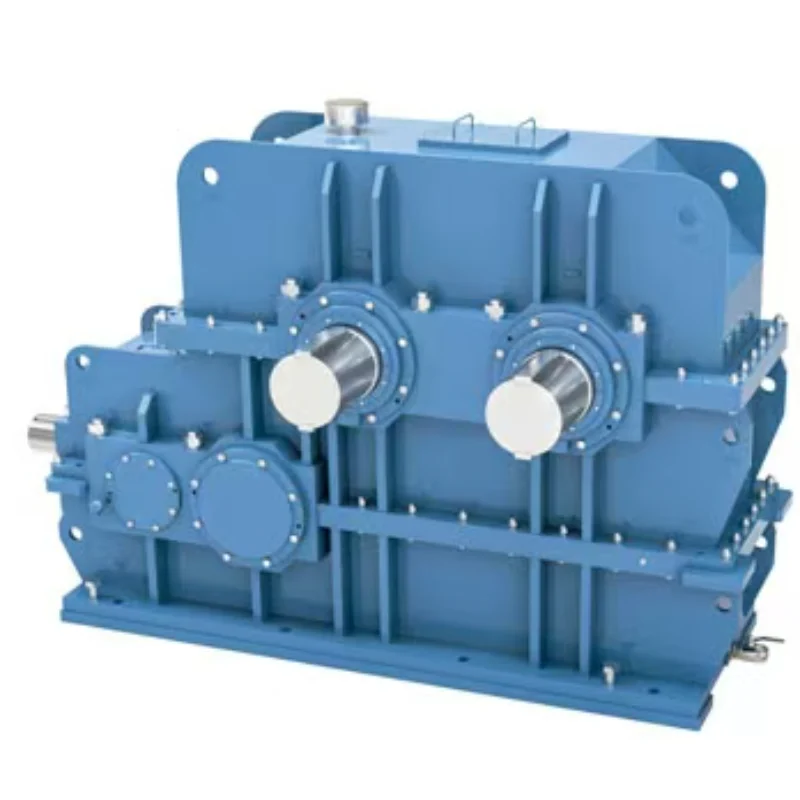
Rubber Internal Mixer Gearbox: Read the Batch Load Profile, Not Just Motor kW
Oct 22, 2026
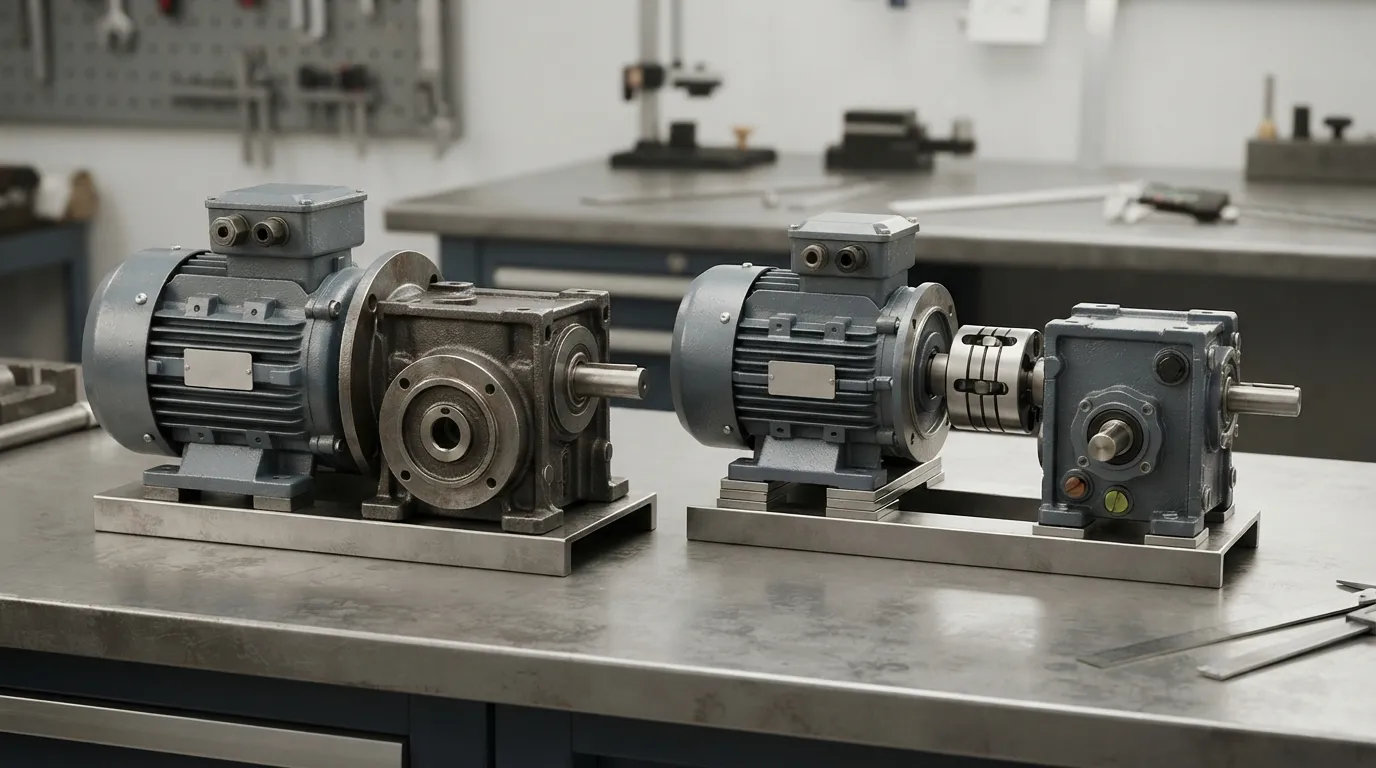
Hot Industrial Gearbox Coupling After Cold Alignment: What to Check
Oct 22, 2026
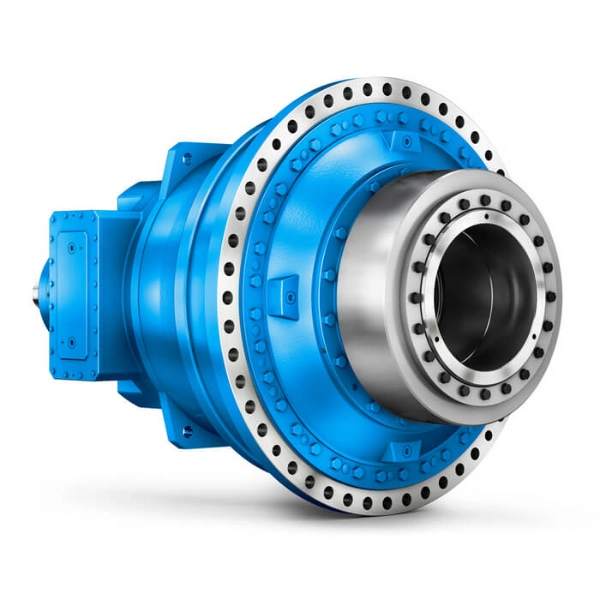
Hydraulic Slewing Drive Won't Rotate: Separate Motor, Brake and Gearbox Faults
Oct 22, 2026
Calender Roll Gap Changes: What Must the Drive Coupling Accommodate?
Oct 22, 2026
AC gear motors are used to produce lower output speed and higher usable torque by combining an AC induction motor with a reduction gearbox. This compact industrial drive is used in automation wherever machinery must start smoothly, run at a controlled speed, and cycle reliably.
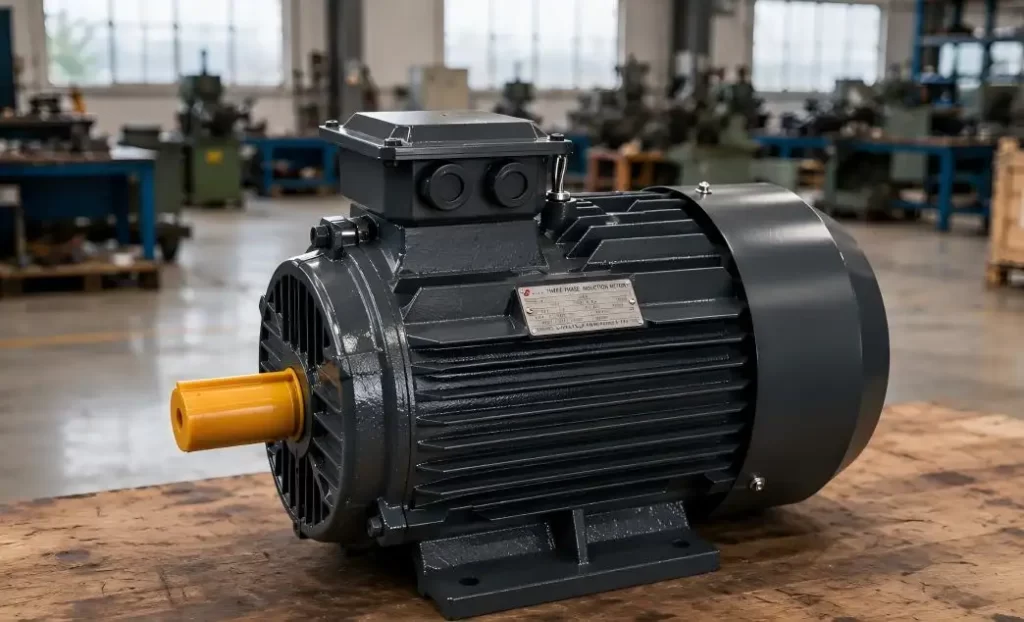
Selecting an AC gear motor is not simply a matter of matching motor power. Output torque, gear ratio, duty cycle, starting load, mounting position, environment, and speed-control method must be evaluated together.
What Is an AC Gear Motor?
A standard induction motor normally rotates faster than conveyors, mixers, gates, and indexing mechanisms require. The gearbox lowers the speed of the motor and, proportionally to the reduction ratio (fewer mechanical losses), increases the output torque.
An AC gear motor, connected directly, eliminates the requirement for external belts, pulleys, chains, and covers. This will probably simplify the process of alignment, decrease the number of wear points, and offer a compact design.
Key functions include:
•Converting motor speed into application-specific output speed
•Increasing torque for startup and continuous movement
•Supporting directly coupled drive layouts
•Providing variable speed when paired with a suitable VFD
•Matching different shaft and mounting arrangements
Variable-frequency drives are commonly used to control the speed of AC induction motors; therefore, an AC gear motor should not be described as inherently adjustable-speed unless a VFD or another control method is included.
Mingye's AC Gear Motor Design Approach
Mingye develops AC gear motor configurations around its YE2 three-phase induction motor platform and compatible reduction gearboxes. The motor and gearbox are treated as one drive system.
| Design Item | Standard or Available Configuration | Practical Value |
| Power supply | 380 V/50 Hz standard; customized 50 Hz voltage from 200 to 600 V | Supports regional machine configurations |
| Enclosure | TEFC construction | Reduces exposure of internal components |
| Protection | IP55 | Suitable for dust and exposure to water jets |
| Ambient range | −20°C to +40°C | Covers many industrial locations |
| Installation altitude | Up to 1,000 m without stated derating | Suitable for most standard sites |
| Quality control | ISO 9001-based procedures | Supports repeatable production and inspection |
Core AC Gear Motor Application Scenarios
| Application | Main Demand | Selection Focus |
| Conveyors and material handling | Continuous torque, frequent starts, variable loading | Starting torque, service factor, dust protection |
| Packaging and filling lines | Repeatable speed, compact installation | Gear ratio, VFD compatibility, mounting accuracy |
| Mixers and process machinery | High startup load and changing resistance | Thermal capacity, overload margin, gearbox strength |
| Food and beverage handling | Moisture, cleaning, corrosion risk | Enclosure rating, seals, surface treatment |
| Automated doors and gates | Intermittent duty, reversing, breakaway torque | Brake option, reversing frequency, and limit control |
| Lifting and positioning | Load holding and controlled stopping | brake, safety factor, and back-driving risk |
Conveyors and Material Handling
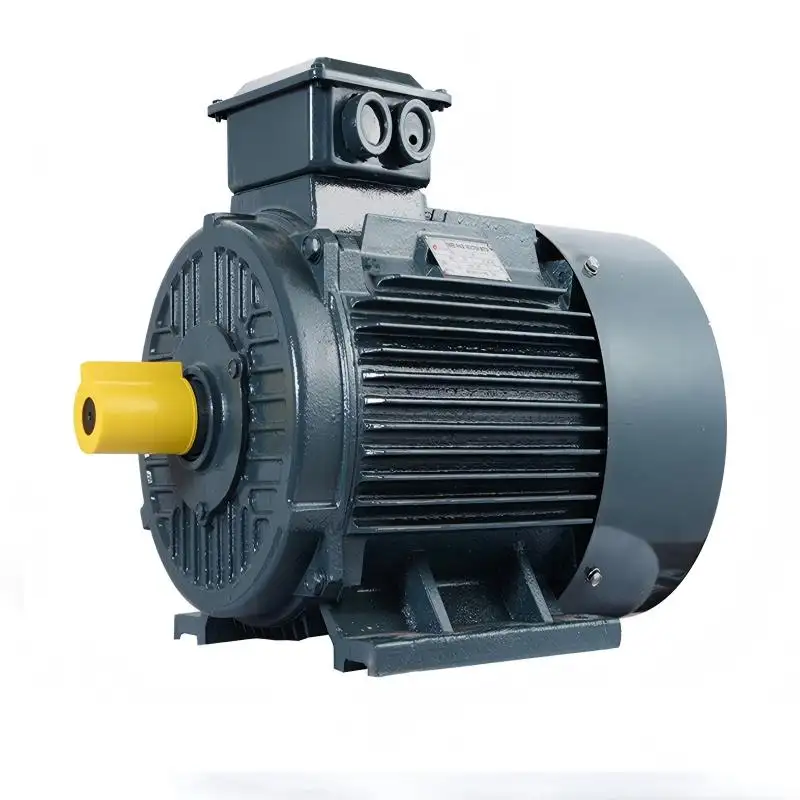
An AC gear motor is commonly used on belt, roller, chain, and screw conveyors because it provides low-speed torque in a compact package. Gear motors are widely applied in bulk-material and warehouse conveyor systems where reliable material flow is required.
Selection should consider:
•Loaded starting conditions
•Conveyor incline and material weight
•Frequent start-stop cycles
•Radial load on the output shaft
•Dust around the cooling fan
For variable conveyor speed, the AC gear motor should be paired with a correctly sized VFD. The gearbox ratio should still keep the motor within a practical frequency and cooling range.
Packaging and Filling Machinery
An AC gear motor can drive infeed conveyors, rotary tables, capping units, labeling mechanisms, and case-handling systems. An appropriate gear ratio facilitates the determination of standard speed. A variable frequency drive (VFD) allows for the control of acceleration and deceleration and the adjustment of the production rate.
In contemporary packaging conveyor systems, combinations of suitable asynchronous motors, gear units, and frequency inverters are used.
Mixers and Process Equipment
Mixers and agitators can have high starting torque, particularly if the process material has settled prior to starting. Nominal motor power alone is therefore insufficient.
Mingye recommends evaluating:
•Material density and viscosity
•Impeller or paddle diameter
•Loaded or unloaded startup
•Batch frequency and operating time
•Shock loads and possible jamming
A properly selected AC gear motor provides torque reserve without unnecessarily oversizing the drive.
Food and Beverage Handling
IP55 protection helps an AC gear motor resist dust and water jets, but it should not automatically be described as suitable for high-pressure hygienic washdown. Under the IP code, the first "5" indicates dust protection and the second "5" indicates protection against water jets.
Wet areas may require higher protection, corrosion-resistant coatings, special seals, or a hygienic gearbox.
Automated Gates and Lifting Equipment
For gates, shutters, hoists, and lifting mechanisms, an AC gear motor may need to stop and hold the load as well as move it.
Brake selection, limit switches, emergency stopping, duty rating, and back-driving behavior should be considered. A standard AC gear motor should not be treated as a load-holding device unless the required brake and safety provisions are included.
Selecting an AC Gear Motor as a Complete System
At Mingye, AC gear motor selection begins with the driven machine. Output speed, torque, duty cycle, mounting, environment, control method, and safety requirements should be defined before choosing the motor frame or gearbox size.
This approach to system design alleviates excessive heat generation, starting torque issues, early failure of bearings, and wastage of energy. The outcome is more reliable and easier to manage automation systems.
FAQs
Q1. What is the purpose of an AC Gear Motor?
AC Gear Motors provide high torque, low-speed motion to conveyors, mixers, gates, packaging machines, and other automated machine tools.
Q2. How is the appropriate gear ratio determined?
The motor speed should be divided by the desired output speed, and the resulting torque needs to be verified against the load of the application.
Q3. Is it possible for an AC Gear Motor to run continuously?
Yes, as long as the motor, gearbox, lubrication, and thermal capacity are all designed to handle continuous-duty operation.
Q4. How is the speed of an AC Gear Motor changed?
With the use of a variable-frequency drive, the speed of the motor can be changed within its designated operating range.
Q5. Does an IP55 AC Gear Motor have waterproof capabilities?
This gear motor is not waterproof. Protection against dust and water jets is provided, but IP55 is not appropriate for immersion or high-pressure washdown.
Share on Social:


Contact Us
In This Article
Rubber Internal Mixer Gearbox: Read the Batch Load Profile, Not Just Motor kW
Oct 22, 2026
Hot Industrial Gearbox Coupling After Cold Alignment: What to Check
Oct 22, 2026
Hydraulic Slewing Drive Won't Rotate: Separate Motor, Brake and Gearbox Faults
Oct 22, 2026
Calender Roll Gap Changes: What Must the Drive Coupling Accommodate?
Oct 22, 2026