


 Home /
 Partnering with a China Gearbox Manufacturer for Long-Run Reliability
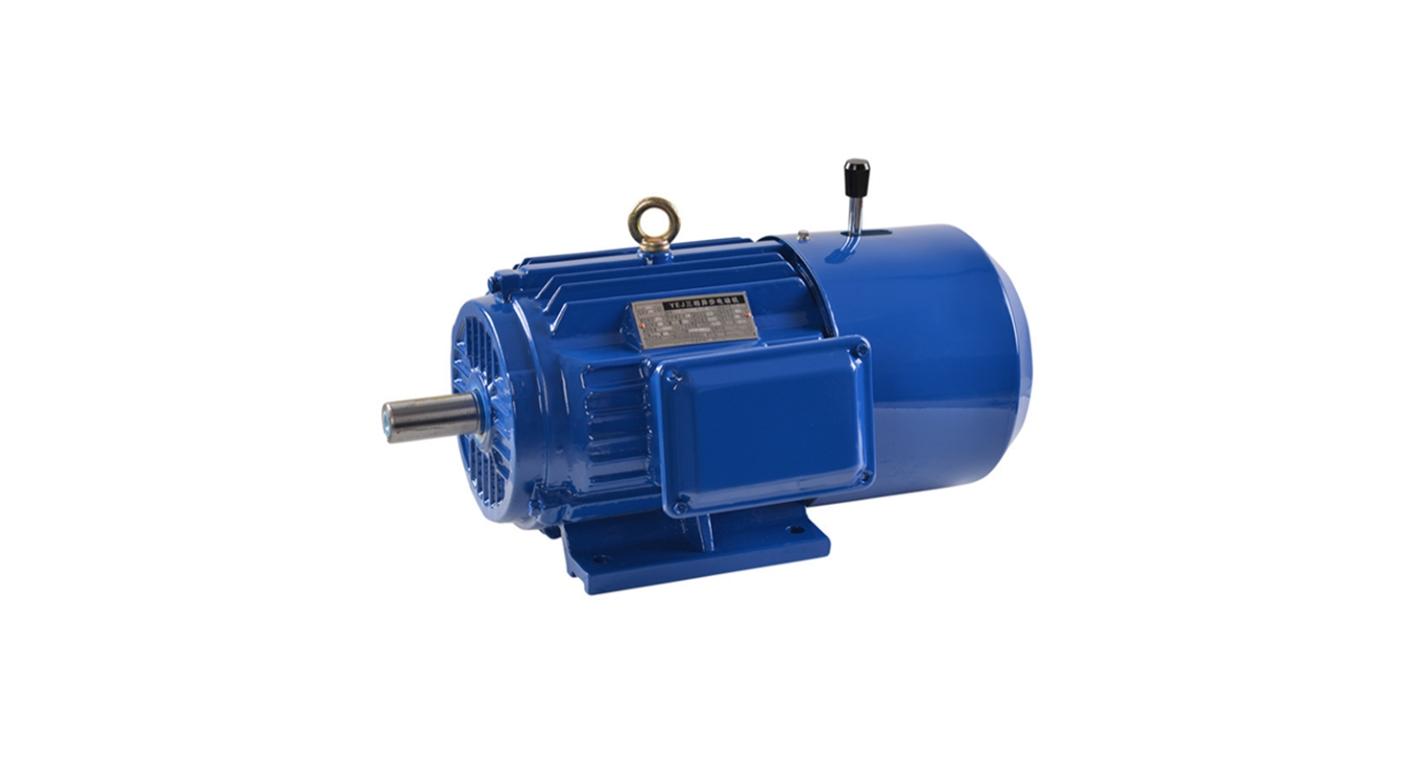
Right Angle Geared Motor: Matching Electrical Supply, Variable Speed and Braking
Oct 26, 2026
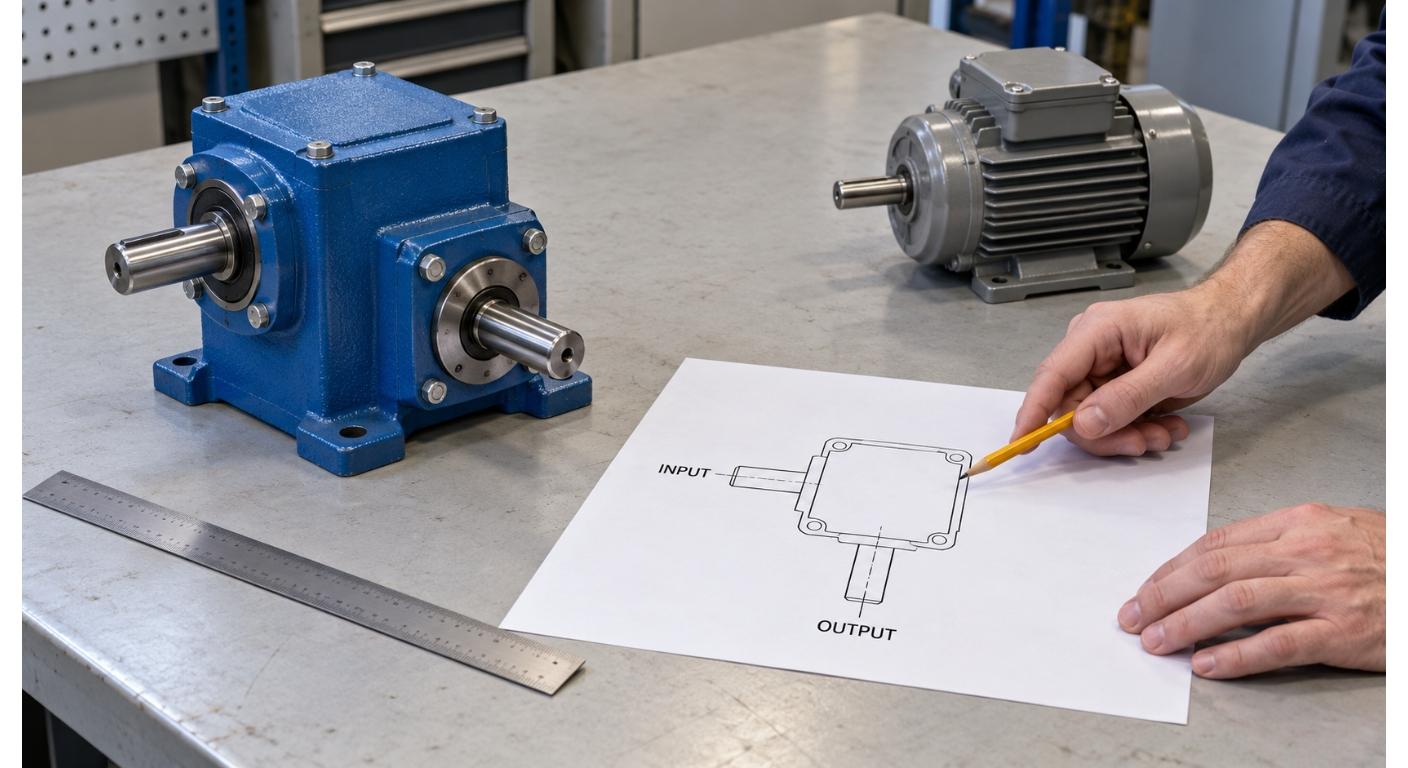
Planning a Bevel Reducer Installation: Turn Shaft Requirements Into a Practical Drive Layout
Oct 26, 2026
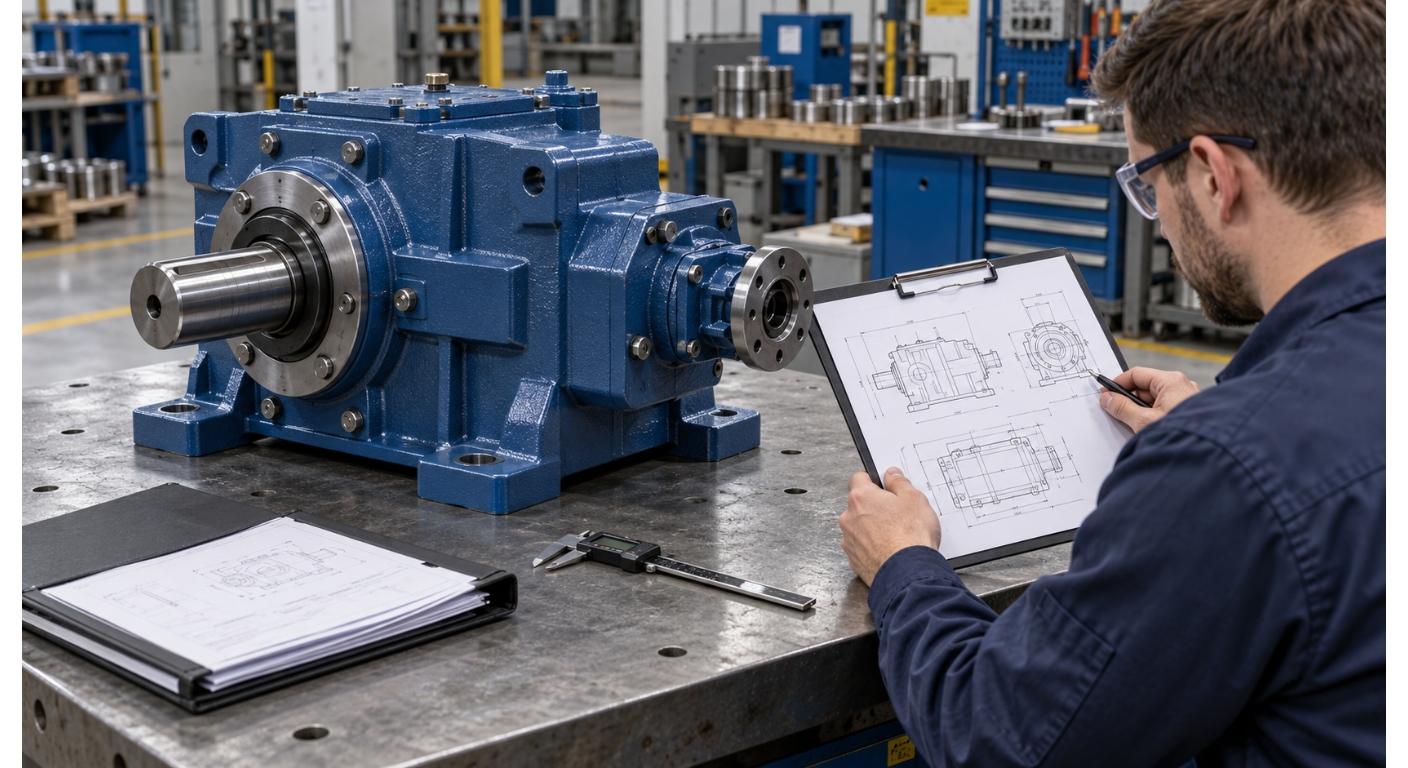
Choosing an Overhead Crane Gearbox by Its Hoisting or Travel Function
Oct 26, 2026
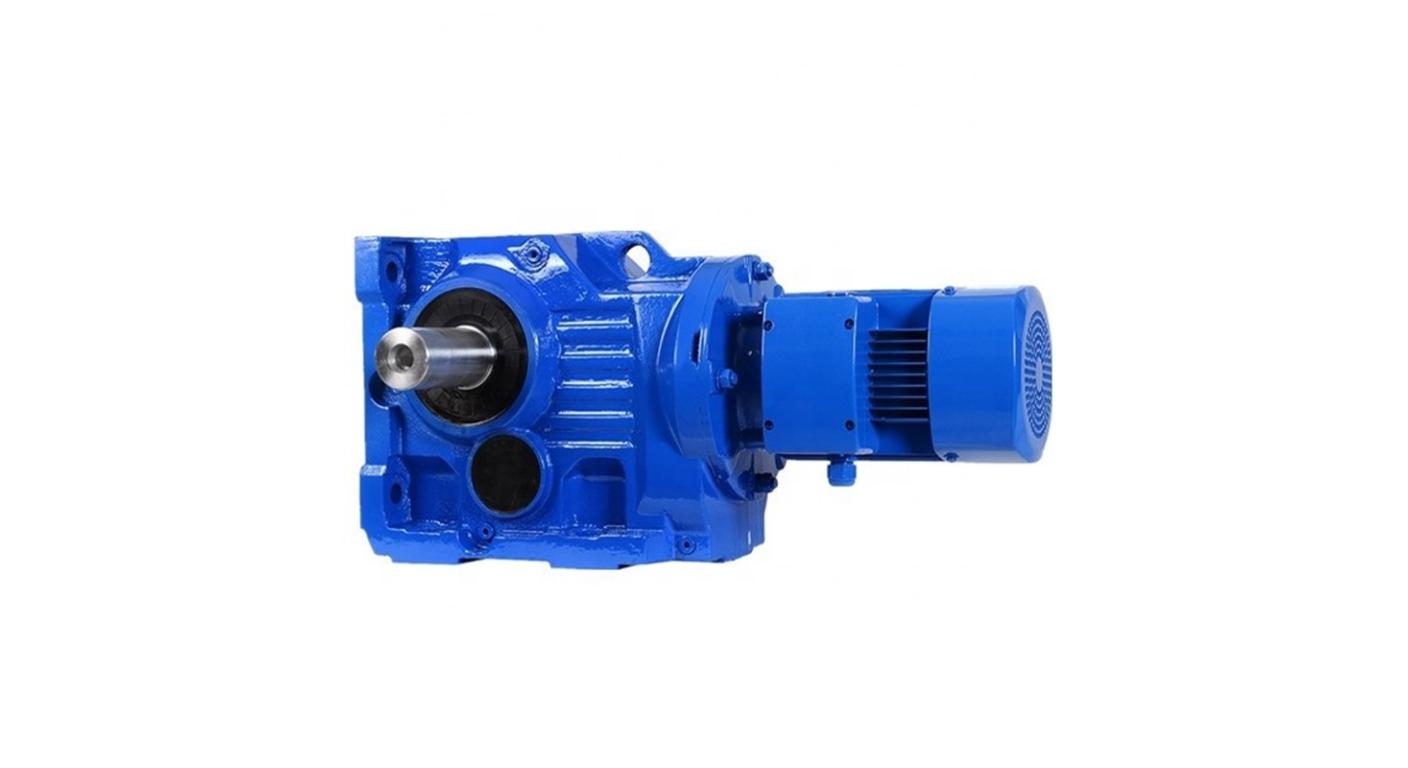
Replacing an Industrial Worm Gearbox: What to Keep and What to Reassess
Oct 25, 2026
Continuous conveyors, mixers, lifting systems, and processing equipment place repeated mechanical and thermal loads on their gearboxes. Under these conditions, long service life depends on more than nominal motor power or reduction ratio.
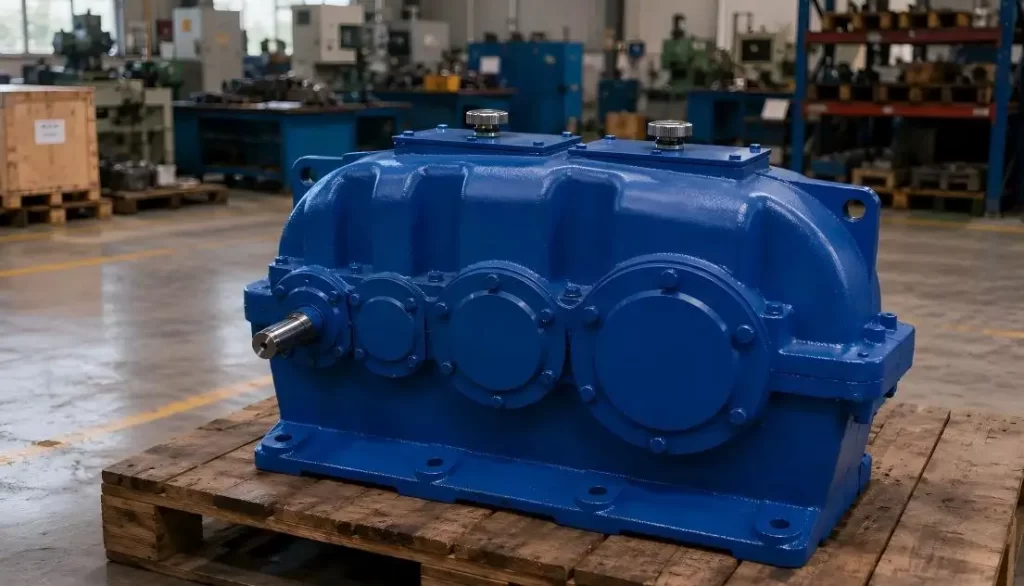
From Mingye's perspective as a Chinese gearbox manufacturer, reliable operation begins with correct gearbox selection, controlled manufacturing, suitable lubrication, accurate installation, and practical maintenance planning.
What Long-Run Gearbox Reliability Really Requires
A gearbox may operate continuously for thousands of hours, but its actual service life is influenced by several connected factors:
•Output torque and peak starting torque
•Daily operating hours and duty cycle
•Radial and axial loads on the shafts
•Load variation, shock, and reversing frequency
•Ambient temperature and ventilation
•Lubricant type, viscosity, and replacement interval
•Shaft alignment and foundation rigidity
A capable China gearbox manufacturer should therefore evaluate the complete operating condition rather than select a gearbox from motor power alone.
Oversizing increases cost, weight, and installation space. Undersizing can lead to excessive temperature, bearing overload, tooth-surface fatigue, and shortened lubricant life.
Understanding the Z-Series Gearbox Structure
The ZDY, ZLY, ZSY, and ZFY series are hardened-tooth-surface cylindrical gear reducers with parallel input and output shafts. They are not coaxial inline gearboxes.
Each model designation represents a specific number of reduction stages:
| Series | Reduction Stages | Published Efficiency* | Typical Selection Purpose |
| ZDY | One stage | Above 96.5% | Low reduction ratios and relatively high output speeds |
| ZLY | Two stages | Above 93% | Medium ratios for conveyors, mixers, and process machinery |
| ZSY | Three stages | Above 90% | Higher ratios and lower output speeds |
| ZFY | Four-Stage | Project-Specific | High-ratio applications requiring detailed thermal evaluation |
*Catalog values apply under specified operating and lubrication conditions. Actual efficiency varies with load, speed, oil temperature, lubricant viscosity, seals, and gear size.
The ZLY is therefore a two-stage parallel-shaft gearbox. Its arrangement provides more reduction than a single-stage ZDY while remaining simpler than three- or four-stage alternatives.
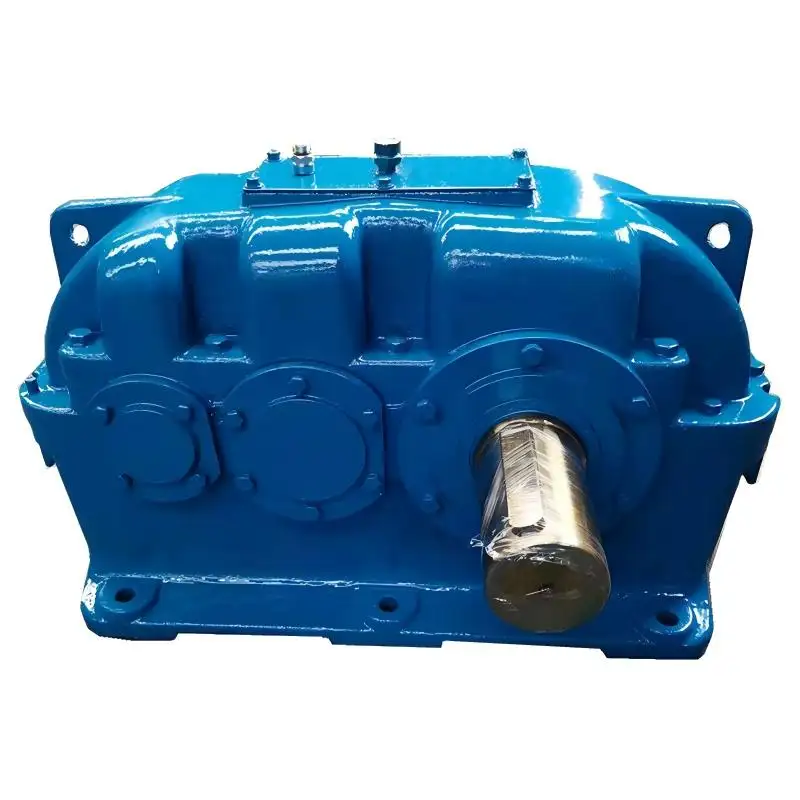
Gear Materials and Heat Treatment
For a China gearbox manufacturer, material specifications must be considered together with heat treatment and finishing accuracy.
Mingye's Z-series gears use high-strength, low-carbon alloy steel. The gears are carburized and quenched, producing a hard wear-resistant surface while retaining a tougher core. Published tooth-surface hardness reaches approximately HRC 58–62. Heat treatment is followed by grinding of the teeth to enhance the accuracy of the gear teeth profiles as well as the quality of the contact.
There are several functional benefits to this method of gear manufacture:
•Enhanced tolerance to pitting: Repeated contact stresses are less problematic to hardened gear teeth.
•Enhanced core toughness: The gear body can resist shifting and intermediate contact shock stresses.
•More even distribution of contact stresses: Grinding of gear tooth profiles significantly reduces contact stresses.
•Damped vibration: Limited play and contact variability as a result of a high-precision engagement of gear teeth reduces the effect of vibrations.
•Reduced wear variation: Predictable contact is a result of consistent surface finish.
The tooth profile of the gear may be hard, but that by itself does not ensure long contact life. The core, case depth, geometry, alignment, lubrication, and finish are critical as well.
Manufacturing Accuracy and Batch Consistency
The long-term reliability of the system is dependent on the gearboxes and spare parts being consistent in dimensions as well.
Mingye uses CNC turning for shafts, machining centers for housings and structural components, gear hobbing before heat treatment, gear grinding for final tooth finishing, and coordinate measuring equipment for dimensional inspection. The company lists equipment including OKUMA CNC turning, FEELER housing machining, NILES gear grinding, and CMM inspection systems.
For users, controlled manufacturing can support:
•More consistent bearing and shaft fits
•Accurate mounting surfaces
•Repeatable gear contact patterns
•Easier replacement of standardized components
•Reduced adjustment during repeat installations
A China gearbox manufacturer should also maintain material records, heat-treatment reports, inspection results, drawings, and serial-number traceability when these documents are required by the project.
Selection Questions to Discuss with the Manufacturer
Before confirming a gearbox, engineers should provide more than a requested model number. Useful operating information includes:
•Motor power, speed, and starting method
•Required output speed and torque
•Maximum startup or jam torque
•Operating hours per day
•Number of starts and reversals
•Driven-machine load characteristics
•Shaft connection and external loads
•Installation position
•Ambient temperature and dust conditions
•Lubrication and cooling limitations
As a China gearbox manufacturer, Mingye uses these details to determine the appropriate series, ratio, service factor, shaft arrangement, lubricant, and thermal configuration.
Maintenance Features That Support Uptime
Even a correctly manufactured gearbox requires inspection. Reliability in the long term is improved when maintenance staff can access lubrication points, seals, bearings, and inspection covers easily.
Some checks that should be done regularly are listed below:
•Oil level and lubricating oil condition
•Housing and bearing temperature
•Vibration and abnormal noise
•Leakage of shaft seals
•Alignment of coupling and foundations
•Blockage of breathers
•Tightening of mounting bolts
Data in the form of trends is generally more meaningful than a single-point measurement. A gradual rise in temperature or vibration may indicate lubrication deterioration, misalignment, bearing wear, or changing gear contact before a major failure develops.
Building a Practical Manufacturing Partnership
Selecting a China Gearbox Manufacturing should be treated as an engineering decision rather than a price-only comparison. Gear material, heat treatment, machining accuracy, inspection capability, documentation, application support, and spare-part availability all influence lifetime operating cost.
At Mingye, the objective is to match the gearbox to the real duty of the machine and provide a configuration that can be installed, inspected, and maintained without unnecessary complexity. This approach helps users achieve more predictable transmission performance while reducing avoidable downtime over repeated operating cycles.
FAQs
Q1. Why are gearbox gears carburized and hardened?
To improve wear resistance for the tooth surface while maintaining toughness for the gear core.
Q2. What parameters are required for gearbox selection?
Parameters include motor power, input and output speed, torque, duty cycle, the type of load, position of loading, and the temperature range during operation.
Q3. Is the ZLY gearbox an inline gearbox?
No. The ZLY is a two-stage variant of the parallel-shaft cylindrical gear reducers.
Q4. What distinguishes ZDY, ZLY and ZSY?
ZDY is single-stage, ZLY is two-stage and ZSY is three-stage.
Q5. What governs the selection of the gearbox reduction ratio?
The required output speed is a direct function of the input speed; thus the ratio is determined.
Share on Social:


Contact Us
In This Article
Right Angle Geared Motor: Matching Electrical Supply, Variable Speed and Braking
Oct 26, 2026
Planning a Bevel Reducer Installation: Turn Shaft Requirements Into a Practical Drive Layout
Oct 26, 2026
Choosing an Overhead Crane Gearbox by Its Hoisting or Travel Function
Oct 26, 2026
Replacing an Industrial Worm Gearbox: What to Keep and What to Reassess
Oct 25, 2026