


 Home /
 Thermal Management In Twin Shaft Paddle Mixer Gearboxes: A 2026 Approach
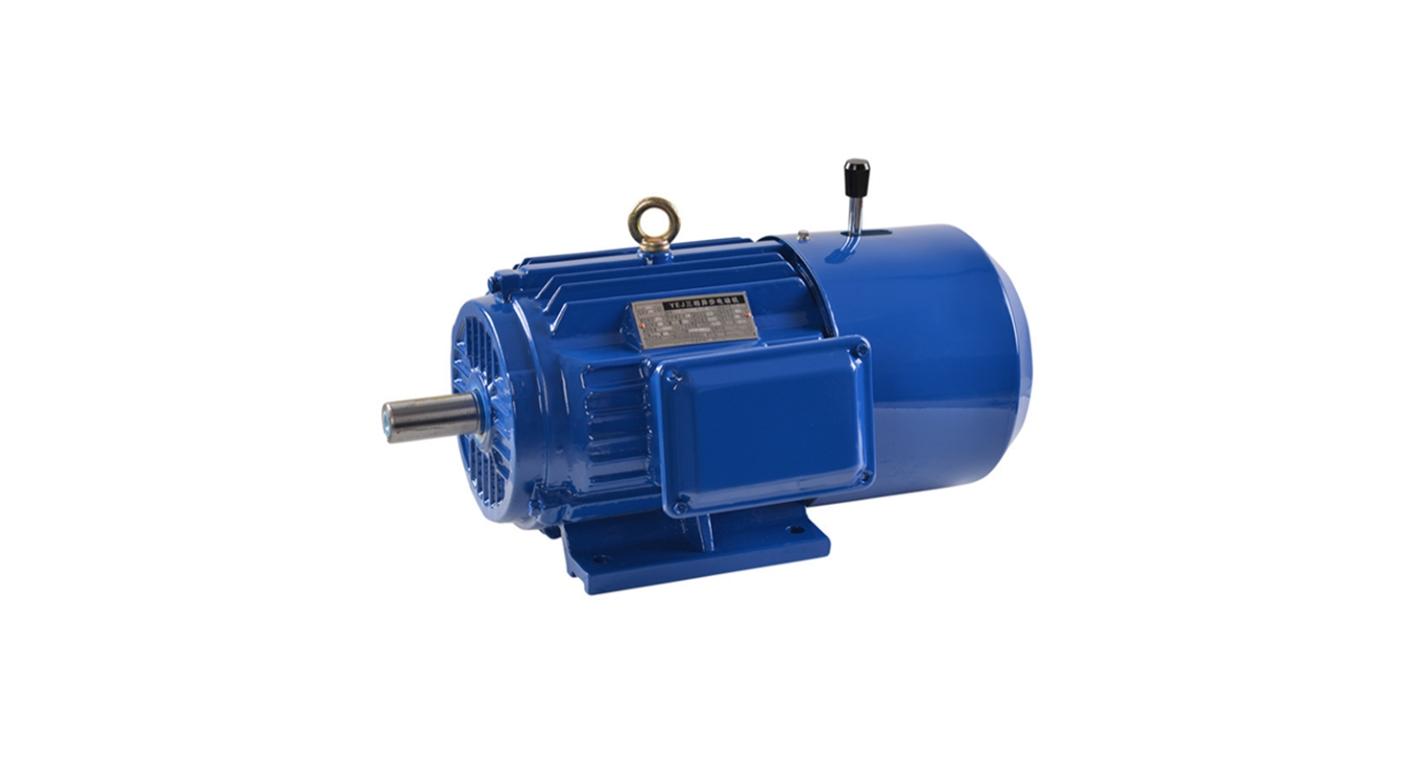
Right Angle Geared Motor: Matching Electrical Supply, Variable Speed and Braking
Oct 26, 2026
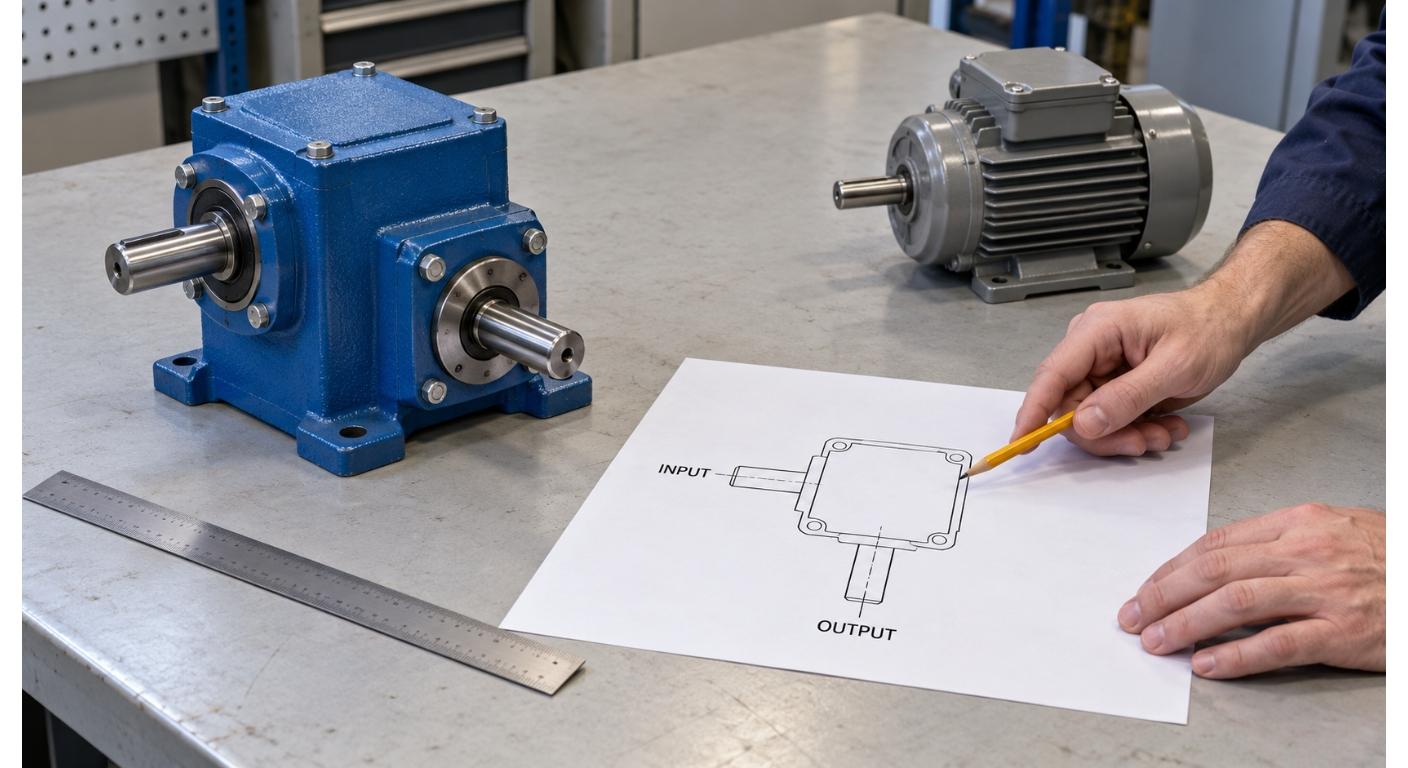
Planning a Bevel Reducer Installation: Turn Shaft Requirements Into a Practical Drive Layout
Oct 26, 2026
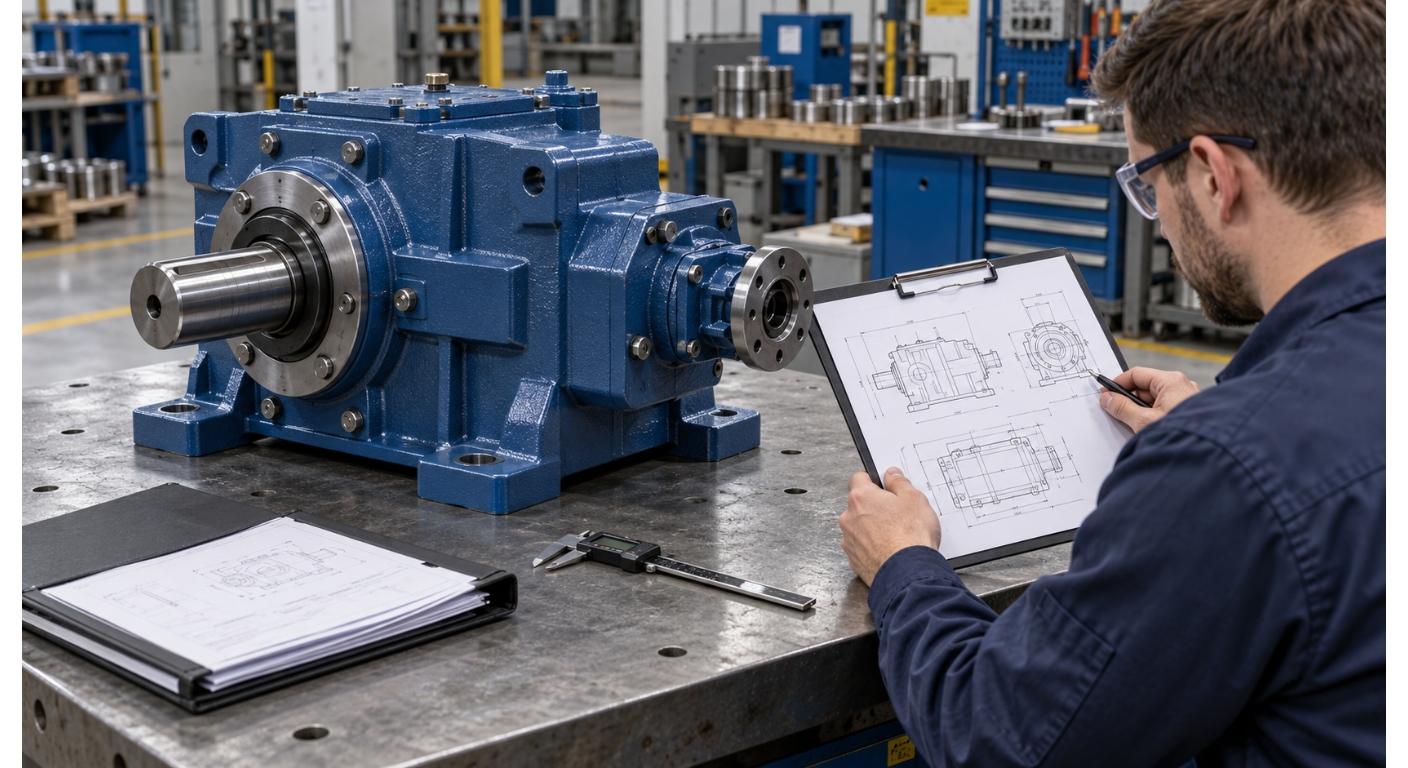
Choosing an Overhead Crane Gearbox by Its Hoisting or Travel Function
Oct 26, 2026
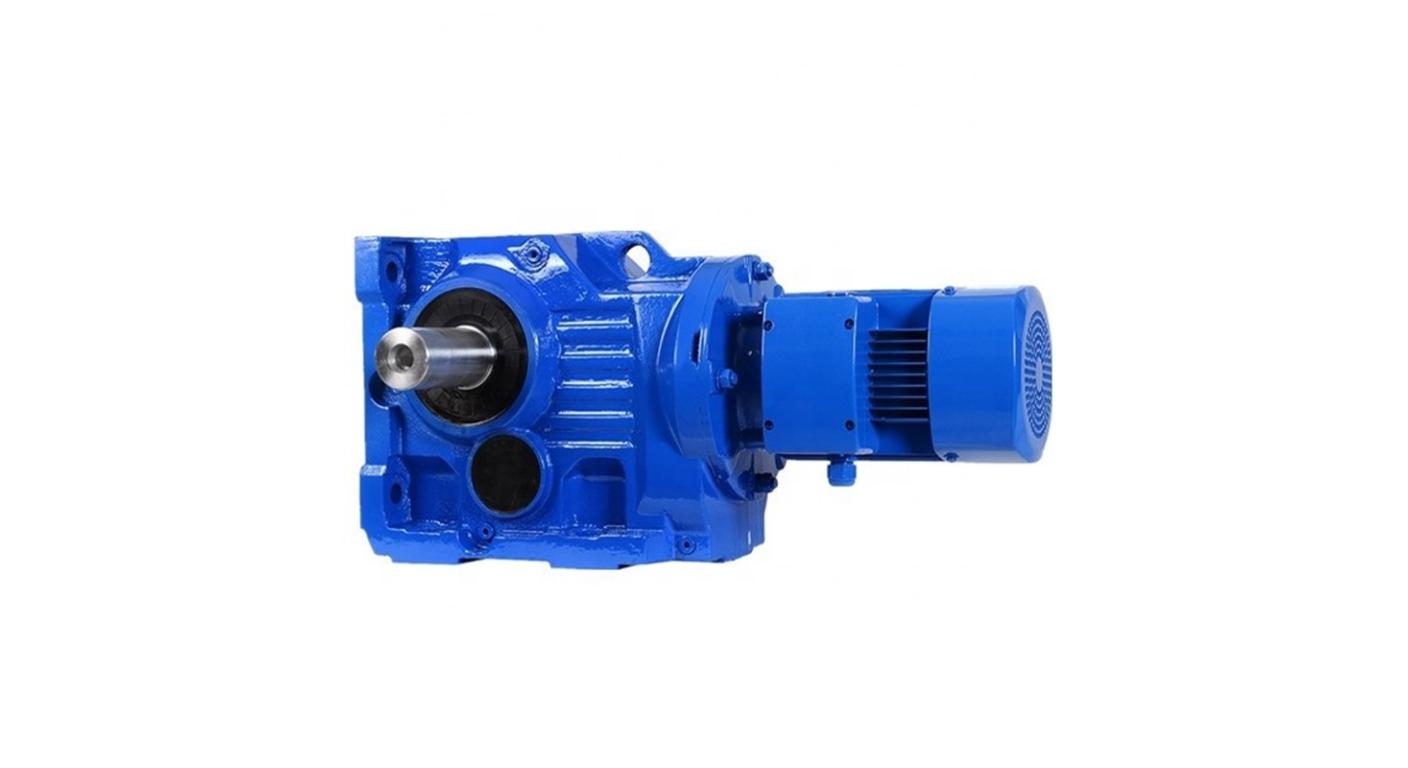
Replacing an Industrial Worm Gearbox: What to Keep and What to Reassess
Oct 25, 2026
Never before have Twin Shaft Paddle Mixer systems been challenged to run harder and for longer periods. By 2026, production lines will require 24/7 operations, operate at higher fill levels, and enforce tighter batch uniformity. Under these new conditions, heat will become the silent adversary to all Twin Shaft Paddle Mixer gearboxes. If internal heat exceeds limits, lubricant fatigue, rapid surface wear, and unplanned outages will follow. This article will focus on Mingye's thermal management for Twin Shaft Paddle Mixers and why thermal management should be on par with core design considerations.
Why Heat Kills Mixer Gearboxes Prematurely
Every Twin Shaft Paddle Mixer gearbox will generate heat during operation, a necessary byproduct of gear meshing, bearing friction, and oil churns. This heat will build up in a standard gearbox. If the Twin Shaft Paddle Mixer operates on high viscosity materials or uses dense powder, the torque demand will increase. Higher torque means higher gear contact stress. Higher stress means more friction. More friction means more heat.
The common failure sequence looks like this:
•Oil temperature exceeds 85°C: Lubricant viscosity drops below safe levels
•Viscosity loss: Metal surfaces lose their protective film
•Direct contact: Gear teeth begin micro-welding and tearing
•Progressive damage: Surface fatigue leads to pitting, then tooth breakage
A Twin Shaft Paddle Mixer operating in dry mortar or battery material applications faces this risk daily. The difference between a three-year gearbox and a ten-year gearbox often comes down to thermal management.
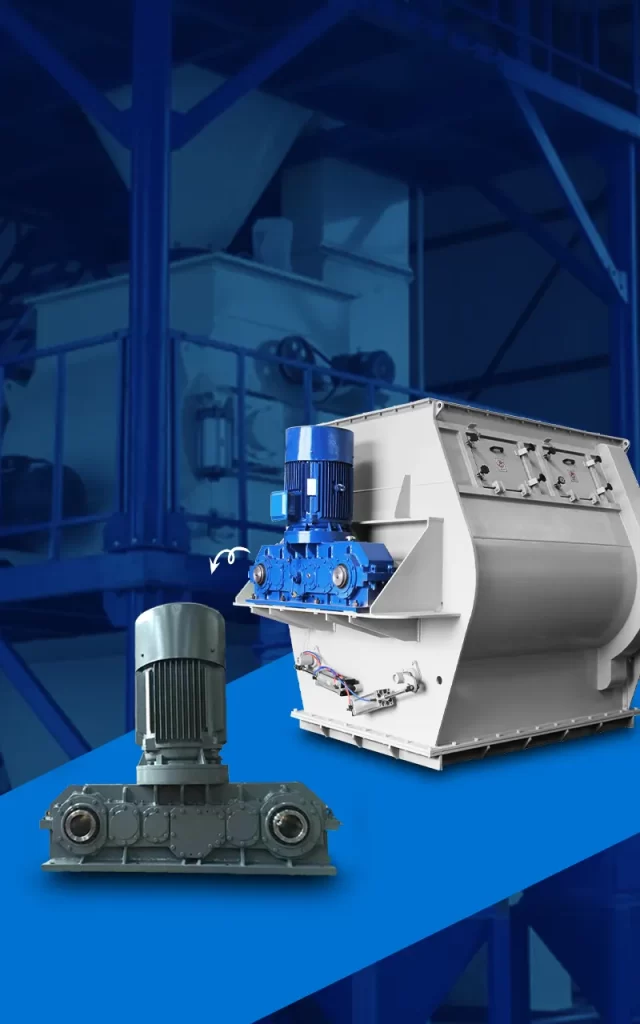
Heat Generation Sources in Twin Shaft Mixer Drives
Understanding where heat comes from helps explain why gearbox design matters. In a typical Twin Shaft Paddle Mixer drive train, thermal energy enters the system through three main paths.
•Gear mesh friction: Using a gear turns a shaft. Moving parts contacts, can create resistance. The slower the shaft turns and the higher the load, the longer the resistance can be felt. This effect is heightened when the friction mesh is run on a Twin Shaft Paddle Mixer system when it is used at moderate speeds with high torque.
•Bearing friction: There are multiple sources of friction when parts touch on a Bearing. A Twin Shaft Paddle Mixer gearbox has many more bearing units on each shaft.
•Oil churning: In a gearbox with oil, the moving gears are always shifting oil. This action is very power consuming and generates a large amount of internal heat, especially with deep sumps and over-filled gearboxes.
The Mingye Thermal Approach: Reduction Before Dissipation
Mingye takes an approach where they don't rely on external cooling techniques as a final resort. Their first line of defense is to introduce fewer heat sources. Cooling the gear box on a Twin Shaft Paddle Mixer becomes an easy task when the internal heat load is decreased.
•Carburized and quenched gears (58–62 HRC): The higher the hardness of a surface the higher the load it can bear with less friction. More heat produces less friction. A Twin Shaft Paddle Mixer gearbox with 6-level accuracy hardened gears runs cooler from the start.
•Grade 6: When surfaces touch, they may locally increase in temperature. Less rough surfaces are favorable. Smoother surfaces generate less sliding resistance. Less sliding resistance results in a lower operating temperature for each Twin Shaft Paddle Mixer gearbox.
•Optimized oil volume: An easily made mistake is putting too much oil in the gearbox. Mingye determines the right oil volumes based on the thermal model and not by guesswork. The right oil volume lubricates the parts but minimizes the friction.
Structural Heat Path Management
Some heat trapped in the gearbox must be managed. Mingye optimizes gearboxes, and their housings are designed to manage heat along with protection. Gearbox housings are made with rib patterns and thin walls to allow for airflow.
It is very important to select the right materials: The casing must conduct heat away from the inner components. Cast iron with the right percentage of carbon has a good combination of strength and conductivity. Every Twin Shaft Paddle Mixer gearbox from Mingye employs Cast Iron with appropriate material selection for thermal properties.
Bearing placement is also important: Although bearings generate heat, they also conduct it. Mingye has bearings placed in a way to permit direct thermal conduction from the rolling part of the bearings to the walls of the casing. The shorter the heat removal path, the lower the internal temperature of the casing at the same condition of operation.
Lubrication as a Thermal Tool
Oil does more than reduce friction. It removes heat from gears and bearings. In a Twin Shaft Paddle Mixer gearbox that is properly designed, oil moves from the housing to the areas of the gearbox that are hot. Mingye uses oil of ISO VG grades for the anticipated operating ranges.
What to look for in your gearbox:
•Oils temperature after four hours of continuous mixing: should be above 80°C and stabilize.
•Housing oil temperature gradient: a temperature gradient indicates insufficient internal convection and uneven flow.
•Oil discoloration: dark discoloration indicates breakdown and aging of the oil due to injurious overheating.
In demanding Twin Shaft Paddle Mixer applications, synthetic lubricants outperform mineral oils concerning heat resistance and preservation of Oils for extended periods at higher temperatures and resistance to oxidation.
2026 Operational Realities
Production Managers are now able to run Twin Shaft Paddle Mixer lines with no (or minimal) operator involvement. Fully automated systems are unable to gauge gearbox temperatures via direct and tactile measurement. This has made passive thermal robustness more important than ever. A gearbox that can manage its own heat without external supporting cooling systems eliminates a number of system design complexity and points of potential failure.
Mingye Design Goals for 2026
•Generate less baseline heat with precision gearing.
•House ribbed geometry for faster heat transfer.
•Establish predictable thermal reactions for the purpose of easier digital monitoring.
•Build compatibility with high-performance synthetic lubricants.
•12 thermal patents underscore a legacy of focus on thermal performance as a differentiator.
Mingye's Recommendations for Buyers
What do you look for when sourcing gearboxes for a new or replacement Twin Shaft Paddle Mixer? At least evaluate gearboxes with respect to the most relevant thermal characteristics.
• What is the gear hardness? Below 55−HRC is entry level; over 58−HRC shows a serious thermal design concern.
• What is the housing design? Smooth castings look clean, but ribbed designs are superior.
• What is the oil capacity? An insufficient thermal mass for continuous operation may be indicated by a sump which is markedly small.
From a 2026 perspective, thermal performance will differentiate basic and engineered offerings of the Twin Shaft Paddle Mixer Gearbox. Ingye builds for the long term; we support the short term. Our engineering team is always available to help with your specific mixing and thermal needs.
Request a Free Quote
For a thermal-matched gearbox, let us know your Twin Shaft Paddle Mixer specs, what you expect your torque to be, and how many hours a day you expect it to run!
FAQ
Q: For the Twin Shaft Paddle Mixer gearbox, what is the greatest working temperature?
A: The gearbox is rated to 80°C. Past that, we would suggest synthetic lubricant and/or cooling assistance on the housing.
Q: At what frequency do I need to perform oil maintenance when applying heat to the mixer?
A: The oil should be changed every 2,500 hours. If working with high temperature and highly abrasive materials (ambient temperature 35°C), this is to be further reduced to 2,000 hours.
Q: Will I need to supply external cooling assistance (fans, radiators, etc.) to the gearbox?
A: Not for high temperature mortar or chemical mixing. Ribbed cooling is passive and sufficient. Highly custom, high power arrangements will need forced cooling draughts.
Q: What is the best lubricant to use on a Twin Shaft Paddle Mixer for 24/7 operation?
A: ISO VG 220 for temperature cabins between 0°C and 40°C. In more extreme environments, VG 320 would be suitable.
Q: What should I look for to determine if I have thermal faulted on my gearbox?
A: Burnt oil (dark brown or black) with a burnt smell, pitting on the teeth of the gear which is visibly abrasive, and increased noise.
Share on Social:


Contact Us
In This Article
Right Angle Geared Motor: Matching Electrical Supply, Variable Speed and Braking
Oct 26, 2026
Planning a Bevel Reducer Installation: Turn Shaft Requirements Into a Practical Drive Layout
Oct 26, 2026
Choosing an Overhead Crane Gearbox by Its Hoisting or Travel Function
Oct 26, 2026
Replacing an Industrial Worm Gearbox: What to Keep and What to Reassess
Oct 25, 2026