


 Home /
 A Sizing Guide: How to Match the Right Reducer to Your Double Shaft Paddle Mixer Based on Volume
Right Angle Geared Motor: Matching Electrical Supply, Variable Speed and Braking
Oct 26, 2026
Planning a Bevel Reducer Installation: Turn Shaft Requirements Into a Practical Drive Layout
Oct 26, 2026
Choosing an Overhead Crane Gearbox by Its Hoisting or Travel Function
Oct 26, 2026
Replacing an Industrial Worm Gearbox: What to Keep and What to Reassess
Oct 25, 2026
In a Double Shaft Paddle Mixer, choosing the right gearbox involves a number of considerations. For example, the output speed, power, and torque of a gearbox can all be influenced by the volume of the mixing chamber, in cubic meters. Gearboxes that are undersized will break, and oversized gearboxes will increase costs unnecessarily and be a waste of resources.
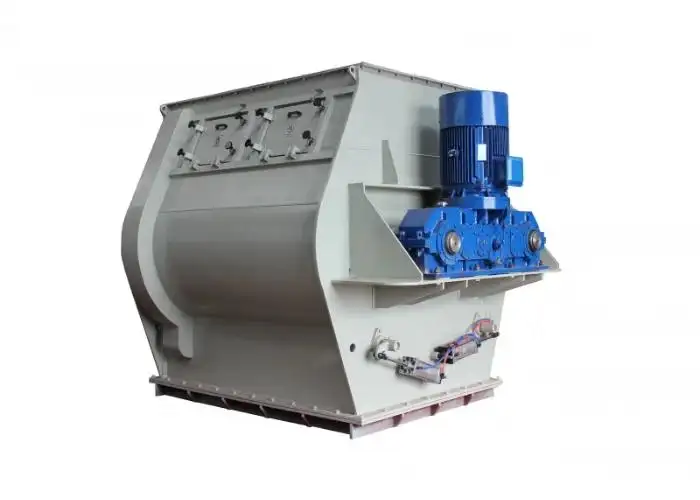
This guide explains, step by step, how to match the right Special Reducer for Twin Shafts Paddle Mixer to your specific mixer volume, based on real engineering parameters from Mingye Machinery.
Why Standard Reducers Fail in Double Shaft Paddle Mixer Applications
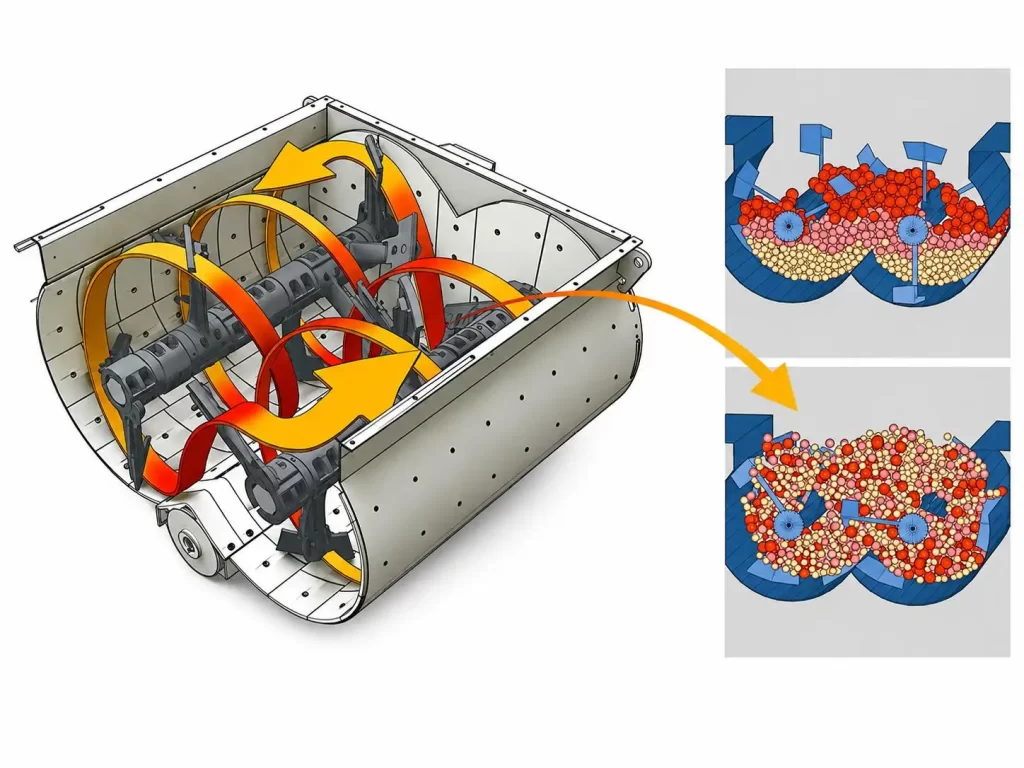
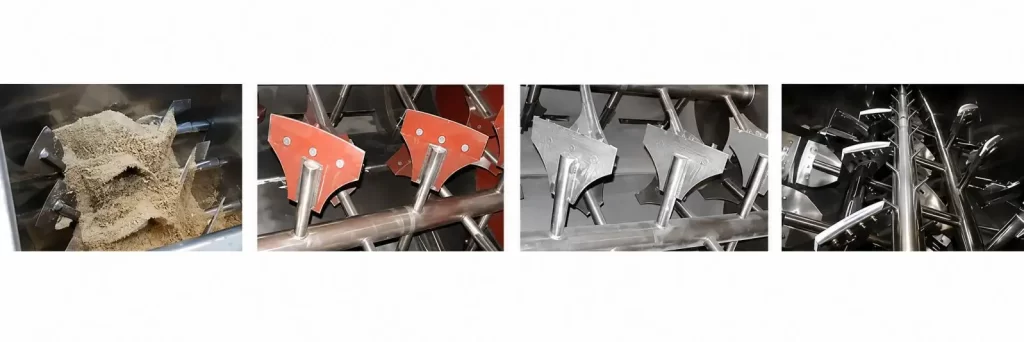
A Double Shaft Paddle Mixer operates with two parallel shafts rotating in opposite directions. The paddles must remain perfectly synchronized to create the "weightless zone" where powders are thrown up and cross-mixed evenly. A general-purpose industrial reducer cannot achieve this.
•Power is directed to a single output shaft on typical reducers, which causes one side to drive the other. This is normally achieved through a chain or coupling. This method is often employed to balance the load across the shafts. However, a torque imbalance is observed.
•No Gear Pair: Absence of a gear pair results in the loss of synchronization of these shafts, which creates collisions between the paddles and/or dead zones (inactive regions) in the mixing chamber.
•Higher Maintenance: When universal reducers are required for continuous mixing of dry mortar, chemicals and battery materials, regular adjustments and replacements of parts are expected.
Mingye Machinery's Twin Shaft Paddle Mixer Gearbox solves these issues with a dedicated gear train that splits input power into two synchronized, balanced outputs. The gearbox is designed specifically for mixing equipment requiring synchronized shaft movement, not as a universal product.
Core Parameters That Connect Mixer Volume to Reducer Selection
Every Double Shaft Paddle Mixer has a geometric working volume. That volume determines four critical transmission parameters: center distance, motor power, reduction ratio, and output speed. Below is how each parameter relates to mixer capacity.
1. Center Distance (mm)
•What it is: Distance of parallel shafts.
•Why it is important: Larger paddles require wider shafts. The spacing of the reducer's output shafts must take this into consideration.
•General rule: A 0.25–0.5 m³ mixer has a center distance of 450 mm and a 12–15 m³ batch mixer has 1360 mm.
2. Motor Power (kW)
•Reason: Must overcome resistance and accelerate the material as well as maintain rotation of the paddles.
•Volume correlation: A 0.5 m³ mixer could have 7.5 kW, while an industrial 10 m³ mixer could have 55–75 kW mixers since the additional requirements don't correlate directly volume-wise, but instead with larger mixers that implement more difficult material and a higher fill.
•Safety margin: Mingye Machinery offers 2 powers with the same center distance (11 kW or 15 kW for 0.5–0.75 m³), which provides a flex to deal with tougher materials.
3. Reduction Ratio and Output Speed
•Typical values: Most double shaft paddle mixers run at 30–50 rpm output speed.
•Why not faster: Higher speeds throw material against the chamber walls rather than creating the weightless falling action needed for uniform cross-mixing.
•Ratio selection: A ratio of 30:1 to 50:1 is common. For a given motor input speed (usually 1450–1500 rpm), the ratio directly sets the paddle tip speed. Mingye's YHJ series provides ratios from 30 to 50.
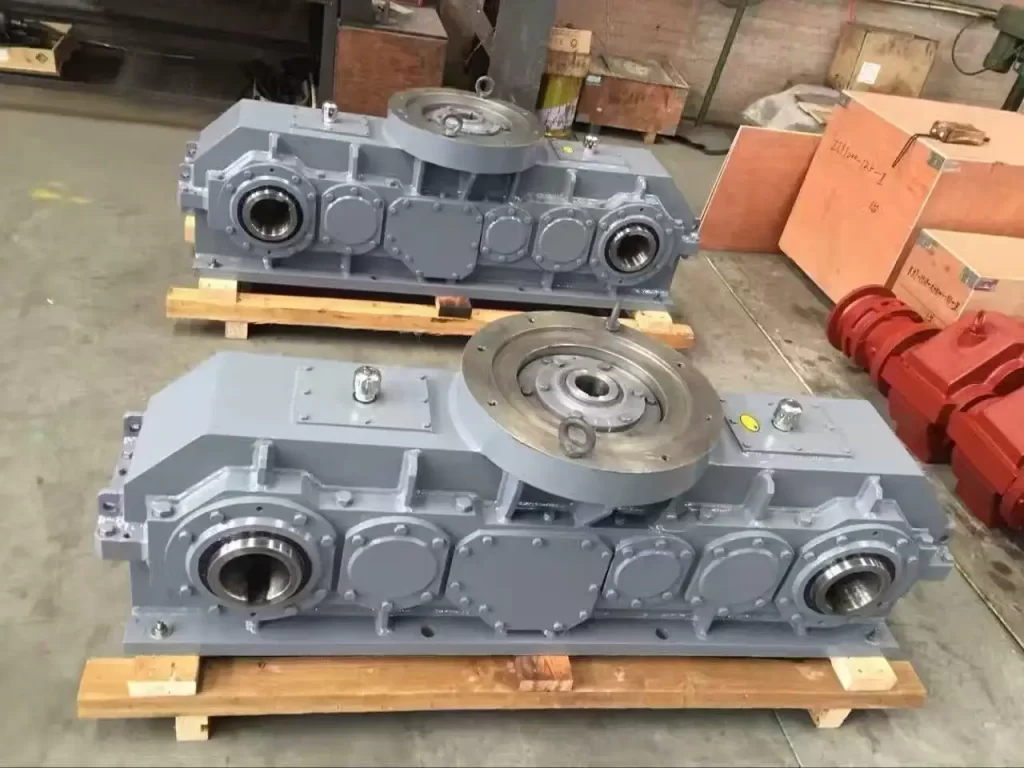
Step-by-Step Matching Process: From Mixer Volume to Reducer Model
Follow this procedure to select the correct Double Shaft Paddle Mixer gearbox for your equipment.
Step 1 – Determine the working volume of your mixer
•Measure the internal chamber length, width, and material fill height. The geometric volume (m³) is defined first.
•Example: A 0.3 m³ pilot mixer is NOT an 8 m³ production line mixer.
Step 2 - Determine the type of item and the bulk density of the material.
•Light powders such as flour and feeds have a lower torque requirement.
•Ceramics, battery powders, and dry mortar have a higher torque requirement and type of gear tooth with a higher modulus.
•Mingye's gearbox is a blend of low-carbon alloy steel with a carburizing and quenching heat treatment that results in a surface hardness of 58-62 HRC at Grade 6. It is perfect for mixing abrasive materials since the wear is negligible.
Step 3 - Look at volume to model table.
Field data from Mingye Machinery matches
•YHJ450-30-AM132: Center distance 450 mm, 7.5 kW, ratio 30, output 50 rpm → for mixers of 0.25-0.5 m³.
•YHJ570-35-AM160/AM180: 570 mm, 11–18.5 kW, ratio 35, output 41 rpm → Suitable for 0.5–0.75 m³.
•YHJ700-33-AM180: 700 mm, 18.5–22 kW, ratio 33, output 45 rpm → Suitable for 1–1.5 m³.
•YHJ890-50-AM200/AM225: 890 mm, 30–37 kW, ratio 50, output 30 rpm → Suitable for 2–4 m³.
•YHJ1050-50-AM225: 1050 mm, 45 kW, ratio 50, output 30 rpm → Suitable for 6–8 m³.
•YHJ1230-50-AM250/AM280: 1230 mm, 55–75 kW, ratio 50, output 30 rpm → Suitable for 8–10 m³.
•YHJ1360-50-AM280: 1360 mm, 90 kW, ratio 50, output 30 rpm → Suitable for 12–15 m³.
Step 4 - Mixing Process Speed Assessment
•Dry chemicals and mortars mix best with a speed of 30-40 RPM.
•Food and feed mixing is best at a speed of 45-50 rpm for a more delicate mix.
•All Mingye reducers have synchronized output with a fixed gear design. Due to this, paddle alignment is consistent, even when speeds vary.
Step 5 - Evaluating the Possible Installations and Integration
•Will the reducer fit into your current mixer setup? Mingye will work with you to adjust the reducer to best fit your mixer setup and your process and installation constraints.
•For OEM projects and replacements, the gearbox design is flexible, and the overall drive layout remains the same. Twin hollow shaft output is installation space efficient and lowers manufacturing costs.
Mingye's Special Reducer for Twin Shafts Paddle Mixer Design Benefits
In addition to volumetric matching, reliable long-term performance is ensured.
•Four-stage gear drive: Smooth power ramp-up with a load distribution design that eliminates shock loading on a gear pair.
•Torque balancing: The gear train splits the input to two outputs. Torque adjusts equally on both sides.
•Rugged design: Gear train consists of low-carbon alloy steel with a case of carburizing and quenching giving a hard, wear-resistant case (58–62 HRC) and a tough core. Gear accuracy of Grade 6 is attainable with low vibration and noise.
•Compact design: Compared to other products, the design is optimal, lightweight, and easy to maintain, with a long service life.
Commonly Asked Reducer Sizing Questions for Double Shaft Paddle Mixers
Can different mixer designs use the same gearbox?
Different mixer designs can use the same gearbox, but the gearbox should not be thought of as a universal or fixed model. It can be modified according to the different structures and layouts of the mixer, as well as according to the conditions of the project.
What should I provide in order to have a reducer substituted or retrofitted?
Please provide photos, drawings, or nameplate and some basic machine data. In addition, include the type of mixer and the application, the existing reducer and the direction of installation, if applicable.
Is it possible to modify the reducer for my working conditions?
Yes it is possible to modify the reducer for working conditions. The layout of the machine, the working conditions, the arrangements of installation and other project related conditions can be considered. Mingye designs and manufactures products according to customer demands.
Conclusion: Start with Volume and Finish with the Right Reducer
Getting the correct reducer for a Double Shaft Paddle Mixer is a logical and systematic exercise. For this, the working volume of the mixer in cubic meters must be known, as well as the density of the material being mixed and the mixing speed. The table supplied above can be used to assist with this. Mingye Machinery's Special Reducer for Twin Shafts Paddle Mixer offers synchronized dual outputs, high-hardness gears, and flexible configuration for both new equipment and retrofits.
For a precise recommendation, gather your mixer's volume, a few photos or drawings, and basic motor data. Then request a free quote or technical discussion. The right gearbox not only improves mixing uniformity — it also extends the life of your entire mixing system.
Get Free Quote – Provide your mixer volume and application details to receive a matched gearbox proposal.
FAQs
Q1: How do I know which model matches my 2 m³ double shaft paddle mixer?
For 2–4 m³ mixers, the YHJ890-50-AM200 (30 kW) or YHJ890-50-AM225 (37 kW) is typically recommended.
Q2: Is it possible to use the same gearbox for mixing both dry mortar and battery materials?
Yes. With adjustments to motor power and provided the manufacturer is willing to work on the process conditions, the gearbox can be used for different materials.
Q3: What are the requirements to maintain a twin shaft paddle mixer gearbox?
Oil changes, monitoring the wear on the surface of the gear, and verifying alignment. Because the gears are carburized and quenched (58–62 HRC), the intervals can be longer.
Q4: What is the ideal output speed for mixing of food and feed powders?
Mixing speeds usually range around 45–50 rpm. The YHJ700-33-AM180 with a 45 rpm output is an example of a suitable design for this application.
Q5: What is the relation between center distance and mixer volume?
Center distance (mm) directly scales with shaft spacing. Larger volumes require larger center distances, from 450 mm (0.25 m³) up to 1360 mm (12–15 m³).
Share on Social:


Contact Us
In This Article
Right Angle Geared Motor: Matching Electrical Supply, Variable Speed and Braking
Oct 26, 2026
Planning a Bevel Reducer Installation: Turn Shaft Requirements Into a Practical Drive Layout
Oct 26, 2026
Choosing an Overhead Crane Gearbox by Its Hoisting or Travel Function
Oct 26, 2026
Replacing an Industrial Worm Gearbox: What to Keep and What to Reassess
Oct 25, 2026