


 Home /
Planetary Gear Reducer Backlash Explained: How 1 Arcmin Affects Positioning Accuracy
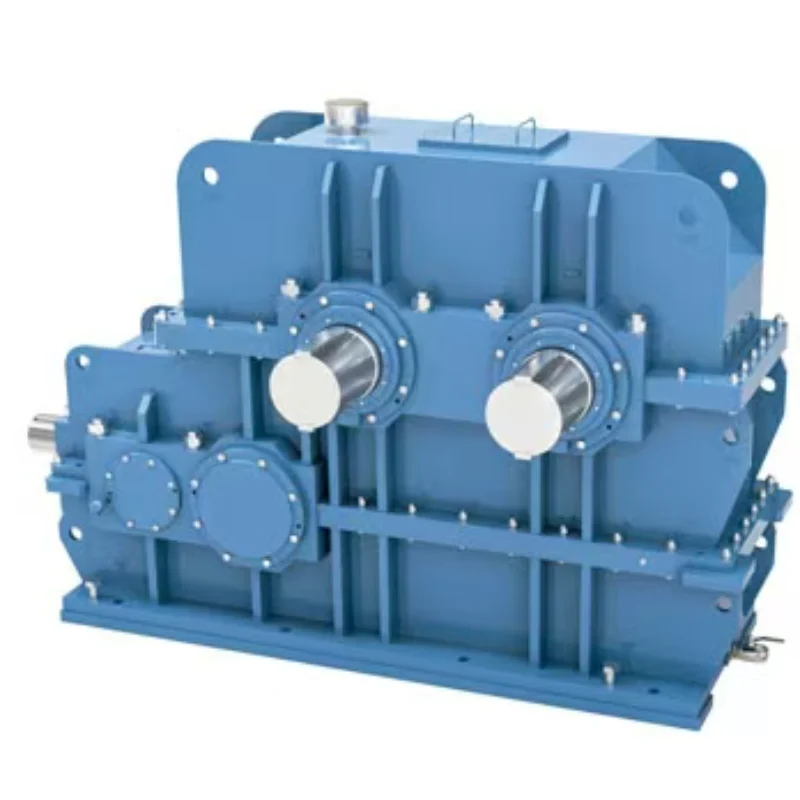
Rubber Internal Mixer Gearbox: Read the Batch Load Profile, Not Just Motor kW
Oct 22, 2026
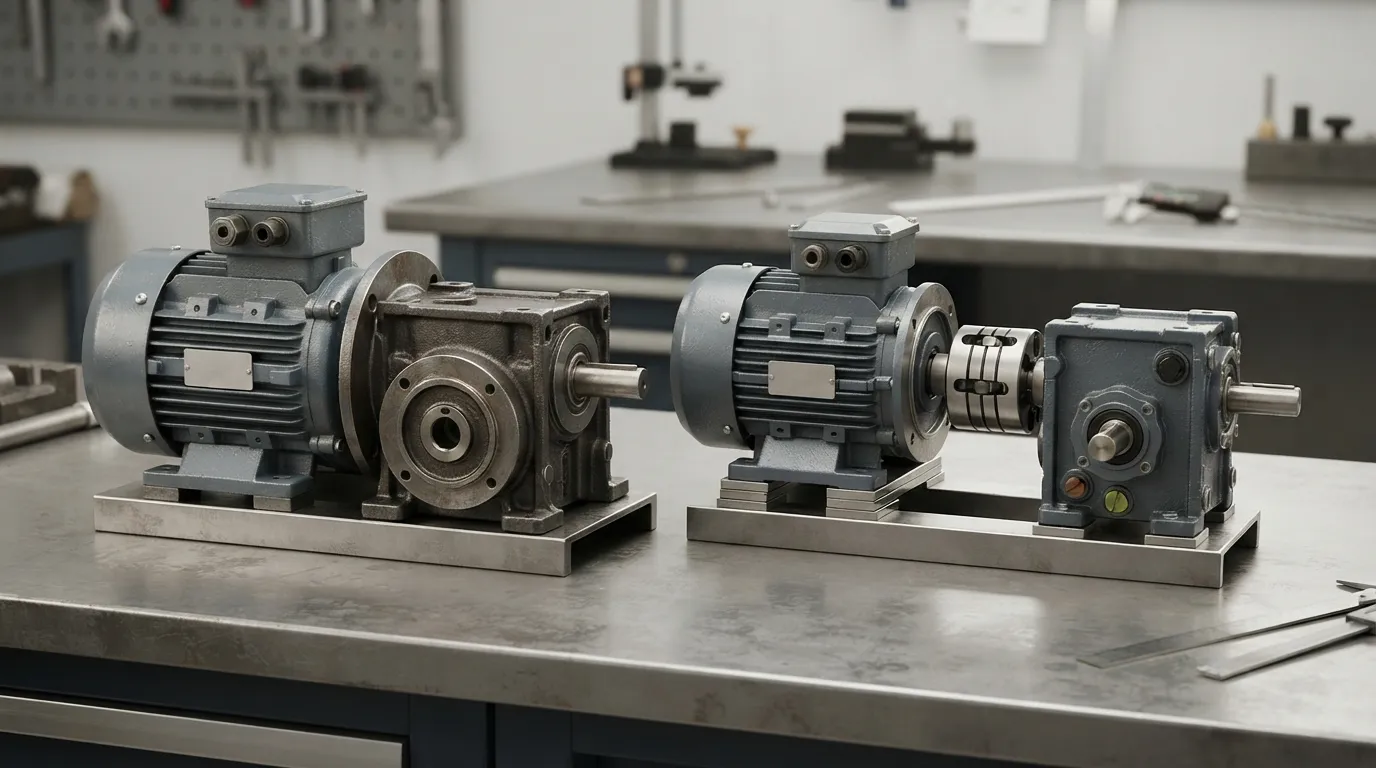
Hot Industrial Gearbox Coupling After Cold Alignment: What to Check
Oct 22, 2026
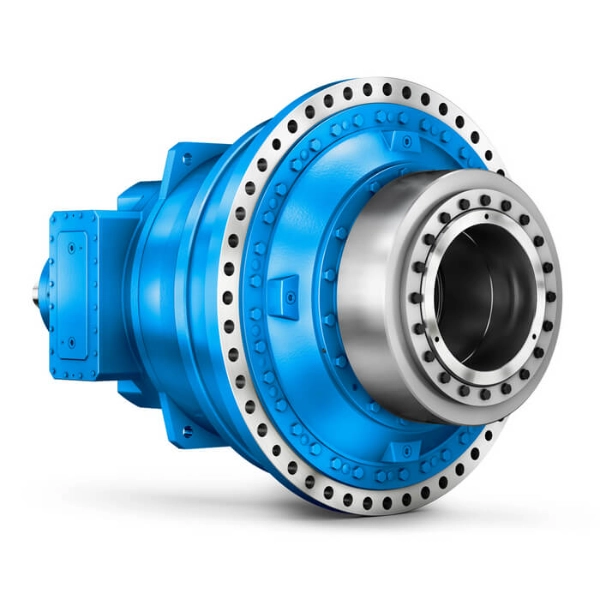
Hydraulic Slewing Drive Won't Rotate: Separate Motor, Brake and Gearbox Faults
Oct 22, 2026
Calender Roll Gap Changes: What Must the Drive Coupling Accommodate?
Oct 22, 2026
In servo-driven machinery, backlash is one of the first specifications engineers check when selecting a Planetary Gear Reducer. A value such as 1 arcmin sounds exceptionally precise, but the number is meaningful only when it is translated into actual positioning error at the machine output.
At Mingye, we view backlash as one part of the complete motion-error budget. Gear accuracy, torsional stiffness, bearing support, output load, motor control and structural rigidity must be considered together before deciding whether a 1 arcmin Planetary Gear Reducer is necessary.
What Backlash Means in a Planetary Gear Reducer
A Planetary Gear Reducer transmits torque through a sun gear, multiple planet gears, a ring gear and a carrier. Under steady rotation, the loaded tooth flanks remain in contact. When direction reverses, the gear set must cross a small mechanical clearance before the opposite flanks carry torque.
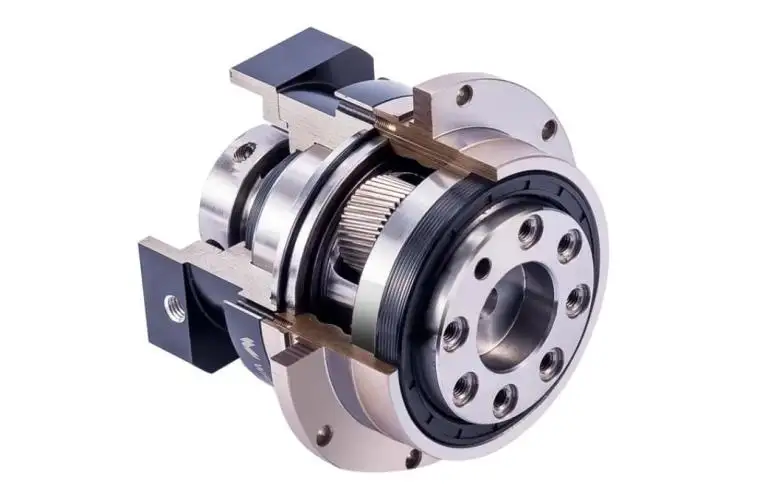
That angular clearance is backlash.
Backlash cannot simply be eliminated because the transmission still requires allowances for:
• Gear tooth thickness and pitch tolerances
• Center-distance variation
• Bearing clearance and preload
• Lubrication film
• Assembly tolerance
• Thermal expansion during operation
The engineering objective is therefore controlled, repeatable low backlash, not theoretical zero clearance.
What Does 1 Arcmin Actually Mean?
One arcminute equals:
1 arcmin = 1/60° = 0.0167° ≈ 0.000291 rad
For rotary machinery, angular backlash becomes linear displacement as the working radius increases:
Linear displacement ≈ Working radius × Angular error
For a Planetary Gear Reducer with 1 arcmin backlash:
| Working Radius | Approx. Tangential Movement |
| 50 mm | 0.015 mm |
| 100 mm | 0.029 mm |
| 200 mm | 0.058 mm |
| 500 mm | 0.145 mm |
| 1,000 mm | 0.291 mm |
For example, a rotary arm with a 200 mm effective radius can theoretically see about 0.058 mm of tangential movement from 1 arcmin alone during reversal.
This is why asking "Is 1 arcmin precise?" is incomplete. The better question is:
Is 1 arcmin compatible with the machine's working radius and allowable positioning error?
Backlash Is Not the Same as Accuracy or Repeatability
Several motion-control terms are often treated as interchangeable, although they describe different behavior.
| Parameter | What It Describes | Typical Effect |
| Backlash | Mechanical clearance between reversing tooth flanks | Reversal error |
| Positioning accuracy | Difference between commanded and actual position | Absolute position |
| Repeatability | Ability to return to the same position | Cycle consistency |
| Torsional stiffness | Resistance to elastic twisting under torque | Loaded position |
| Lost motion | Combined clearance and elastic displacement | Reversal under load |
A low-backlash Planetary Gear Reducer can therefore still show angular displacement if torque causes the gear train, shafts, bearings or housing to deform elastically.
Low backlash does not automatically mean high loaded positioning accuracy.
Torsional Stiffness Becomes Critical Under Load
Once backlash has been taken up, torque continues to deform the transmission elastically.
A useful simplified relationship is:
Angular deflection ≈ Applied torque / Torsional stiffness
This means the same Planetary Gear Reducer can produce different positioning behavior at 10%, 50% and 100% operating torque.
A realistic error budget should consider:
• Reducer backlash
• Gear and carrier elastic deformation
• Output shaft deflection
• Bearing deformation
• Coupling compliance
• Servo and encoder error
• Driven mechanism clearance
• Machine-frame deformation
For precision axes, evaluating backlash without torsional stiffness gives an incomplete picture.
Where Planetary Gear Reducer Precision Comes From
Gear Geometry
Tooth profile, pitch accuracy, tooth thickness, helix accuracy and concentricity determine how consistently the gear meshes engage.
Planet Support
Multiple planet gears distribute torque efficiently, but their benefit depends on accurate alignment and rigid support. Planet pin deflection or carrier deformation can disturb load sharing and transmission accuracy.
Output Bearing Arrangement
A pulley, pinion, robot arm or rotary fixture may impose radial, axial and overturning loads on the output. Bearing rigidity therefore affects shaft alignment as well as service life.
Assembly Control
Bearing fits, preload, concentricity, shaft alignment and housing accuracy influence how the completed Planetary Gear Reducer performs after individual parts are assembled.
This is why two reducers quoting similar nominal backlash can behave differently in a real servo system.
Mingye PAB Design: Looking Beyond the Backlash Number
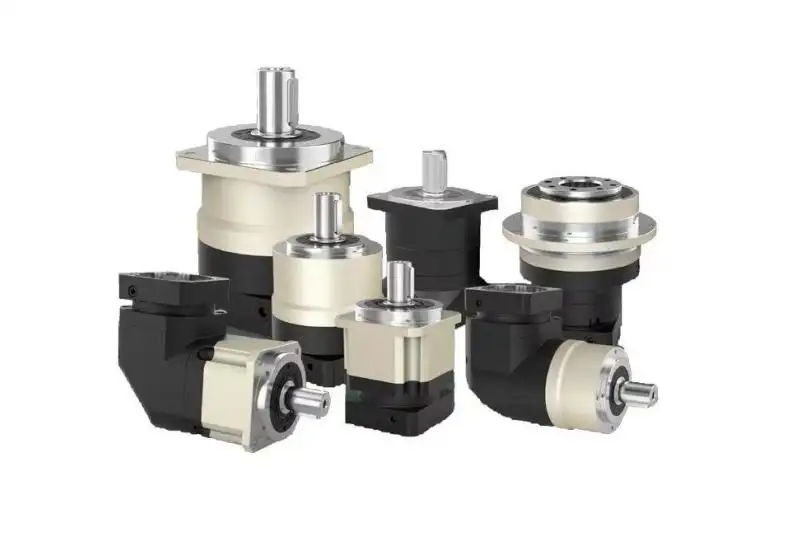
Mingye's PAB Series Planetary Gear Reducer is available in P0 and P1 precision grades, with specified backlash as low as 1 arcmin. The design also combines helical gearing, full needle roller bearing support at both ends of the planet gears, dual tapered roller bearings at the output and a self-aligning input flange.
Understanding mechanical function allows for understanding of the following features:
• Double-ended planet support: Controls precision deflection of the planet and stabilizes transmission.
• Full needle roller bearings: Support the loading of planet-gear in an economical space.
• Dual tapered roller output bearings: Support combined external loads.
• Helical gear engagement: Contact conditions improve, and vibration and load conditions improve.
• Self-aligning input interface: Stable bond with various motor shafts.
• Inline design: Simplifies integration into compact servo axes.
For Mingye, the important point is not to treat "1 arcmin" as an isolated sales number, but to consider how gear support, bearing arrangement and system loading affect usable precision.
When Is a 1 Arcmin Planetary Gear Reducer Necessary?
Applications more likely to justify very low backlash include:
• CNC rotary and indexing axes
• Robotic joints
• Precision positioning tables
• Pick-and-place equipment
• Vision-guided automation
• Electronic manufacturing machinery
• High-dynamic servo packaging systems
A conveyor, mixer or constant-speed drive may gain little from specifying an unnecessarily low backlash class.
The correct Planetary Gear Reducer is therefore not always the reducer with the smallest number—it is the reducer whose accuracy matches the machine requirement.
How to Select the Required Backlash
A practical engineering sequence is:
• Define final linear or angular positioning tolerance.
• Determine the effective working radius.
• Convert allowable linear error into angular error.
• Allocate only part of the error budget to the reducer.
• Check nominal torque and peak acceleration torque.
• Verify ratio, input speed and reversing frequency.
• Check radial and axial output loads.
• Evaluate torsional stiffness together with backlash.
• Confirm servo inertia matching, duty cycle and mounting interface.
For example, if a mechanism allows only ±0.05 mm total error, selecting a Planetary Gear Reducer that already consumes most of that tolerance leaves too little margin for the servo, coupling, bearings and machine structure.
Conclusion: Treat 1 Arcmin as a System Requirement
A 1 arcmin Planetary Gear Reducer limits mechanical reversal clearance to approximately 0.0167°, but its real effect depends on working radius, transmitted torque, torsional stiffness and the rest of the motion system.
The more reliable selection method is to begin with the machine's required positioning tolerance, build an error budget, and then determine the allowable reducer backlash.
For machine builders evaluating a precision Planetary Gear Reducer, Mingye's PAB Series provides P0/P1 precision options, backlash down to 1 arcmin and a bearing-supported planetary structure designed for stable motion transmission. Engineers can review the Mingye PAB Planetary Gear Reducer and compare ratio, torque, motor interface and precision requirements against the actual application before final selection.
FAQs
Q1. Why does Mingye use helical gears in its Planetary Gear Reducer?
Helical gear engagement provides smoother tooth contact and can help reduce vibration and transmission noise while maintaining stable torque transfer.
Q2. What precision grades are available for the Mingye Planetary Gear Reducer?
The Mingye PAB Planetary Gear Reducer is available in P0 and P1 precision grades, allowing engineers to select an accuracy level according to the application's positioning requirements.
Q3. Is a 1 arcmin Mingye Planetary Gear Reducer suitable for servo applications?
It can be suitable for precision servo systems, but engineers should also verify torque, ratio, input speed, torsional stiffness, inertia matching, duty cycle and external output loads.
Q4. Why does Mingye use double-ended support for the planet gears?
The planet gears use full needle roller bearing support at both ends. This arrangement helps control planet deflection, maintain alignment and support stable torque transmission under load.
Q5. What is the benefit of dual tapered roller bearings in the Mingye PAB Planetary Gear Reducer?
Dual tapered roller bearings at the output help support combined radial and axial loads and improve output shaft stability in demanding mechanical applications.
Share on Social:


Contact Us
In This Article
Rubber Internal Mixer Gearbox: Read the Batch Load Profile, Not Just Motor kW
Oct 22, 2026
Hot Industrial Gearbox Coupling After Cold Alignment: What to Check
Oct 22, 2026
Hydraulic Slewing Drive Won't Rotate: Separate Motor, Brake and Gearbox Faults
Oct 22, 2026
Calender Roll Gap Changes: What Must the Drive Coupling Accommodate?
Oct 22, 2026