


 Home /
 Dry Powder Mixer Consistency: Batch Uniformity Through Stable Torque Output
Right Angle Geared Motor: Matching Electrical Supply, Variable Speed and Braking
Oct 26, 2026
Planning a Bevel Reducer Installation: Turn Shaft Requirements Into a Practical Drive Layout
Oct 26, 2026
Choosing an Overhead Crane Gearbox by Its Hoisting or Travel Function
Oct 26, 2026
Replacing an Industrial Worm Gearbox: What to Keep and What to Reassess
Oct 25, 2026
A Dry Powder Mixer produces consistent and repeatable results with uniform mechanical input. If the output torque of the mixer is inconsistent, it results in the mixer producing segregated and unevenly distributed particles, which will ultimately lead to rejected batches. For procurement managers and plant engineers assessing the production lines for the year 2026, the question no longer pertains to the volume of the mixer alone but concerns the stability of the drive train system.
Mixing Quality and Torque Stability Explained
In order to blend dry powders, shear forces must be applied uniformly and consistently during the entire mixing process. Torque output variations are caused by:
•Lack of enough torsional stiffness in the drive system
•Backlash of gears builds up when switching direction
•Shaft deflection due to inadequate support structures for the bearing
These factors lead to repeatable and catastrophic failures. A dry powder mixer will mix blends containing particulate matter with uneven distributions of clustering of the active ingredients. This poses a significant risk of non-compliance for highly regulated sectors like the pharmaceutical and food processing industries. For chemical and construction material applications, it means product quality claims cannot be sustained.
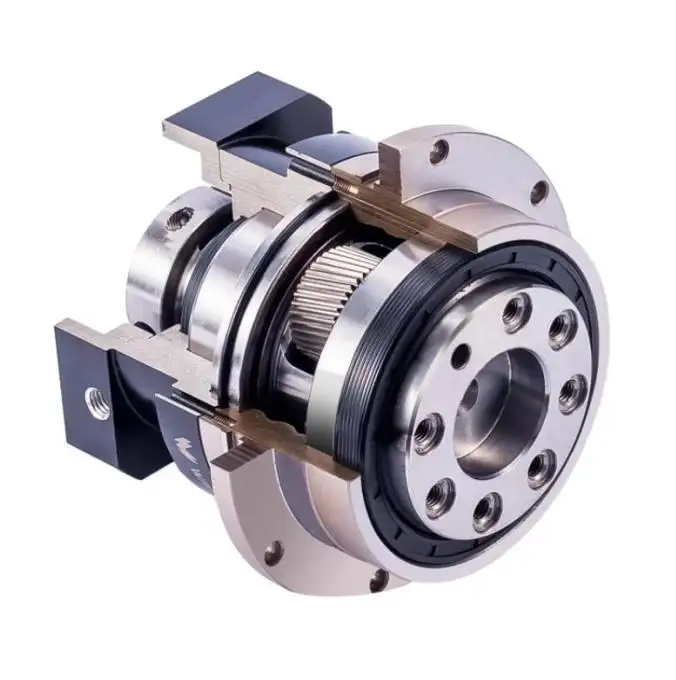
The Mechanical Link: Planetary Reducer Performance
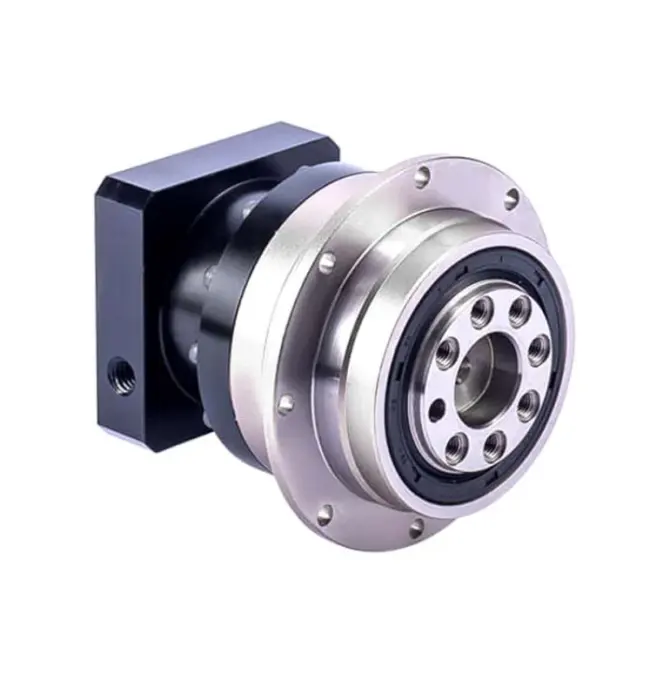
PAB series planetary reducer technology addresses torque stability at the component level. Planetary style gearboxes transfer power at multiple points of gear contact compared to standard helical gearboxes which focus on one.
Performance characteristics of uniformity in quality of output throughout mixing:
•Beneficial to load sharing are distributing contact points on planet gears: multiple contact points reduce the wear critical to backlash formation.
•Provides high torsional rigidity: full needle roller bearings keep aligned supports to the planet gears.
•Negligible clearance in backlash gear gradations of 1 arcmin (PO/P1) qualify for quicker torque response.
•Higher radial and axial capacity yields less deflected bearing on the shaft on the output. Provides dual tapered rollers which also keeps the mechanical seal and bearing on the mixer positioned per the agitator.
These specs come from evidence. Within the boundaries of an end-of-cycle uniformity specification, measurable differences exist by placing these on a Dry Powder Mixer.
Advantages in Production Environments
For engineering teams who are either purchasing or retrofitting equipment for production lines, consistent torque output is directly transferable to a number of operational metrics:
•Decreased rework: Minimizing loss of shear energy leads to consistently uniform particle distribution in successive batches.
•Decreased maintenance frequency: Maintenance is a function of seal/bearing life and is decreased due to decreased shaft displacement and vibration.
•Reduced energy consumption: By improving power transmission efficiency, power loss caused by heat loss and vibration is reduced.
•Shorter validation cycles: Stability of mechanical behavior leads to simpler validation for compliance to regulatory requirements.
According to estimates, the dry powder mixing equipment market will reach USD 2.78 billion by 2032 at 5.34% CAGR. The market preference is shifting to the total cost of ownership as opposed to the initial purchase costs. A Dry Powder Mixer fitted with a precision planetary drive system usually requires fewer services in comparison to units with basic gear systems.
Installation and Integration Features
Mingye planetary reducer systems integrate seamlessly and resolve many implementation challenges.
•Self-aligning input flange: Accommodates shaft alignment for a more adaptable installation.
•Compact Inline Housing: Fits existing mixer layouts with no design changes.
•Custom gearbox dimensions: Flexible designs for all motor and application types.
For clients with minimal tolerance for system downtime, significant labor and cost savings result from a Dry Powder Mixer that reduces installation time from 8 hours to 3 hours.
Industry Applications and Anticipated Results
There are concrete specifications for mixing systems for each of the following dry powder applications:
Mixing of Pharmaceuticals and Nutraceuticals
•Requires validated consistency.
•Has a cost advantage with low-backlash drives that can hold mixers when power is removed.
•Requires a wash friendly design with a clean-in-place system.
Chemical and Industrial Mixtures
•Contain powders that are abrasive and may damage gears.
•Need high torsional rigidity for dealing with varying densities.
•Benefit from increased service duration to reduce production disruptions.
Food Parts and Additives
•Need constant shear to keep a uniform particle size.
•Appreciate drives that Wash down easily.
•Need predictable scaling from lab to production volumes.
Mechanically speaking, consistent stable torque input yields consistent and Stable outputs regardless of dry powder application.
Shifts in Requirements for 2026 Trends
There are notable shifts in the procurement for dry powder mixer selection.
IE5-ready drives are helping improve sustainability. They are standard in energy efficiency while reducing operating costs.
•Digitization shifts towards drives with Vibration and load monitoring that support predictive maintenance.
•Supply chain shifts towards dry powder mixer manufacturers that offer Local Service Footprint and spare parts.
•Noise reduction shifts towards drives with helical gear that satisfy the comfort of the workers.
For the most part, integrated planetary gear drives with helical gears respond to the noise level issues and at the same time offer space savings.
Conclusion
Stable mechanics are key in achieving uniformity in batching dry powders. Therefore, Dry Powder Mixers designed with precision planet gear drives - such as those with low backlash, high torsional stiffness and dual bearing supports - allow repeatable results that meet quality and production goals.
Mingye produces PAB series planetary reducers for mixers. These reducers are customizable for volume, motor types, and mounting type.
FAQ
Q: What is the recommended torque rating when designing a Dry Powder Mixer that deals with abrasive materials?
A: Choose a reducer that has output shafts with dual tapered roller bearings. This design handles radial loads and impacts that lead to premium service elevator life expectancy in abrasive environments.
Q: How does backlash relate to the uniformity of dry powder batches?
A: Backlash breaks the flow of synchrony in applied torque, directing it at a different location at a particular point in time which then, in turn, disrupts shear. A design of low backlash (1 arcmin) executes mixing cycles with repeatability.
Q: Could planetary reducers be easily integrated into the existing Dry Powder Mixer lines?
A: Yes. The configuration of in-line housing and self-aligning input flanges create simple replacements of conventional gearboxes with only minor adjustments to the frame.
Q: What is the recommended maintenance frequency for PAB reducers engaged in mixing?
A: Usually, an inspection is performed on every 10,000 hours of operation for normal load conditions. Also, due to severe conditions, more frequent lubrication is implemented.
Q: Is there a possibility of customized sizes in response to non-standard sunotor interfaces?
A: Yes. Gearbox sizes are flexible to suit different classes of motors and particular apposite mounting standards.
Share on Social:


Contact Us
In This Article
Right Angle Geared Motor: Matching Electrical Supply, Variable Speed and Braking
Oct 26, 2026
Planning a Bevel Reducer Installation: Turn Shaft Requirements Into a Practical Drive Layout
Oct 26, 2026
Choosing an Overhead Crane Gearbox by Its Hoisting or Travel Function
Oct 26, 2026
Replacing an Industrial Worm Gearbox: What to Keep and What to Reassess
Oct 25, 2026