


 Home /
 Precision at Low RPM: Why Your Welding Rotator Needs Grade 6 Gears
Rubber Internal Mixer Gearbox: Read the Batch Load Profile, Not Just Motor kW
Oct 22, 2026
Hot Industrial Gearbox Coupling After Cold Alignment: What to Check
Oct 22, 2026
Hydraulic Slewing Drive Won't Rotate: Separate Motor, Brake and Gearbox Faults
Oct 22, 2026
Calender Roll Gap Changes: What Must the Drive Coupling Accommodate?
Oct 22, 2026
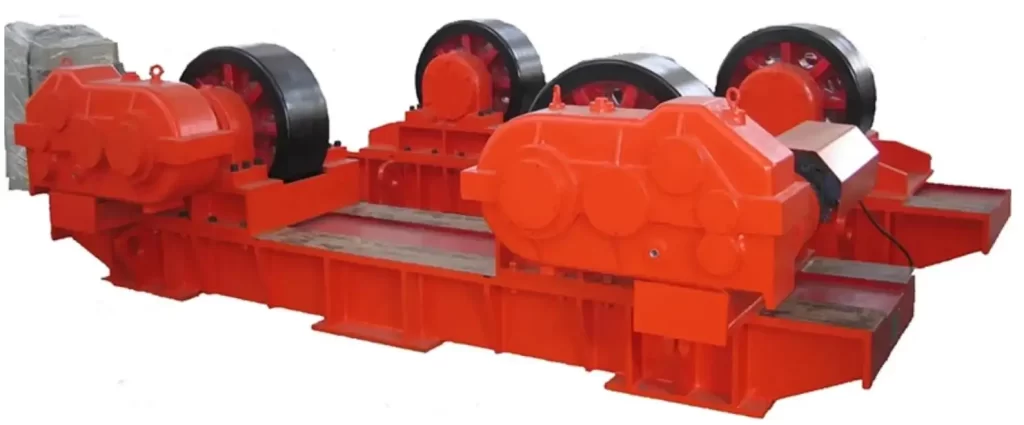
A Welding Rotator is expected to do one thing reliably: turn a heavy workpiece at a slow, steady speed while a welding head runs its bead. But in many fabrication shops, the actual performance tells a different story. Jerky motion, uneven rotation, and gradual misalignment are common complaints. The root cause often sits inside the drive system—specifically, the gearbox.
For 2026, more buyers and engineers are asking a practical question: Why does low-speed rotation require such high-precision gearing? This article explains the connection between Grade 6 gears and stable welding rotator performance, without hype or overclaim.
Low RPM Does Not Mean Low Demands
It is a common misunderstanding: if a Welding Rotator turns slowly, the gearing can be simple or loosely manufactured. In reality, low-speed, high-torque applications place greater stress on each tooth contact point. The workpiece may weigh several tons. Every rotation cycle transfers that load through the gear train.
At low RPMs, reduced gear accuracy causes two key issues:
• Variable Torque: Depending on the position of the gearbox, rotation is jerked away from the gearbox and intermittently added to the gear, causing varying degrees of creeping.
• Vibration: Gear slack and associated vibration increase, particularly at low frequencies, which deteriorates the quality of the weld.
These problems prevent the construction of code quality, therefore, the only viable option for industrial applications is gearboxes with the required specifications.
The Benefits of Grade 6 Gears
There are several quality classes for gear grading that for example are defined by ISO 1328 or by DIN 3962. A comparision between Grade 5/4 Aerospace Grade and Grade 8/9 General Purpose, Grade 6 would fall in the middle.
Some of the Grade 6 specifications would include:
• Enhanced profile tolerance. Helps with the uniformity of contact patterns between different teeth on the gear.
• Minimized pitch error. Results in less engagement error between the teeth of the gear and smoother rotation.
• Runout is even less. This is the wobble concerning the gear’s center.
Because of this, Grade 6 gears are a lot more consistent in Welding Rotators. Sudden changes in rotation would not be compensated for by the operator, keeping the welding arc consistent.
Operational Differences
In the first shift of a case with two identical weldments, one with Grade 8 gear and one with Grade 6 gear, the differences would be significant.
Gearbox behavior at low RPM:
Grade 8
- Jumps from cogging while advancements are tooth-accurate.
- Show inconsistent penetration due to weld start and stop points.
- Causes vibration due to off-center loads.
Grade 6
- Motion appears to be continuous even under 1 revolution per minute (RPM).
- Makes the welding head track along a stable circuit.
- Little to no vibration.
These differences do appear in radiographic results. Dimensional inspections will show that the Welding Rotator with a Grade 6 gearbox has less discontinuities.
Material and Hardness Support the Precision
Don't assume that just because gear boxes are Grade 6, that the gear boxes will wear quickly.
Gearbox Grade 6
- Gear Material: low alloy steel
- Heat Treatment: carburizing + quenching
- Surface Hardness: 58–62 HRC
A Welding Rotator offers long lasting accuracy with firmness for specialty work cases.
Why 2026 Demands Better Low-Speed Control
The new standard for fabrication buyers around the world is no more "good enough" rotation. Two things have to be addressed:
More welding processes that incorporate automated and intelligent welding have more stringent requirements. If there is any required stop/use or the welding rotator loses it's tracking reference, welds will become defects due to the system causing delays.
Second, customers are more frequently checking welds. There are more NDT requirements for pressure vessels, wind tower sections and components of heavy equipment. A rotator that introduces motion error is a liability.
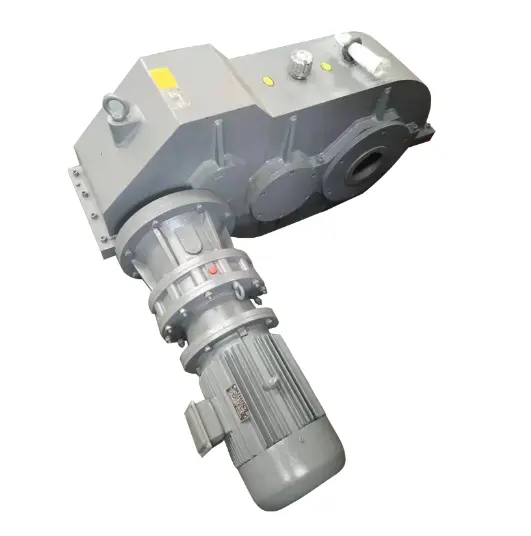
Mingye's gearboxes of the JA, JB, and JC series are designed for these situations. The gear arrangement aids in aligning with rotator wheels and accommodates a variety of equipment layouts. Output motion is consistent across varying loads, which helps maintain welding accuracy without the need for operator overrides.
Flexible Integration Without Rework
A precision gearbox is useful only if it fits existing or planned rotator configurations. Mingye structures its gearbox supply to support practical installation needs.
• Adaptable to bolt adjustable rotators, self-aligning rotators, and lead screw adjustable types
• Mounting positions can match different shaft arrangements
• Input and output directions configurable for site requirements
For OEM projects or replacement needs, this flexibility reduces engineering time. The Welding Rotator gearbox does not force a redesign of the whole drive layout.
What Buyers Should Specify
When sourcing a Welding Rotator or replacement gearbox, consider adding these points to your inquiry:
• Gear accuracy grade (specify Grade 6 minimum)
• Surface hardness range (58–62 HRC recommended)
• Material type and heat treatment process
• Load testing documentation at rated capacity
These specifications help distinguish purpose-built rotator gearboxes from general-purpose reducers that happened to fit the mounting holes.
Practical Bottom Line
Precision at low RPM is not a luxury for a Welding Rotator. It affects weld quality, inspection pass rates, and daily productivity. During extended welding operations, Grade 6 gears provide a steady, unchanging speed and a uniform distribution of torque and motion. Combined with carburized alloy steel reaching 62 HRC, the gearbox maintains this performance across years of heavy workshop use.
Mingye manufactures these units as application-specific drives—not generic reducers adapted to rotators. For 2026 fabrication standards, that distinction matters.
FAQ
Q: Is Grade 6 good for light-duty welding rotators?
A: Not really. Grade 8 might work for deal with the occasional light welding task or small workpieces. But Grade 6, is noticeably better than Grade 8 when it comes to providing consistent weld quality for medium and heavy vessels.
Q: How can I find the gear grade for the welding rotator I have?
A: The grade of a gear can be found on a data sheet or nameplate found on the gearbox. If they have provided the grade of the gear, then chances are, it’s Grade 8 or less, as most reducers do not specify their precision grade.
Q: Is a high hardness gear grade a sign of a brittle gear?
A: Certainly not. Carburizing and quenching provide a hard surface (58–62 HRC), and alongside a tough core of the gear, they provide resistance to wear.
Q: Is it possible to retro fit Grade 6 gearboxes to an existing welding rotator?
A: Certainly. Mingye is flexible to all forms of mounting. We aim to provide the best compatibility, so furnish us with the measurements of your rotator.
Q: What is the time frame for the production of a custom welding rotator gearbox?
A: On the basis of the configuration and the amount ordered, we shall provide the best time estimation. Precision shall be at the forefront with custom units; therefore, the time frame shall be longer. Should you have a more exact custom case along with the requirements you can always reach out to Mingye for the best time estimation.
Share on Social:


Contact Us
In This Article
Rubber Internal Mixer Gearbox: Read the Batch Load Profile, Not Just Motor kW
Oct 22, 2026
Hot Industrial Gearbox Coupling After Cold Alignment: What to Check
Oct 22, 2026
Hydraulic Slewing Drive Won't Rotate: Separate Motor, Brake and Gearbox Faults
Oct 22, 2026
Calender Roll Gap Changes: What Must the Drive Coupling Accommodate?
Oct 22, 2026