


 Home /
 Welding Roller Frame: What to Customize When Standard Won't Work
Right Angle Geared Motor: Matching Electrical Supply, Variable Speed and Braking
Oct 26, 2026
Planning a Bevel Reducer Installation: Turn Shaft Requirements Into a Practical Drive Layout
Oct 26, 2026
Choosing an Overhead Crane Gearbox by Its Hoisting or Travel Function
Oct 26, 2026
Replacing an Industrial Worm Gearbox: What to Keep and What to Reassess
Oct 25, 2026
Most welding roller frames give clear specs, such as load capacity, rotation speed, and roller diameter. While these specs work for most standard tasks, the welding industry often deals with projects that involve strange dimensions, unusual weight distribution, and layout problems that standard frames cannot solve. At this point, custom solutions are required. This article describes the key technical details and the importance of a dedicated welding rotator gearbox, as well as what to tell a manufacturer when all of the standard specs have been surpassed.
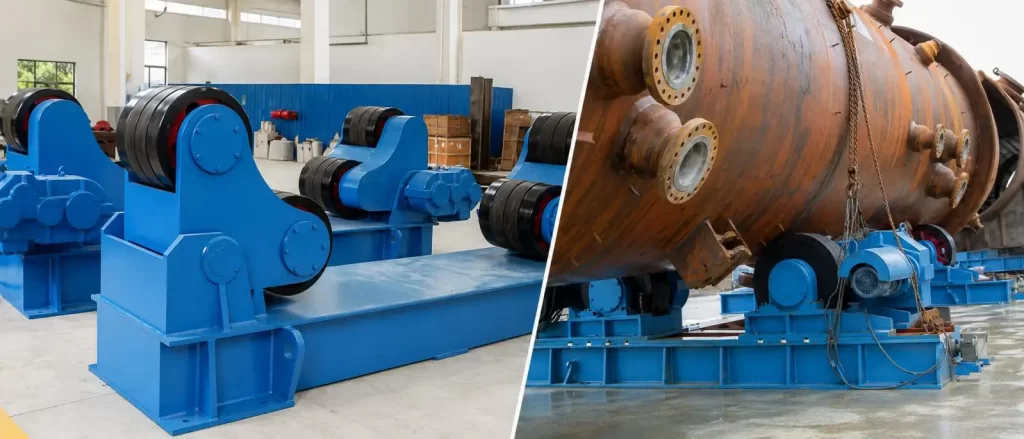
When Does a Standard Welding Roller Frame Hit a wall?
Customize solutions only when standard welding roller frames are inadequate. Some of the most common problems include:
•The workpieces have a large diameter variation and fail to make good contact with the roller
•The weight has a large variation (for example, 2 to 10 tons) and the drive system is unable to provide a steady torque.
•Shop floor space is limited or existing equipment interferes with predefined frame dimensions.
•Rotational speed requirements are extreme (very slow for multi-pass welding or faster for light-gauge parts).
•High precision or low backlash is critical; standard gearboxes may cause motion fluctuations and weld defects.
Once you identify any of these gaps, a customized welding roller frame becomes a practical necessity rather than a luxury.
Step 1: Workpiece and Operation Profile Description
At the outset of discussions regarding custom welding roller frames, we would like to understand the workpieces (what you need to rotate) and the way you would like to perform the welding.
Welding roller frame designers/manufacturers such as Mingye Machinery would like to have the following information:
1. Dimensions of the workpiece (i.e., its size and shape). These dimensions identify the size and shape of the welding frame and range as below.
2.Workpiece that is cylindrical and in the form of a tank of steel has an outer diameter of between 0.8 m and 3.2 m, and an outer length of up to 12.0 m, with an outer wall thickness of 10 mm.
3.A weight range, including a typical operating weight, of the workpiece to determine the weight that the frame would need to support and the torque that the frame would need to bear.
4.The workpiece surface condition. This has an impact on the workpiece rollers and could require rubber lined rollers.
5.The welding process and the range of welding speeds. This would determine the rate of rotation of the workpiece and the rate of linear movement of the welding apparatus. Movement can also be described as a rotational movement.
6.The working duty cycle. The frame can be designed for continuous rotation versus intermittent rotation. Continuous high-load cycles demand better heat dissipation and gear durability.
Mingye Machinery's approach emphasizes "application-based discussion" rather than relying on unsupported fixed figures. Providing the above details upfront makes the engineering conversation more efficient.
Step 2: The Heart of a Customized Welding Roller Frame – The Drive System
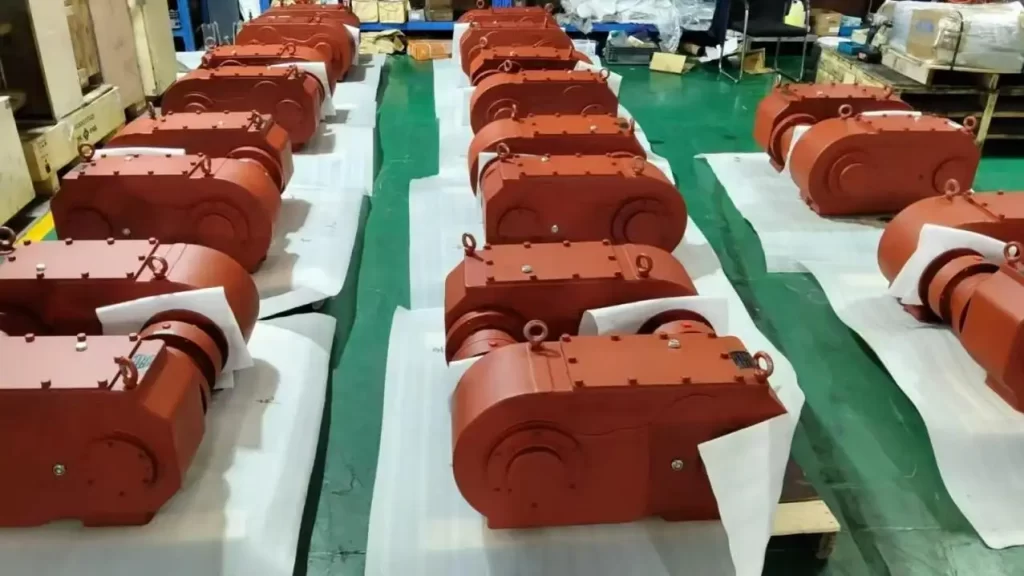
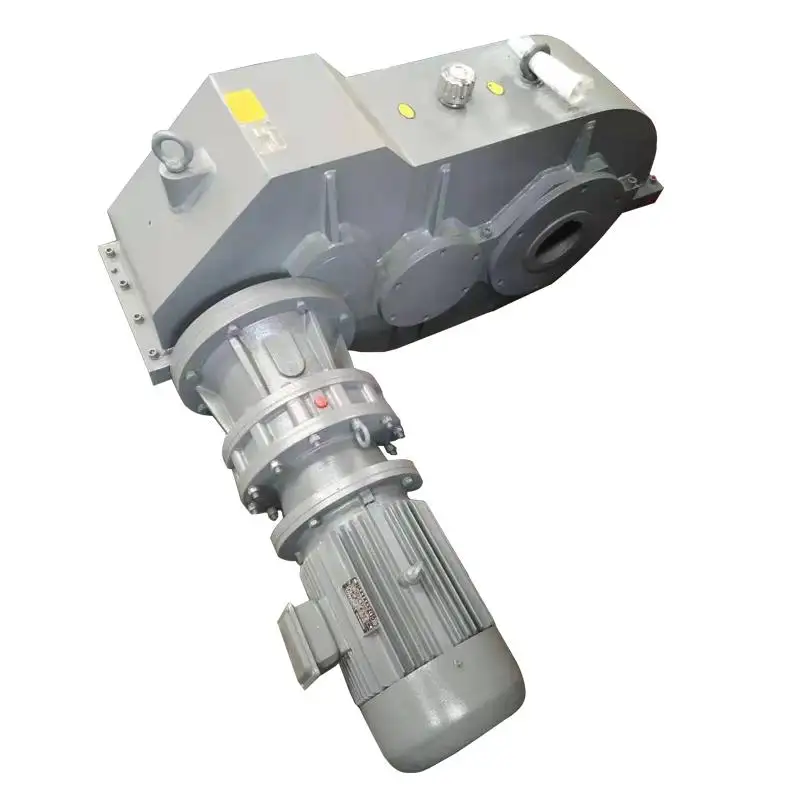
In any welding roller frame, the drive system determines rotation smoothness and accuracy. Generic reducers often fail under low-speed, high-torque, load-varying welding conditions. A Special Reducer for Welding Rotator (welding rotator gearbox) is the critical differentiator.
What makes it "special"? Like most gearboxes, these are made for rotating cylindrical pieces. Here's how Mingye Machinery differentiates their design:
•Purpose-built design: Great for low-speed, high-torque operations like welding.
•Dependable Uniformity: Gives the option to turn at the same speed with high and dependable torque.
•Robust Construction: High-strength steel easily accommodates large heavy workpieces.
•Cross-World Compatibility: Pairs best with adjustable, self-aligning, lead screw, and fit-up rotators.
•Tailor-Made Design: Built to your site and your workpieces, and everything in between.
These use low-carbon alloy steel with carburizing and quenching. The result is hardness of 58–62 HRC with an accuracy of 6, and virtually no backlash to ensure smooth and steady motion through long welding cycles.
Step 3: Discussing Integration with Your Existing or Planned Equipment
A customized welding roller frame is designed to integrate with every other piece of equipment. It must work with your welding manipulator, column and boom, turning rolls, or even an automated assembly line. During the customization discussion, address the following integration points:
•Roller arrangement and adjustment mechanism: Will the frame use bolt-adjustable rollers for simple centering, or lead screw adjustable rollers for precise, tool-free alignment? Self-aligning rotators automatically accommodate minor workpiece diameter variations.
•Drive wheel placement: Driven wheels (powered by the gearbox) and idler wheels placement should be such that weight distribution does not lead to an overload situation on one side. The gearbox structure should dictate the positioning of the rotator wheels for even load transfer.
•Output speed control interface: Does the gearbox accept the standard AC motor with inverter, or is the provision of the hydraulic motor interface necessary? For precision welding, low-speed output (often below 1 rpm) with minimal speed ripple is non-negotiable.
Mounting footprint: Provide the available floor space or existing bolt hole pattern. Mingye Machinery's gearbox supports flexible mounting positions, which simplifies retrofitting into older systems.
Step 4: New Project, Replacement, or Upgrade – All Are Valid
Customization is not only for brand-new equipment. According to Mingye Machinery's FAQ guidance, a dedicated welding roller frame gearbox can be discussed for:
•New equipment projects: You are designing a custom welding line from scratch. The gearbox parameters (torque, reduction ratio, shaft orientation) can be defined exactly to your performance targets.
•Replacement needs: An existing rotator has a failed gearbox, and the original manufacturer no longer supports it. As long as you share the equipment structure and operating requirements, a replacement unit can be engineered to match the existing mounting and performance envelope.
•Upgrade discussions: You want to increase the load capacity or improve rotation accuracy of an older welding roller frame. A higher-strength gearbox with better gear precision can transform performance without changing the entire frame.
Step 5: The Five Essential Data Points Before You Inquire
To make the customization conversation productive and avoid back-and-forth delays, prepare the following five categories of information. Mingye Machinery provides the following recommendations for an efficient inquiry:
•Identify the type and use of machine: Is the machine a bolt adjustable rotator, self-aligning rotator, lead screw adjustable rotator, fit-up rotator, etc.? If further assistance is needed, please provide details of the full assembly, including design as a single-roller or multi-roller.
•State the dimensions and requirements of the workpiece: State the minimum and maximum workpiece diameters and the maximum workpiece length and provide the limits of all operating weights and the maximum weight of the least expected load.
•Provide rotator construction details: Include the number of drive wheels, the diameter and composition of the drive wheels (polyurethane, steel, or rubber lined), the distance between roller stations, and any available drawings.
•Provide method of operation and welding information: Describe the desired speed with range limits (rpm), the need for bi-directional rotation, and the typical length of the welding cycle. Also include any requirements for indexed positioning or for speed control to be operated at a distance.
If there are any drawings or reference data, no matter how rough, expressing constraints in floor space or positioning of the motor or expressing an existing pattern of bolt holes, these are all very helpful. Existing photos are also helpful.
Step 6: Beyond Heavy Fabrication – Cross-Industry Applications
Though welding roller frames are typically linked with fabrication of vessels, tanks, and pipe welding, customized solutions can be found in other sectors as well. Broadening your understanding of these related applications may help identify additional requirements you may have not considered.
•Food and Beverage Processing: Stainless steel mixers and filling and bottling machines may have rotators to join the cylindrical parts. In these applications, the design focus shifts to the use of hygiene design and corrosion resistant materials such as stainless steel for the gearbox housings.
•Packaging and Automation Equipment: Roller frames are used to pack large diameter rolls, while assembly machines may require low backlash precision for laser welding or seam sealing. In such applications, compact frames with servo gearboxes are used.
•Heavy Fabrication Workshops: These applications may use pressure vessels, wind tower sections, and kiln shells. These require large load capacities (tens of hundreds of tons) and braking systems. The JA/JB/JC series gearboxes with carburized and quenched gears are a good fit.
Conclusion: Customization Is a Collaborative Engineering Process
There are many things that customizable welding roller frames cannot do. Beyond those limits, it is necessary to focus on the drive system. A dedicated welding rotator with a high-strength alloy (58-62 HRC, grade 6) gearbox, which provides a corrosion resistant frame, enables secure and balanced handling of large loads. Successful customization requires a lot of data and clear articulation of design ideas and requirements. Mingye is a manufacturer that allows for application articulation and does not incorporate superfluous products. The benefits of a custom design include a clear improvement in the quality of the welding, a reduction of maintenance needs, and an increase in expected service life.
FAQs
Q1: Is it possible to submit an order for a welding roller frame which is designed specifically for a workpiece with a non-standard diameter?
A: Yes. Custom welding frames allow the spacing of adjusting rollers, the adjusting roller's profile and the gearbox output to be customized for almost any diameter.
Q2: What info is needed for a quote?
A: Size and weight of the workpiece. Type of frame, required speed and any drafts or photos of the work site.
Q3: What are the performance implications of frame rollers welded out of specific gear material?
A: Carburizing and quenching of gear teeth of high strength alloy steel to 58-62 HRC provides wear resistance and allows stable lifting of the frame under heavy load.
Q4: Can your gearboxes integrate self-aligning and lead screw adjustable frames?
A: Yes. Our gearboxes integrate self-aligning frames and lead screw adjustable frames, as well as fit-up adjusters.
Q5: In what ways does a tailored welding roller frame help to optimize the quality of the welding?
A: The tailored roller frame is meant to avoid sudden and large accelerations or decelerations. That way, the work-piece can be kept fixed relative to the welding head.
Share on Social:


Contact Us
In This Article
Right Angle Geared Motor: Matching Electrical Supply, Variable Speed and Braking
Oct 26, 2026
Planning a Bevel Reducer Installation: Turn Shaft Requirements Into a Practical Drive Layout
Oct 26, 2026
Choosing an Overhead Crane Gearbox by Its Hoisting or Travel Function
Oct 26, 2026
Replacing an Industrial Worm Gearbox: What to Keep and What to Reassess
Oct 25, 2026