


 Home /
 Twin Shaft Mixer Reliability: Why the Special Reducer Is a Non-Negotiable Component
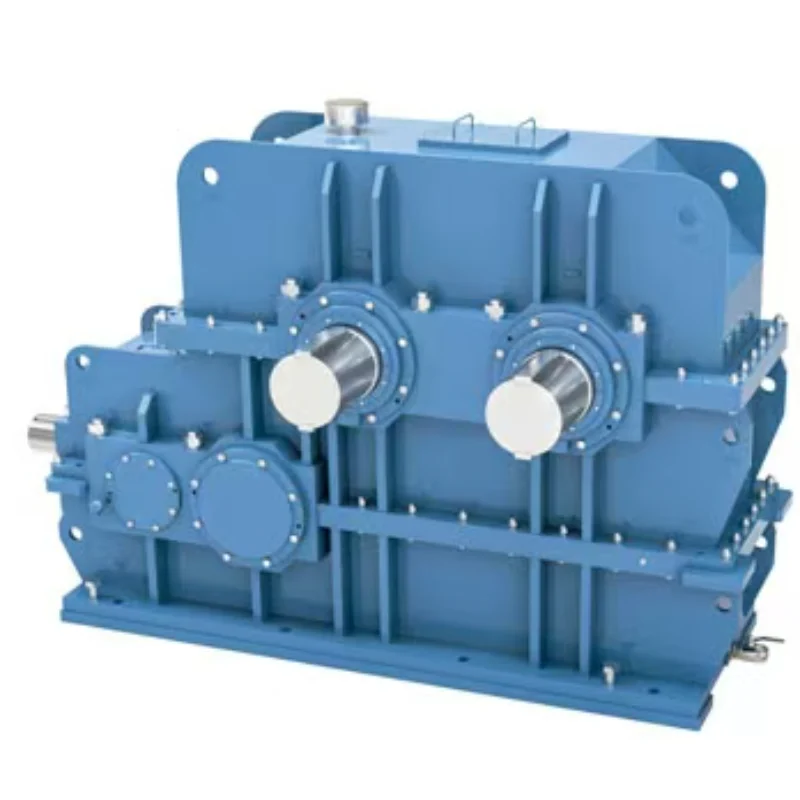
Rubber Internal Mixer Gearbox: Read the Batch Load Profile, Not Just Motor kW
Oct 22, 2026
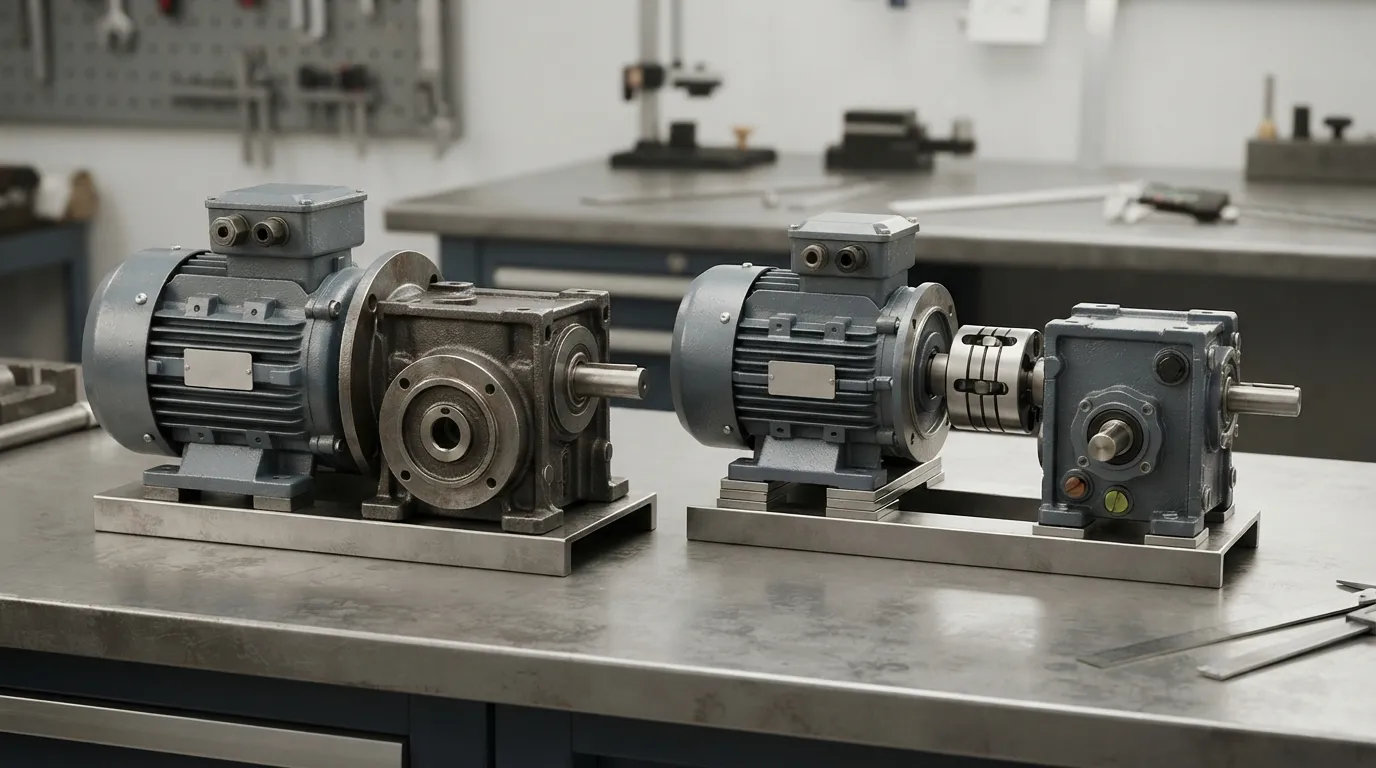
Hot Industrial Gearbox Coupling After Cold Alignment: What to Check
Oct 22, 2026
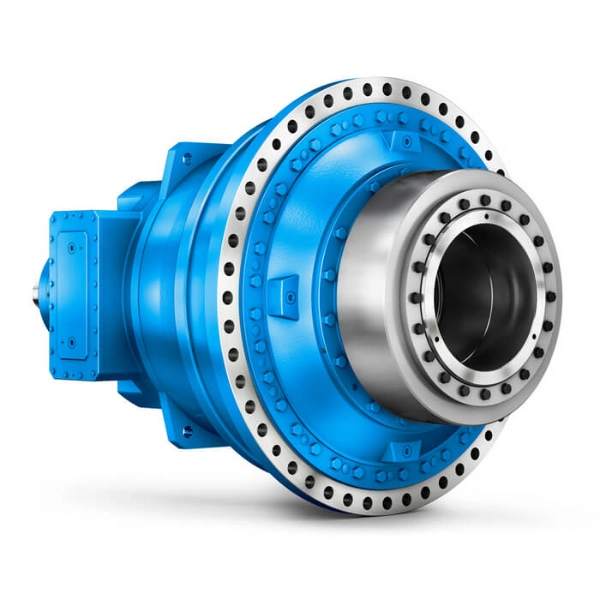
Hydraulic Slewing Drive Won't Rotate: Separate Motor, Brake and Gearbox Faults
Oct 22, 2026
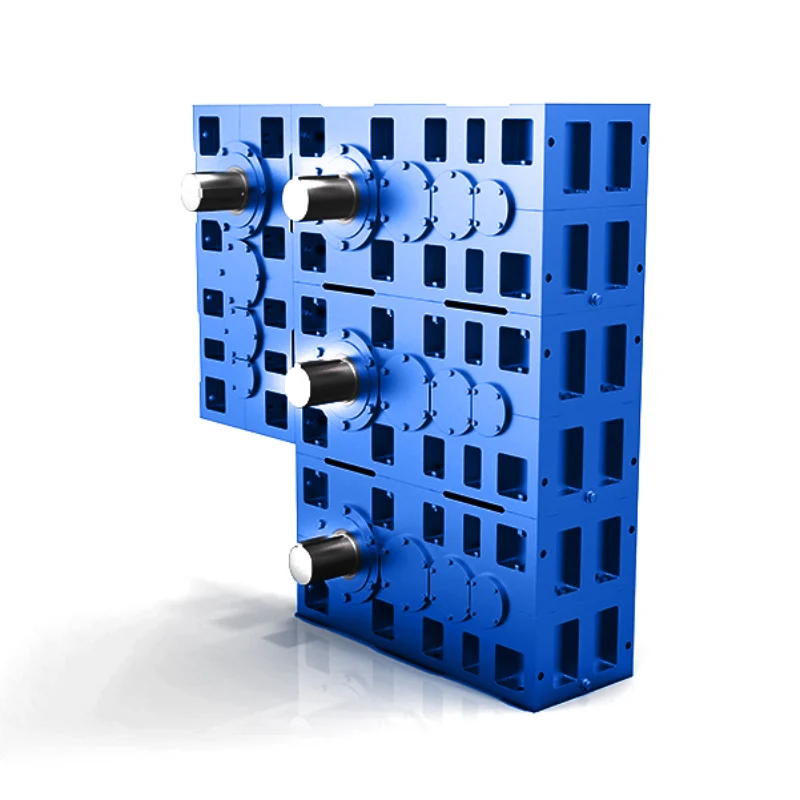
Calender Roll Gap Changes: What Must the Drive Coupling Accommodate?
Oct 22, 2026
The Double Shaft Mixer is one of the most versatile mixers available. It is suitable for dry mortar, chemicals, food, and even battery mixers. Although the double shaft mixer seems very simple. Like many other double shaft mixers, it consists of two shafts that rotate and paddle to mix. However, the rotation of the shafts is almost an engineering marvel. The shafts rotate under simple mechanical control, yet the loads are and will be unpredictable throughout the days, month, and even years of operation.
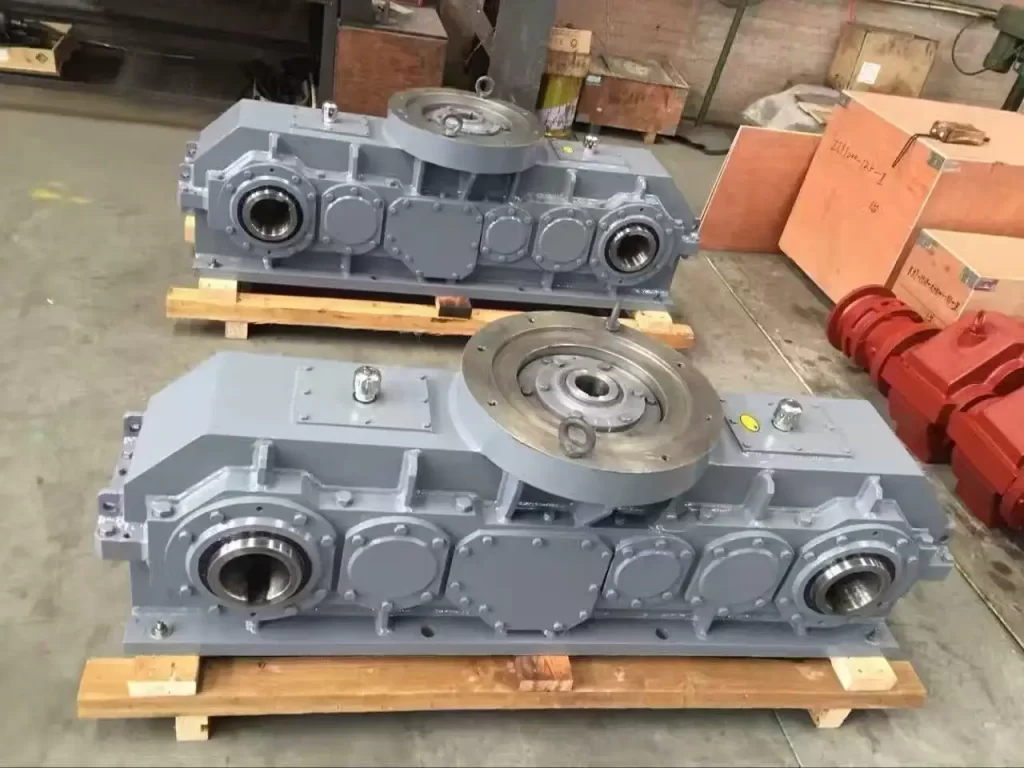
The special reducer is a very important component. It is a special reducer designed specifically for use in a twin shaft paddle mixer. Unlike other gearboxes, it is not a generic gearbox. The double shaft mixer is not designed to even work without one.
The Core Challenge: Two Shafts, One Mission
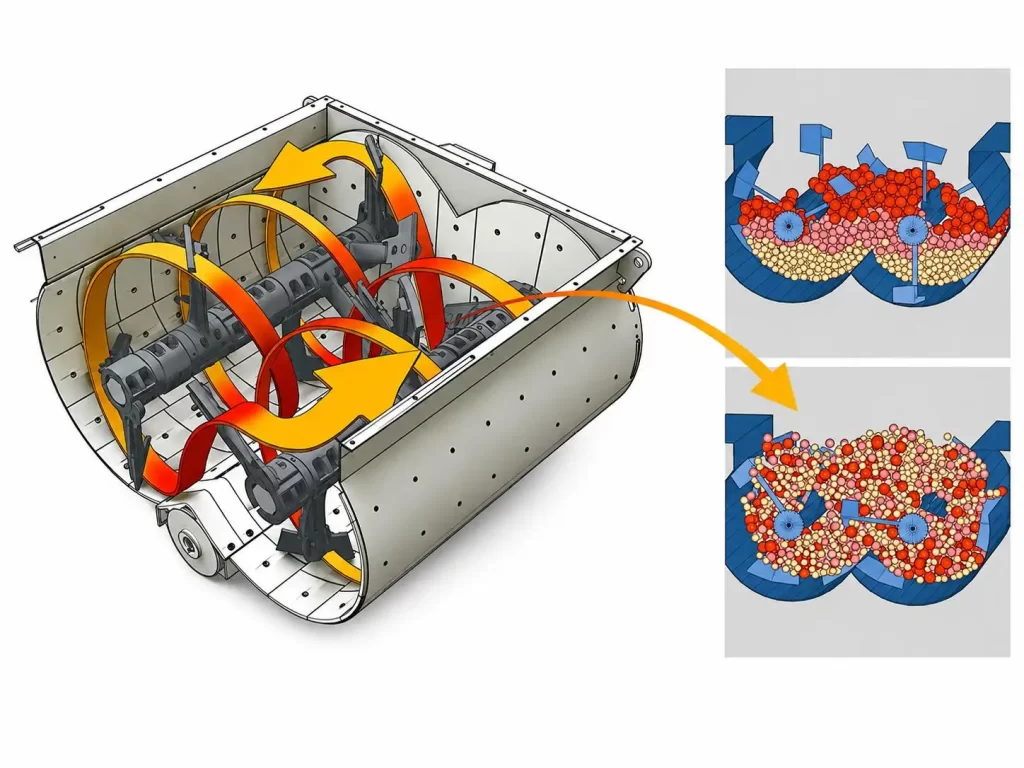
The Double Shaft Mixer will usually be designed with the two shafts rotating in the opposite direction. The paddles which can even be mounted at an angle will be designed to push, lift, and tumble the materials to achieve a very even uniform mix.
One problem with this design is that the shafts must rotate at exactly the same speed and must be matched in the amount of torque that is applied. If this is not the case, the mixer will be unbalanced and some areas will be over mixed and others will be under mixed. This will cause a very negative impact on the quality of the product and will increase the energy that is consumed. It will also cause the mechanical components to wear out very quickly.
This is where a standard, off-the-shelf reducer falls short.
What a "Special Reducer" Does That a Standard One Cannot
1. Synchronized Power Distribution
A Double Shaft Mixer requires that input power be divided evenly between two output shafts. A unique reducer design features a specialized gear system that delivers two dependent outputs. This design results in evenly distributed torque to each shaft, resulting in matched paddle movements in each mixing chamber.
Why is this beneficial? Without evenly matched movements, the paddle tips would hit/restrict each other's movements and both the paddle and the reducer would ultimately become damaged.
2. Load Balancing with Changing Resistance
Mixing in industry is not a simple process. Even in a single mixing cycle, the resistance of the mixed product can be altered by changing viscosity and density.
Our reducer design features two separate rotational transmission paths instead of one common output.
If the resistance to the mixer's flow has changed, then the torque can also change on each side without the addition of an overload to the shaft.
This achieves a consistent working condition.
3. Speed Reduction in Relation to Torque Increase
As previously noted, electric motors generally rotate at a speed of 1500 revolutions per minute. Conversely, a Double Shaft Mixer should ideally function within the range of 30 to 50 RPM.
The reducer decreases the RPM of the motor and increases the torque in the range of 50 - 150.
This is not simply a reduction of speed. It is the ability to deliver the necessary high torque to move a product, which may be dense, viscous, or difficult to handle.
4. Design of the Reducer and Fixed-Ratio Synchronization
The fixed gear relationships in the reducer allow for the consistent synchronization of shaft rotation. The gear engagement provides a consistent timing of rotations.
The uniformity of mixing remains consistent, especially in changing processes of material density or viscosity.
Why "Universal" Reducers Don't Work
The question may arise: "Why not just put a standard reducer on each shaft?"
In theory, this would be possible. In practice, it isn't.
•Perfect synchronization is impossible with two independent reducers. Even the smallest tolerances or wear resulting in speed discrepancies will take place.
•Load sharing will become uneven, resulting in the breakdown of gears and bearings on one shaft.
•In addition, the cost, space, and maintenance will have to account for the alignment of the two independent drive trains.
To address all of these issues, a special reducer integrates synchronization and fits in a single compact housing. This special reducer is not a universal solution, but rather developed for twin-shaft paddle mixer systems.
The Engineering Behind a Quality Special Reducer
Just because a reducer is special does not make it a good design. The highest quality special reducers have some of the following features and are only designed by manufacturers with extensive knowledge in the area of Double Shaft Mixers.
1. Four-Stage Gear Transmission
•Offers incremental and smooth power reduction.
•Provides consistent torque at all levels and throughout the entire range of operation.
2. High-Grade Gear Materials
•Low carbon alloy steel, processed through carburizing and quenching.
•Gear surface hardness reaches 58–62 HRC.
•Gear accuracy reaches Grade 6 levels.
3. Compact, Lightweight Design
•Compared to similar domestic and overseas products, well-engineered reducers offer smaller size and lighter weight without compromising strength.
•The twin hollow shaft output mode maximizes savings in installation space and production costs.
4. Reliability and Long Life
•Reliable work performance under continuous operation.
•Convenient maintenance access.
•Extended service life.
What are the Effects of Using the Wrong Reducer?
Using the wrong reducer in a double shaft mixer will affect:
•The mixer has a poor mixing quality and provides a suboptimal yield of the desired product.
•The shafts become misaligned and the increased vibration damages bearings and seals.
•The increased load on the already overloaded gears causes pitting and leads to broken gear teeth.
•Unpredicted repairs result in downtime and increased costs.
However, a correctly chosen special reducer offers power control with the confidence industrial mixing and blending can operate for long periods of time without maintenance.
Matching the Reducer to Your Mixer
Choosing a special reducer for a double shaft mixer involves numerous parameters:
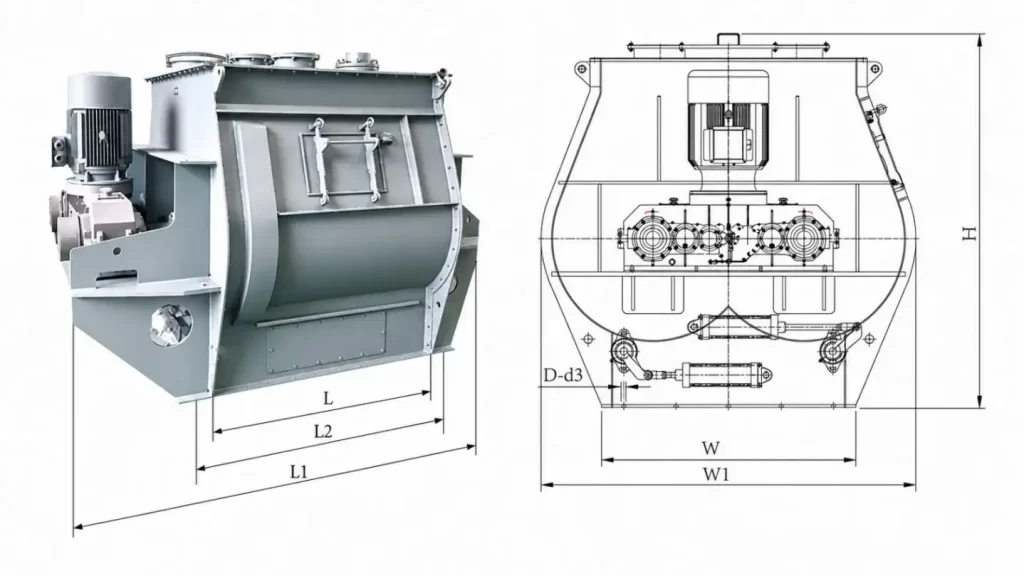
•Center distance, which corresponds to the shaft spacing of the mixer.
•Motor power of 7.5 kW to 90 kW depending on the size of the mixer.
•Reduction ratio of 30:1 to 50:1.
•Output speed of 30 to 50 RPM.
•Mixer capacity which can range from 0.25 to 15 m³.
A reducer can also be selected based on installation requirements and process needs.
Replacement and Retrofit Considerations
For the majority of industrial plants, the focus becomes "Can we replace our reducer with a better one?"
Yes, if the information is right.
•Images and drawings of current setups help with determining the new reducer's fit.
•Nameplate data from the current reducer establishes an important baseline.
•Mixer type, application, and machine design are all part of the configuration discussion.
This is not about fitting a standard product to a design. It is about customizing the reducer solution to fit the particular design and operational needs.
The Bottom Line
A Double Shaft Mixer is only as good as its drive train. The reducer is the core of the mixing system, converting motor power to the motion that enables twin-shaft mixing.
A customized reducer for twin-shaft paddle mixers provides:
•Even mixing via synchronized rotation of the shafts.
•Control of load to reduce wear.
•Torque control as material conditions change.
•Designed Cost and Space Saving Integration.
•Reliability with little to no maintenance.
For OEM, replacement, or application projects, the tailored reducer solution is a requirement.
For guidance on choosing a reducer for your Double Shaft Mixer, new build, replacement or retro-fit, please contact Mingye Machinery. We will be happy to help you with your process requirements and installation constraints.
FAQs
Q1. What parameters are important in choosing a special reducer?
Special reducers require consideration of center distance, motor power (kW), reduction ratio, and the output speed, which is generally 30 to 50 RPM, against the capacity and the material characteristics of the mixer.
Q2. Can this special reducer be used for retrofit purposes?
Yes. Sending pictures of equipment and the nameplate and/or dimensions will allow engineers to evaluate the situation and offer a proper solution.
Q3. What materials can this reducer handle?
This reducer can handle a variety of materials including dry mortar, chemicals, pesticides, ceramics, food, feed, battery slurries and more, even with different densities and viscosities.
Q4. What happens when material resistance suddenly changes?
If some material has higher resistance, the internal paired transmission paths will distribute the torque to both shafts to eliminate the overload on one shaft while keeping everything in order.
Q5. What is the maintenance for special reducers?
Checking the oil level (keeping the level 2/3 of the sight glass), and replacing gear oil periodically according to the manufacturer is the main maintenance for special reducers.
Share on Social:


Contact Us
In This Article
Rubber Internal Mixer Gearbox: Read the Batch Load Profile, Not Just Motor kW
Oct 22, 2026
Hot Industrial Gearbox Coupling After Cold Alignment: What to Check
Oct 22, 2026
Hydraulic Slewing Drive Won't Rotate: Separate Motor, Brake and Gearbox Faults
Oct 22, 2026
Calender Roll Gap Changes: What Must the Drive Coupling Accommodate?
Oct 22, 2026