


 Home /
 Custom Gearbox Manufacturer For Stable Heavy-Load Torque
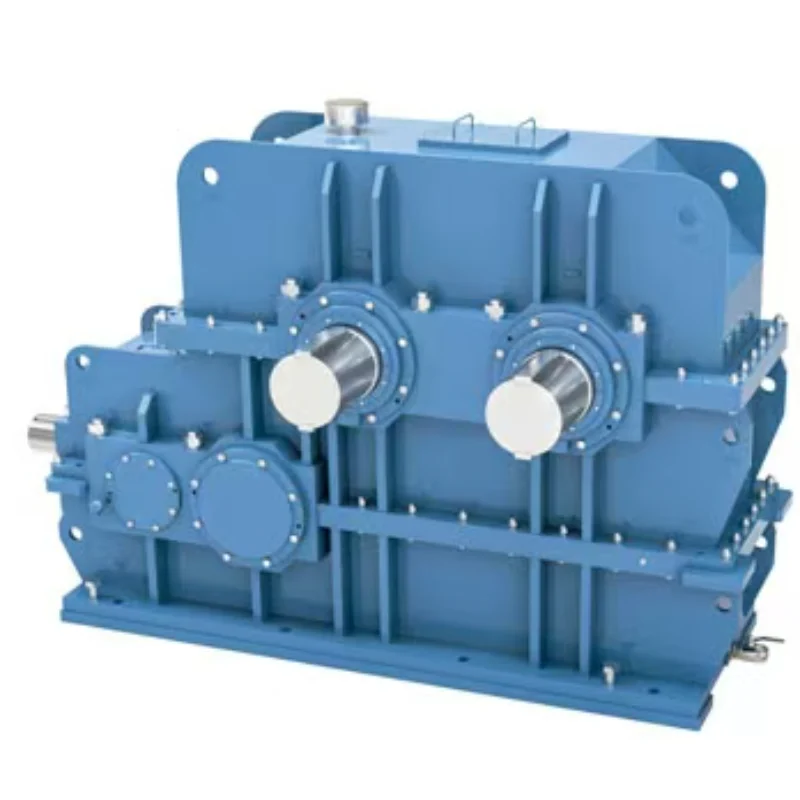
Rubber Internal Mixer Gearbox: Read the Batch Load Profile, Not Just Motor kW
Oct 22, 2026
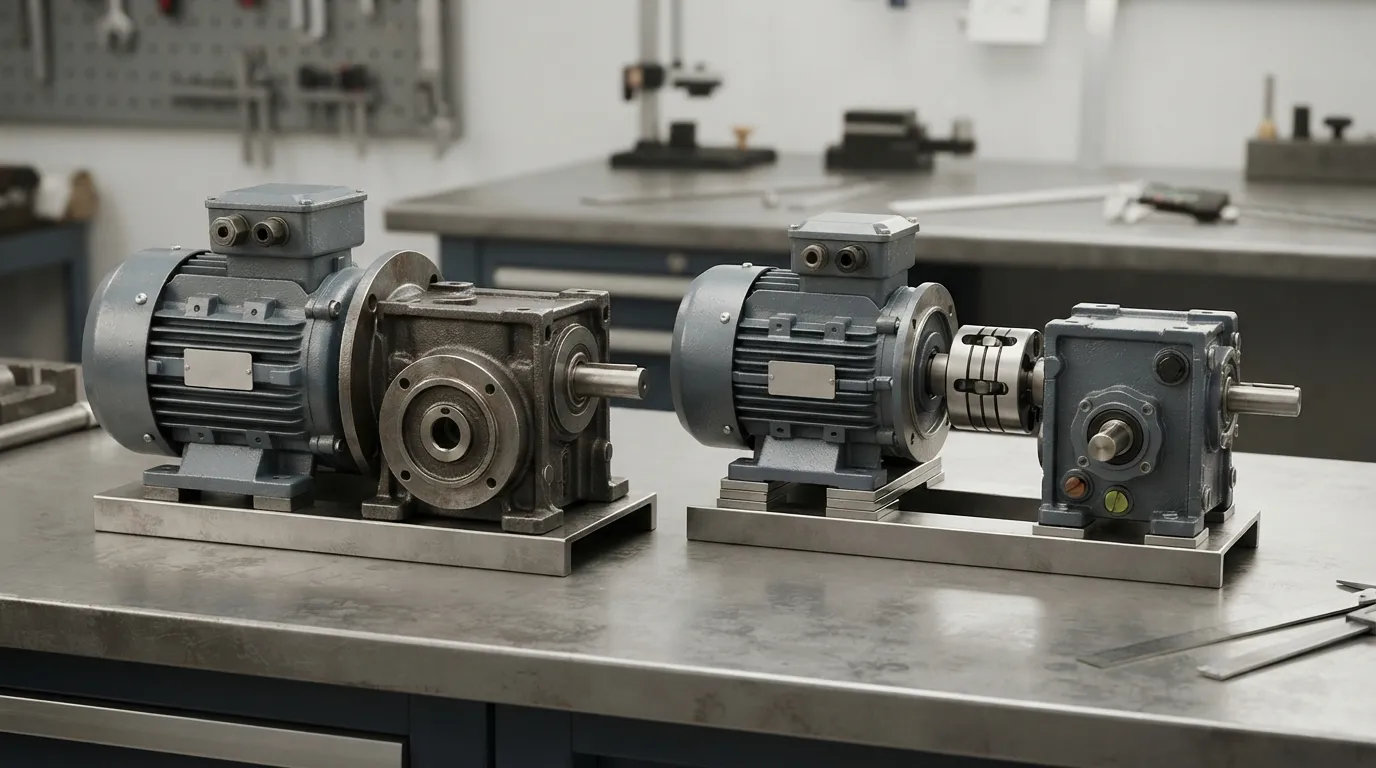
Hot Industrial Gearbox Coupling After Cold Alignment: What to Check
Oct 22, 2026
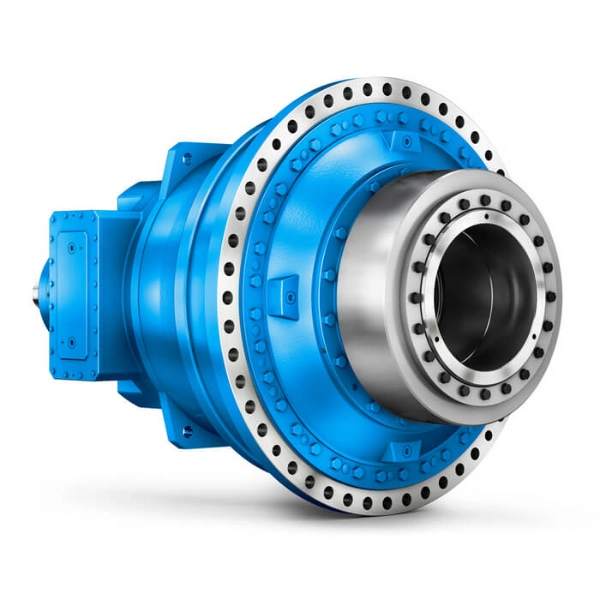
Hydraulic Slewing Drive Won't Rotate: Separate Motor, Brake and Gearbox Faults
Oct 22, 2026
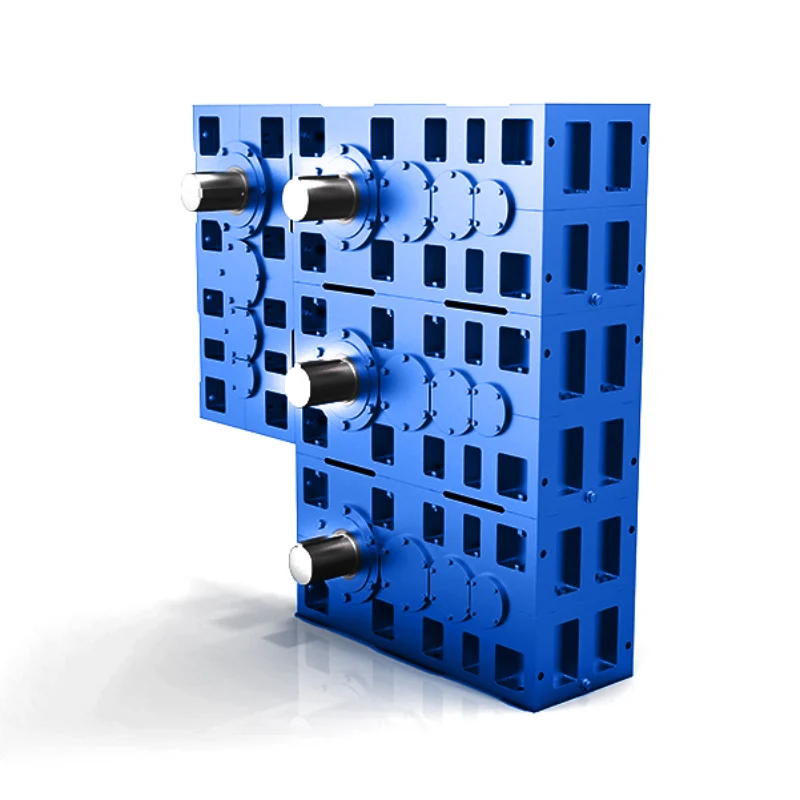
Calender Roll Gap Changes: What Must the Drive Coupling Accommodate?
Oct 22, 2026
In 2026, companies will choose custom gearbox manufacturers based on their ability to provide consistent torque for different loads, along with gearboxes that are easy to adjust and require little maintenance and that can work with current automation systems.
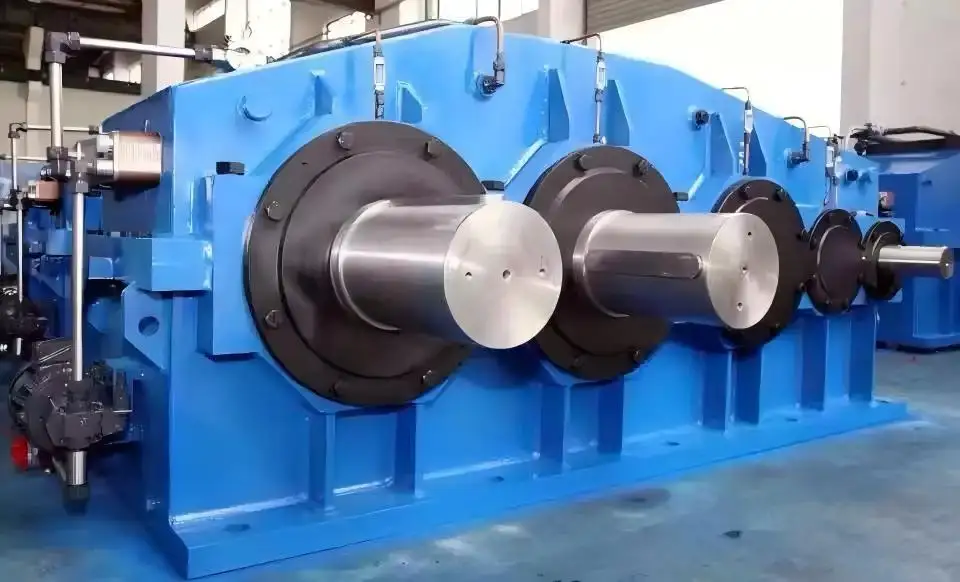
The strength of the motors that run conveyors, mixers, and various rubber and plastic machines, along with welding roller stands and automated production lines, is just one part of choosing a gearbox. All of the following must be considered as an integrated system: the output torque, the starting load, the duty cycle, service factor, ratio, shaft layout, temperature, and mounting space.
Mingye provides an answer to this challenge with our design of modular, customizable, multi-stage transmissions. Each stage can be optimized for a reduction in speed and a specific load transfer for either continuous or variable operation.
Stable Torque Through Multi-Stage Design
Heavy load equipment can either start with the load already applied or be loaded through multiple load cycles. An appropriately configured gearbox allows the motor speed to be converted to output torque, enabling the controlled movement of the machine.
Calculation frameworks for the load capacity of spur and helical gears, such as ISO 6336, provide for the evaluation of the performance of the gear set in a gearbox. While this calculation framework provides a foundation, the performance of the gearbox cannot be assured without the evaluation of the bearings, shafts, housing, assembly, the lubrication, and the actual operating conditions.
Engineering benefits include the following:
•Controlled Starting Performance: A ratio and service factor that are appropriately applied allow for smooth acceleration under load.
•Consistent Output Speed: Gearbox speed is aligned with the machine speed through multi-stage reduction.
•Balanced Load Transfer: This principle relates to designing subsystems wherein integral components are optimally sized for the application.
•Application-Based Sizing: In this context, the gearbox configuration is related more to the torque requirement than the power rating of the drive motor.
Modular Engineering Applications for 2026
The focus of modern manufacturing in 2026 will be on rapid configurability and flexible, digitally monitored, and repeatable manufacturing. The World Economic Forum provides examples of manufacturing that emphasize rapid changeover and the ability to produce on demand. The World Economic Forum provides examples of manufacturing that emphasize rapid changeover and on-demand production capabilities. The World Economic Forum provides examples of manufacturing that emphasize rapid changeover and the ability to manufacture on demand. This trend will drive the need for innovative gearbox solutions.
As a custom gearbox manufacturer, Mingye follows a cabal about the interaction of lubrication and the configurable systems engineering (CSE) methodology. Mingye maintains online product offerings of 18 series from 0.18 kW to 4,000 kW and 39,000 ratio variants. End-users of this configurable tool should independently verify the manufacturer-published data for the selected series during the project assessment.
| Purchaser Needs | Mingye Solution | User Benefit |
| High Starting Torque | Multi-stage helical or bevel-helical gearing | Allows for loaded starts and continuous acceleration |
| Specific output speed, configurable transmission ratios | Configurable gearbox transmission ratios | Enables alignment of gearbox output to process speed |
| Restricted Installation Space | Choice of shafts and mounting layouts | Optimizes machine integration |
| Continuous operation | Contracted gear teeth design + planned lubrication scheme | Enables extended cyclical motion |
| Retrofit undertaking | Maintains OEM size and profile interface | Enables conformity to existing equipment layouts |
Gearbox Series for Various Drive Layouts
For different arrangements within a machine, Mingye offers several families of gear reducers.
•DCY Series: Parallel shaft, multi-stage helical gearing for conveyor and general heavy-duty transmission.
•DBY Series: Bevel and cylindrical gear stages gear for applications where a change in direction of power is needed.
•ZDY, ZLY, ZSY, and ZFY Series: Adjustable speed and torque.
•H Series and B Series: Large modular helical and bevel-helical drive systems.
•Within OEM Configurations: Flexibility for special machinery OEM configurations allows for changes to shafts, mounting sizes, gear ratios, lubrication systems, and accessory connections. This flexibility is achieved through modifications to shafts, mounting dimensions, ratios, lubrication systems, and accessory interfaces.
For the DCY Series, Mingye uses teeth that are treated to be hard and durable, with a hardness rating of HRC 58-62. Because specifications may vary among product families, purchasers should verify the material and heat treatment of the actual product.
Lubrication and Stability of a Gearbox Transmission
Concerns arise on the interaction of lubrication and serviceability of a system with gears and bearings and the dissipation of heat. ISO 12925-1:2024 describes and provides examples of lubricants for closed industrial gear units and aids in choosing lubricant classes.
At Mingye the following is considered in the planning of lubricants:
•Speed: The viscosity of lubricants Speed: The speed of gears and the degree of lubrication affect the viscosity of lubricants. The viscosity of lubricants is influenced by the speed of the gears and the degree of lubrication.
•Load: The conditions of film and heat are affected by the torque and duty cycles.
•Mounting Position: The level of oil and coverage are affected by the orientation of the shafts.
•Environment: Sealing and oil selection are influenced by temperature, dust, and moisture.
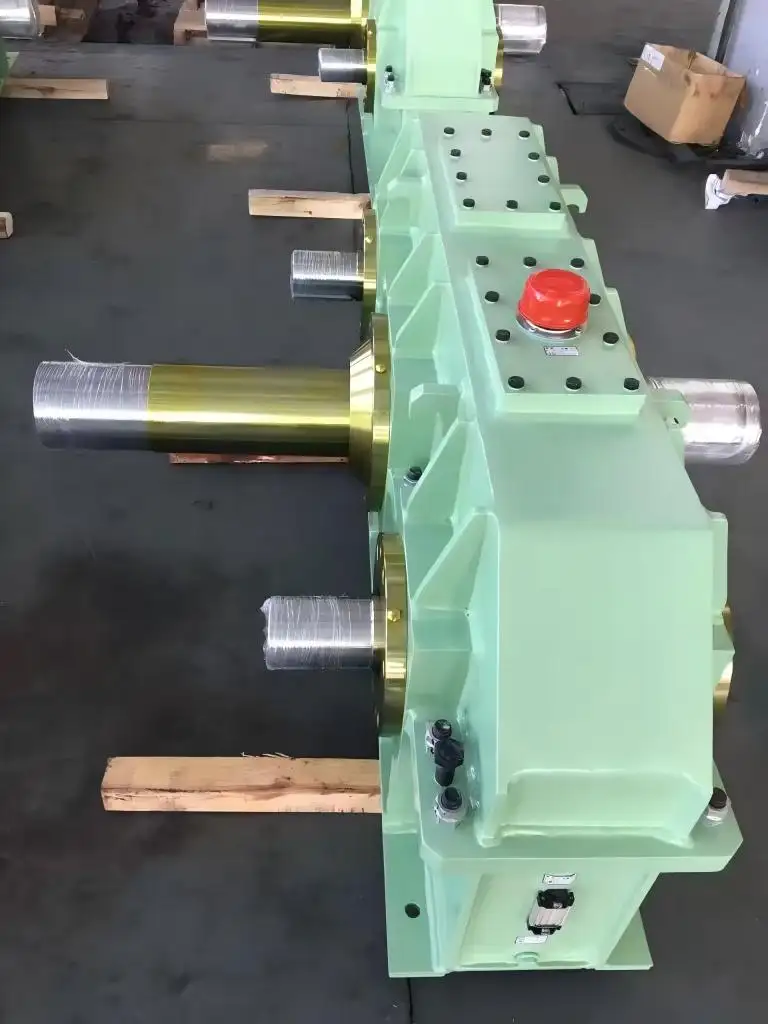
Design of a Gearbox for Monitoring
The design for the monitoring of a gearbox is influenced by the growing importance of condition monitoring for industrial consumers. ISO 17359:2018 provides standards for monitoring the condition of machines, while NIST specifies temperature, noise, and vibrations as the main parameters for predictive maintenance.
A monitoring-ready gearbox may incorporate access for inspection and features for the mounting of temperature, vibration, oil-level, and lubricant-condition sensors. Mingye can consider the mounting of these sensors and access during the design of the housing and associated equipment.
What Buyers of Gearbox Systems Should Provide
The complete specification of a Gearbox starts with the complete description of its application.
•Machine Data: The type of machine, gearbox rating, input speed, and the desired output speed.
•Load Profile: Torque characteristics (normal, peak), start-up load, and load variability.
•Duty Cycle: Describe the number of operational hours and starts per hour, as well as the operational pattern.
•Installation Data: Describe the installation position as well as the directional and space requirements for the shafts.
•Site Conditions: Describe the temperature and moisture conditions as well as the dust levels and the location the unit is taken to.
• Control Needs: Describe the requirements for PLCs, variable frequency drives, encoders, and brakes as well as the requirements for monitoring.
Consideration also should be given to the use of more efficient motors during system-level choices. IEC 60034-30-1:2025 describes the future classes of better efficiency for line AC motors from 0.12 kW up to 1,000 kW. This new standard helps assess the motor, gearbox, and driven machine as a unified powertrain.
Engineering Value Beyond the Product
An adept custom gearbox manufacturer offers more than just standard product models. Mingy offers an integrated suite of services, including modular selection, CNC machining, gear processing, OEM tailoring, and application analysis for material handling, mixing, packaging, processing of rubber and plastics, and heavy industrial machinery.
For projects rooted in 2026, customers will want a gearbox that meets specific requirements for torque and fits for maintenance and machine layout and that is designed with an eye on the future for potential adaptability of evolving production systems. Mingye's modular systems are well positioned to convert these needs into a workable gearbox for the defined operating task.
FAQs
Q1. What Factors Should Be Considered When Selecting Gearbox Lubrication?
Consider the gearbox lubrication based on speed, load, temperature, orientation, and the total time the gearbox is expected to run continuously.
Q2. What Details Are Necessary For Proper Gearbox Selection?
Essential details include motor power, input and output speeds, load torque, duty cycle, and the proposed installation and operating environments.
Q3. What Type Of Gearbox Is Considered For Heavy Loads?
Typically, bevel-helical, cylindrical, and helical gearboxes are considered for heavy load applications based on the preferred shaft arrangement and load ratio.
Q4. Is It Possible For Mingye To Design And Adjust Specifics Of A Gearbox To Accommodate A Unique Ratio?
Yes. Mingye is able to design and adjust specific transmission ratios to accommodate customer requirements of output and operational cycle.
Q5. Will An Industrial Gearbox Integrate With My Current Systems?
Yes. Gearboxes can be designed to allow for the integration with current systems by accommodating specific mounting dimensions, shafts, interfaces, and housing.
Share on Social:


Contact Us
In This Article
Rubber Internal Mixer Gearbox: Read the Batch Load Profile, Not Just Motor kW
Oct 22, 2026
Hot Industrial Gearbox Coupling After Cold Alignment: What to Check
Oct 22, 2026
Hydraulic Slewing Drive Won't Rotate: Separate Motor, Brake and Gearbox Faults
Oct 22, 2026
Calender Roll Gap Changes: What Must the Drive Coupling Accommodate?
Oct 22, 2026