


 Home /
Why Right Angle Gear Motors Run Hot: Gear Mesh, Load, Lubrication, Mounting and Duty Cycle
Rubber Internal Mixer Gearbox: Read the Batch Load Profile, Not Just Motor kW
Oct 22, 2026
Hot Industrial Gearbox Coupling After Cold Alignment: What to Check
Oct 22, 2026
Hydraulic Slewing Drive Won't Rotate: Separate Motor, Brake and Gearbox Faults
Oct 22, 2026
Calender Roll Gap Changes: What Must the Drive Coupling Accommodate?
Oct 22, 2026
A plant operator notices the right-angle gear motor on the main conveyor drive is running hot. The housing surface reads 75°C on an infrared thermometer — uncomfortably warm to the touch. The first instinct is to blame the gearbox: something is wrong with the unit. But after a week of diagnostics, the real cause turns out to be a combination of an oil level that is 20 mm too high (the mounting position was changed during the last service without adjusting the fill quantity) and a conveyor belt that has been running 15% tighter than specification to prevent slippage.
Right-angle gear motors run hot for many reasons — and most of them are not gearbox defects. The heat comes from multiple sources: the gear mesh, the motor, the bearings, the lubricant, the load, the installation, and the duty cycle. This article provides a diagnostic framework for identifying where the heat is coming from and what to do about it, without jumping to the conclusion that the unit is faulty.
Distinguish Normal Warmth From Abnormal Overheating
Every gear motor generates heat during operation. The question is not whether the housing is warm, but whether the temperature is within the range expected for the gear type, load, duty, and ambient conditions.
What Is “Normal”?
Gearbox housings run warm during operation — that is expected. The heat generated by gear mesh friction, bearing friction, and oil churning is conducted through the housing and dissipated to the surrounding air. A gearbox that feels warm to the touch after several hours of operation is not necessarily a problem.
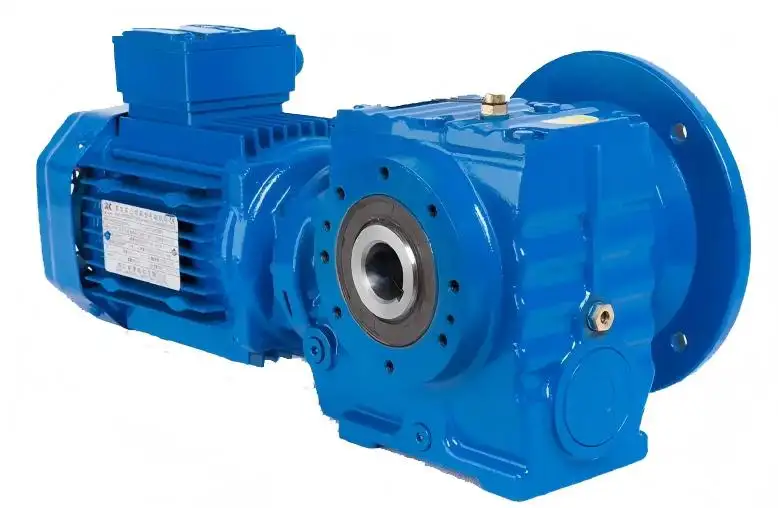
However, there are practical reference points drawn from manufacturer maintenance documentation (not universal standards):
Permitted oil and gearbox temperatures depend on lubricant, gearbox design, seals, mounting position and manufacturer limits. Compare measured values with the documentation for the actual unit. Touch is not a reliable temperature assessment. Use a measured temperature and compare it with the actual gearbox/motor limits; also look for abnormal trends, oil discoloration, current rise or noise change.
When to Investigate
Investigate the causes of overheating when:
- The housing temperature has increased noticeably over time (a trend, not a one-time reading)
- The gearbox is running significantly hotter than an identical unit on a similar application
- The oil color has darkened or there is a burning smell
- The noise level has increased
- There is oil leakage from seals or the breather
- The motor current has increased without a corresponding load change
Right-angle gear motor running hot? Before ordering a replacement, check the oil level, mounting position code, and breather condition. Send the housing temperature (with measurement location), ambient temperature, motor load current, and model number — we can help identify whether the heat source is the gear mesh, the motor, the bearings, or the installation.
Identify the Heat Source
The first step in diagnosis is to identify where the heat is coming from. Right-angle gear motor heat comes from three main zones:
Zone 1: Gearbox Housing — Gear Mesh Losses
The gear mesh is the primary heat source in the gearbox. The heat generated depends on the gear type:
Worm gear mesh: The sliding contact between the worm thread and the worm wheel tooth generates significant friction. This is inherent to the worm gear design — the same friction that transmits torque also generates heat. A worm gear motor will generally run warmer than a helical-bevel unit of similar size and load, especially at higher ratios and under continuous load where sliding friction is more pronounced. This is a design characteristic, not a defect.
Helical-bevel gear mesh: The rolling-dominant contact generates less friction and therefore less heat. However, multi-stage helical-bevel units still generate heat at each gear mesh, and the total heat depends on the number of stages and the load.
Diagnostic question: Is the heat concentrated at the gear mesh area (typically the middle of the housing, where the gears are located)? If so, the cause is likely related to gear type, ratio, load, or lubrication — not to the motor or bearings.
Zone 2: Motor Side — Electrical Losses
The motor generates heat from electrical losses: copper losses (current × winding resistance), iron losses (magnetic hysteresis and eddy currents), and friction losses (bearings, fan). Motor overheating typically manifests as:
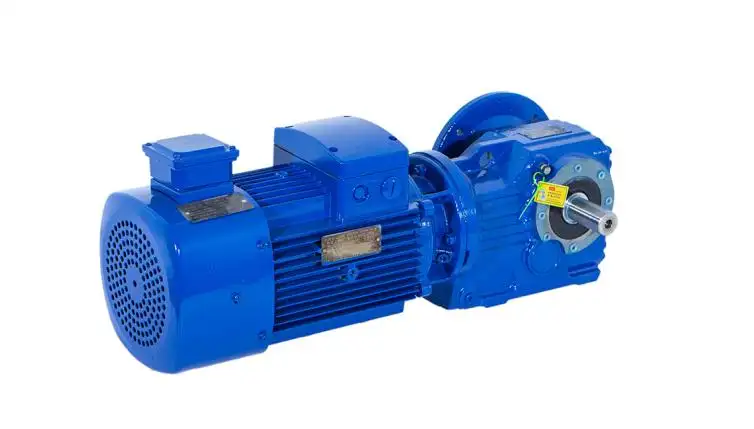
- High motor surface temperature (the motor body, not the gearbox)
- High motor current reading (check against the nameplate rated current)
- A burning smell from the motor (indicates winding insulation stress)
- Tripping of motor protection (thermal overload relay, circuit breaker)
Motor overheating can be caused by:
- Overload: The motor is delivering more torque than its rated continuous value
- Undersized motor: The motor power is insufficient for the load
- Voltage issues: Low voltage causes the motor to draw more current to deliver the same power; high voltage increases iron losses
- Inadequate cooling: The motor fan is blocked, the motor is in an enclosed space, or the ambient temperature is too high
- Frequent starts: Starting current is much higher than running current; frequent starts cause thermal cycling that can overheat the motor
Diagnostic question: Is the motor body hotter than the gearbox housing? If so, the heat source is likely on the electrical side — check load current, voltage, cooling, and duty cycle. For DC motor-specific overheating causes (brush wear, PWM frequency effects, voltage mismatch), see our DC gear motor overheating guide.
Zone 3: Bearing and Output Side — Mechanical Friction
Bearings generate heat from rolling friction, which is normally low. Excessive bearing heat indicates a problem:
- Overhung load too high: A sprocket, pulley, or coupling applying too much radial force to the output shaft overloads the bearing
- Shaft misalignment: Misalignment between the gearbox shaft and the driven shaft (in solid-shaft installations) causes the coupling to transmit bending forces to the shaft, loading the bearing unevenly
- Bearing damage: Pitting, spalling, or brinelling of the bearing race or rolling elements increases friction
- Inadequate lubrication: The bearing is not receiving enough lubricant (in grease-lubricated bearings) or the oil is not reaching the bearing (in oil-bath systems, possibly due to incorrect oil level for the mounting position)
Diagnostic question: Is the heat concentrated at the output shaft area (near the bearing housing)? If so, check the overhung load, alignment, and bearing condition.
Cause 1: Gear Type and Ratio — Structural Heat
If the unit is a worm gear motor, higher operating temperature is partly inherent to the design. The sliding contact mechanism generates more heat than rolling contact at equivalent loads and ratios. This does not mean the worm gear is defective — it means the thermal management must account for this characteristic.
When structural heat becomes a problem:
- A worm gear motor selected for intermittent duty is running continuously — the heat that was acceptable in short cycles accumulates over hours
- The ratio is high (60:1 or above), increasing the sliding component and reducing efficiency
- The ambient temperature is high, reducing the gearbox’s ability to dissipate heat to the surrounding air
What to check: Compare the actual duty (hours per day, load level) against the duty the unit was selected for. If the application has changed from intermittent to continuous, the worm gear motor may need to be replaced with a helical-bevel unit, or the duty cycle needs to be reduced.
Cause 2: Overload and Underload Mismatch
If the gear type and ratio check out, the next most common cause is load mismatch. The gear motor is asked to deliver more torque than it was rated for.
- Conveyor belt tension increases over time as the belt stretches or is adjusted tighter to prevent slippage
- Process material changes — a mixer designed for a low-viscosity product is now mixing a higher-viscosity batch
- Wear in the driven equipment — a worn bearing or seal in the driven machine increases the resistance the gear motor must overcome
- Speed changes via VFD — running the motor at a lower speed reduces the motor’s cooling fan output while the load may not decrease proportionally
What to check: Measure the motor current under load and compare it to the nameplate rated current. If the current is at or above the rated value, the motor is at or above its rated load. Check the driven equipment for increased resistance (worn bearings, tight belts, changed material properties).
Cause 3: Lubrication Problems
If the load is within specification, the next place to check is the lubricant. Lubrication issues are among the most common causes of gearbox overheating, and they are often the easiest to fix — if correctly diagnosed.
Oil Level Too High
If the oil level is above the specified range, the gears dip too deep into the oil sump. This causes churning loss — the gears must push through excess oil, generating heat from fluid friction. The effect is similar to trying to run in waist-deep water: more energy is spent moving the fluid than doing useful work.
Common cause: The mounting position was changed (or the unit was installed in a different orientation than specified) without adjusting the oil fill quantity. The oil that was at the correct level for horizontal mounting is now too high (or too low) for the new orientation.
Oil Level Too Low
If the oil level is below the specified range, the gears do not dip into the oil at all (or not enough). The upper bearings and gears receive inadequate splash lubrication, and friction increases due to metal-to-metal contact or boundary lubrication. This generates heat rapidly and can cause gear tooth and bearing damage.
Common cause: Oil leakage from a damaged seal, loose drain plug, or breather that is positioned below the oil level (due to incorrect mounting position). Also: the oil was never filled to the correct level at installation.
Oil Viscosity Incorrect
Using a lubricant with the wrong viscosity grade for the operating conditions causes inadequate lubrication. Too low viscosity: the oil film is too thin to separate the gear tooth surfaces, leading to metal-to-metal contact. Too high viscosity: the oil is too thick, increasing churning losses and generating heat from fluid friction.
What to check: Verify the oil grade against the manufacturer’s recommendation for the specific model, mounting position, and ambient temperature. If the ambient temperature has changed significantly (e.g., seasonal variation), the oil grade may need to change accordingly.
Breather Blocked
The gearbox breather (vent) equalizes internal pressure as the air inside heats and cools. If the breather is blocked by dust, paint, or debris, the internal pressure rises. This can force oil past the seals (causing leakage and low oil level) and prevent the gearbox from breathing properly, contributing to overheating.
What to check: Locate the breather on the gearbox housing and verify it is clear. Clean or replace it if blocked.
Cause 4: Mounting Position and Installation
If the lubricant is correct, the next factor to check is the installation itself. Mounting errors can cause overheating even when the gear type, load, and oil are all correct.
Wrong Mounting Position
As discussed in the mounting guide, the mounting position directly affects the oil level relative to the gears. A gearbox installed in a different orientation than specified will have incorrect lubrication — either too much oil at the gears (churning) or too little (starvation).
Shaft Misalignment (Solid Shaft Installations)
Misalignment between the gearbox output shaft and the driven shaft causes the coupling to transmit bending forces to the output shaft. This loads the output bearing unevenly, causing localized heating at the bearing. Misalignment also causes vibration, which can damage the coupling, the shaft, and the seals.
Overhung Load Too High
If a sprocket, pulley, or chain is mounted on the output shaft, the tension in the chain or belt creates a radial force (overhung load) on the shaft. If this force exceeds the gearbox’s rated overhung load, the output bearing is overloaded and overheats.
What to check: Verify the mounting position matches the original specification. Check shaft alignment with a straightedge or dial indicator. Calculate the overhung load from the chain/belt tension and sprocket pitch diameter, and compare to the gearbox rating.
Cause 5: Duty Cycle and Environment
Finally, if the unit, load, lubrication, and installation are all correct, the operating conditions themselves may be the problem.
Continuous Duty on an Intermittent-Rated Unit
If a gear motor was selected for intermittent duty (e.g., S3 duty, 30 minutes on / 30 minutes off) and is now running continuously, the heat that was dissipated during the off periods now accumulates. The gearbox and motor never cool down, and the temperature rises steadily until it reaches a new (higher) equilibrium — or until something fails.
High Ambient Temperature
If the ambient temperature exceeds the rated range for the specific motor and gearbox, the gearbox’s ability to dissipate heat to the surrounding air is reduced. Higher ambient reduces the temperature margin available for the drive; actual oil/housing temperature must be assessed from measured data and manufacturer limits.
Enclosed Space
If the gear motor is installed in a cabinet, enclosure, or tight space with limited airflow, the heat dissipated from the housing has nowhere to go. The air around the gearbox heats up, reducing the temperature differential and the cooling rate. A gear motor that runs fine in an open installation may overheat in an enclosed one.
What to check: Compare the actual operating hours and ambient conditions against the original selection criteria. If the duty has increased or the environment has changed, the gear motor may need to be reselected for the new conditions.
Field Diagnostic Checklist
When investigating a right-angle gear motor that is running hot, record the following data before contacting a supplier or ordering a replacement:
| Data Point | What to Measure or Record |
| Housing surface temperature | Measure at the gear mesh area (middle of housing) and at the output bearing area |
| Ambient temperature | Measure near the installation, not in a separate room |
| Motor current | Measure under load; compare to nameplate rated current |
| Oil level | Check with the dipstick or sight glass; note the mounting position |
| Oil condition | Color, smell, consistency; is it dark, burnt, or watery? |
| Oil grade | Verify against manufacturer recommendation |
| Breather condition | Clear or blocked? |
| Mounting position | Does it match the original order specification? |
| Noise level | Has it changed? Is there a new grinding, clicking, or whining? |
| Vibration | Is there noticeable vibration at the housing or output shaft? |
| Run time before overheating | How long does it take to reach the concerning temperature from a cold start? |
| Load condition | What is the driven machine doing? Has the load changed? |
Gear motor running hot? Send the housing temperature (with the measurement location), ambient temperature, motor load current, and run time before overheating starts. If you can also provide the model number and mounting position, we can help check whether the oil level and lubricant grade are correct for your installation — before you assume the unit is defective.
Summary: Heat Is a Symptom, Not a Diagnosis
A hot right-angle gear motor is telling you something — but the message is not always “the gearbox is broken.” The heat may be coming from the gear mesh (structural, for worm gears), the motor (electrical overload), the bearings (mechanical overload or misalignment), the lubricant (wrong level, wrong grade, blocked breather), the installation (wrong mounting position, misalignment), or the duty cycle (intermittent-rated unit running continuously).
Before ordering a replacement, work through the diagnostic checklist above. The most common fixes — adjusting the oil level, correcting the mounting position, clearing the breather, or reducing the load — cost nothing and may resolve the issue without replacing the unit.
Long-term overheating with noise or vibration? If the gearbox has been running hot for an extended period and is now making noise or vibrating, the heat may have already caused damage to the gears or bearings. Upload a short video of the running unit (capturing the noise) and a photo of the nameplate. We can help assess whether this is a selection problem (wrong unit for the application) or a product issue — and recommend the right next step, whether that is a different model, a different gear type, or a warranty review.
Share on Social:


Contact Us
In This Article
Rubber Internal Mixer Gearbox: Read the Batch Load Profile, Not Just Motor kW
Oct 22, 2026
Hot Industrial Gearbox Coupling After Cold Alignment: What to Check
Oct 22, 2026
Hydraulic Slewing Drive Won't Rotate: Separate Motor, Brake and Gearbox Faults
Oct 22, 2026
Calender Roll Gap Changes: What Must the Drive Coupling Accommodate?
Oct 22, 2026